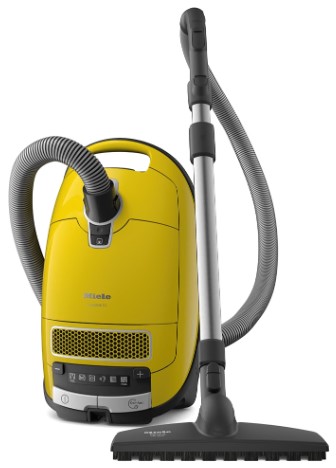
Miele Complete C3 Calima reaches 60–66 dB depending on setting. For cordless cleaning, most high-suction choices exceed 65 dB under stronger settings. It combining strong carpet cleaning with low operating noise.
Top 3 High-Suction Vacuums Under 65 dB
| Model | Noise Level | Suction / Airflow | Best Use | Price |
|---|---|---|---|---|
| Pro Team Supercoach Vac | 63 dBA | High carpet-cleaning capability; powerhead | Carpets + large homes | Amazon |
| Miele Complete C3 Calima | 60–66 dB | 1,200W motor; variable suction | Hard floors + low/medium carpet | Amazon |
| Dyson V15 Detect | 65 dB | Strong powered agitation | Carpet + mixed floors | Amazon |
Our Testing Criteria: High Suction Without Excessive Noise
A quiet vacuum cannot earn a recommendation solely from a low decibel number.
High suction requires useful airflow, adequate pressure, effective agitation, and a cleaning head capable of transferring motor power into debris removal.
The evaluation framework emphasizes five factors:
- Noise output: Preference for independently measured results at or below 65 dBA under clearly identified conditions.
- Suction performance: Airflow, suction pressure, and real cleaning performance receive greater weight than motor wattage alone.
- Floorhead performance: Powered agitation matters greatly for embedded carpet debris and pet hair.
- Filtration: Bagged designs and well-sealed filtration systems receive additional consideration for fine-particle containment.
- Operating consistency: A vacuum producing 63 dB only in a low-power mode does not qualify as a true high-suction quiet machine.
Independent testing demonstrates the problem with simple manufacturer specifications.
The Dyson V15 Detect, for example, produces excellent suction measurements but reaches approximately 70.5–71 dBA on bare floor and low-pile carpet in RTINGS testing.
Expert Opinion
Expert’s Tip: Never Judge Suction by Decibels Alone
A low dB reading does not automatically mean weak cleaning, and a loud vacuum does not automatically mean superior suction.
Canister architecture provides a major acoustic advantage because the motor housing sits away from the cleaning head. SEBO and Miele have historically used substantial acoustic insulation around powerful motors.
Independent measurements place the SEBO around 63 dBA, while Miele C3 Calima measurements range from roughly 60 to 66 dB depending on power setting.
Another important point: 65 dB must have a test condition attached. Distance from the vacuum, floor surface, attachment, motor setting, and room acoustics can materially change the result.
That distinction prevents one of the most common vacuum-buying mistakes: treating a single decibel number as an absolute measurement of every cleaning mode.
Best High-Suction Vacuums Under 65 Decibels (dB)
1. Miele Complete C3 Calima — Best for Quiet Mixed-Floor Cleaning
Why It Made the List
The C3 Calima remains a useful reference point for quiet, powerful canister cleaning. Independent measurements place the machine around 60–66 dB across lower-to-mid power settings.
The variable suction control also allows quieter operation when maximum power is unnecessary.
Pros
- Quiet operation at lower and medium settings
- Strong performance on hard floors and low-to-medium carpet
- Excellent maneuverability and bagged filtration design
Con
- C3 availability is increasingly limited after the 2026 discontinuation
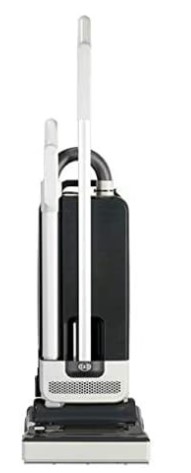
2. SEBO 300 — Best for Quiet Upright Carpet Cleaning
Why It Made the List
The Sebo 300 offers an important alternative to canisters: upright convenience without abandoning relatively low noise. Independent testing recorded approximately 64.1 dBA under a specific hard-floor test condition.
Pros
- Strong upright carpet-cleaning design
- Approximately 64.1 dBA under the cited test condition
- Adjustable cleaning-head configuration
Con
- Noise rises substantially under other settings and surfaces
The vacuum uses SEBO’s S-Class filtration system, although current testing notes that S-Class should not automatically be described as HEPA filtration.
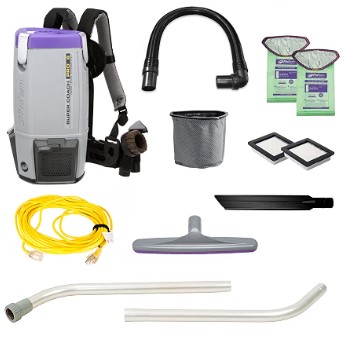
3. ProTeam Super CoachVac — Best for Commercial-Style Quiet Cleaning
Why It Made the List
The Super CoachVac appears in independent noise databases around 63 dBA. The backpack architecture keeps the cleaning system close to the operator while providing strong commercial cleaning capability.
Pros
- Approximately 63 dBA in published data
- Commercial-grade cleaning design
- Backpack format reduces floor-level equipment bulk
Con
- Backpack operation requires an adjustment period
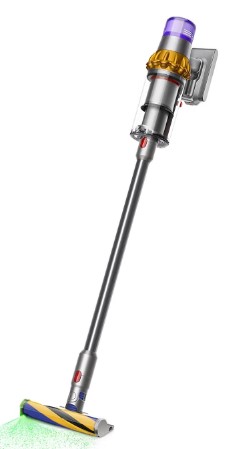
4. Dyson V15 Detect — Best for High Suction When 65 dB Is Flexible
Why It Made the List
The V15 Detect deserves mention because suction performance is excellent, but the model demonstrates why a strict 65 dB ceiling eliminates many powerful cordless vacuums. RTINGS measured approximately 70.5 dBA on bare floors and 71 dBA on low-pile carpet.
Pros
- Excellent measured suction and airflow
- Cordless convenience
- Strong debris and pet-hair performance
Con
- Does not meet a strict 65 dB ceiling during the cited independent tests
FAQs
1. Are vacuums under 65 dB powerful enough for carpets?
Yes. SEBO Airbelt D4 testing demonstrates that relatively low noise can coexist with strong carpet-cleaning performance.
Powered brush agitation, airflow, suction pressure, and floorhead design matter more than motor wattage alone.
2. Is 65 dB considered quiet for a vacuum?
Yes, relative to many household vacuums. A 63 dBA machine sits around normal-conversation territory in commonly used comparisons.
A 10 dB increase represents a substantial perceived loudness increase, so small numerical differences matter.
3. Why do cordless vacuums often exceed 65 dB?
Compact cordless designs concentrate a high-speed motor, airflow path, filtration system, and floorhead into a smaller package.
High-power modes can produce considerably more noise. The Dyson V15, for example, reaches approximately 70.5–71 dBA in independent testing.
Final Take
High-suction cleaning below 65 dB is most realistic with premium canister or specialized upright designs. Miele C3 Calima provides the clearest combination of low measured noise and powerful cleaning.
Cordless models generally require accepting higher noise during powerful cleaning modes.