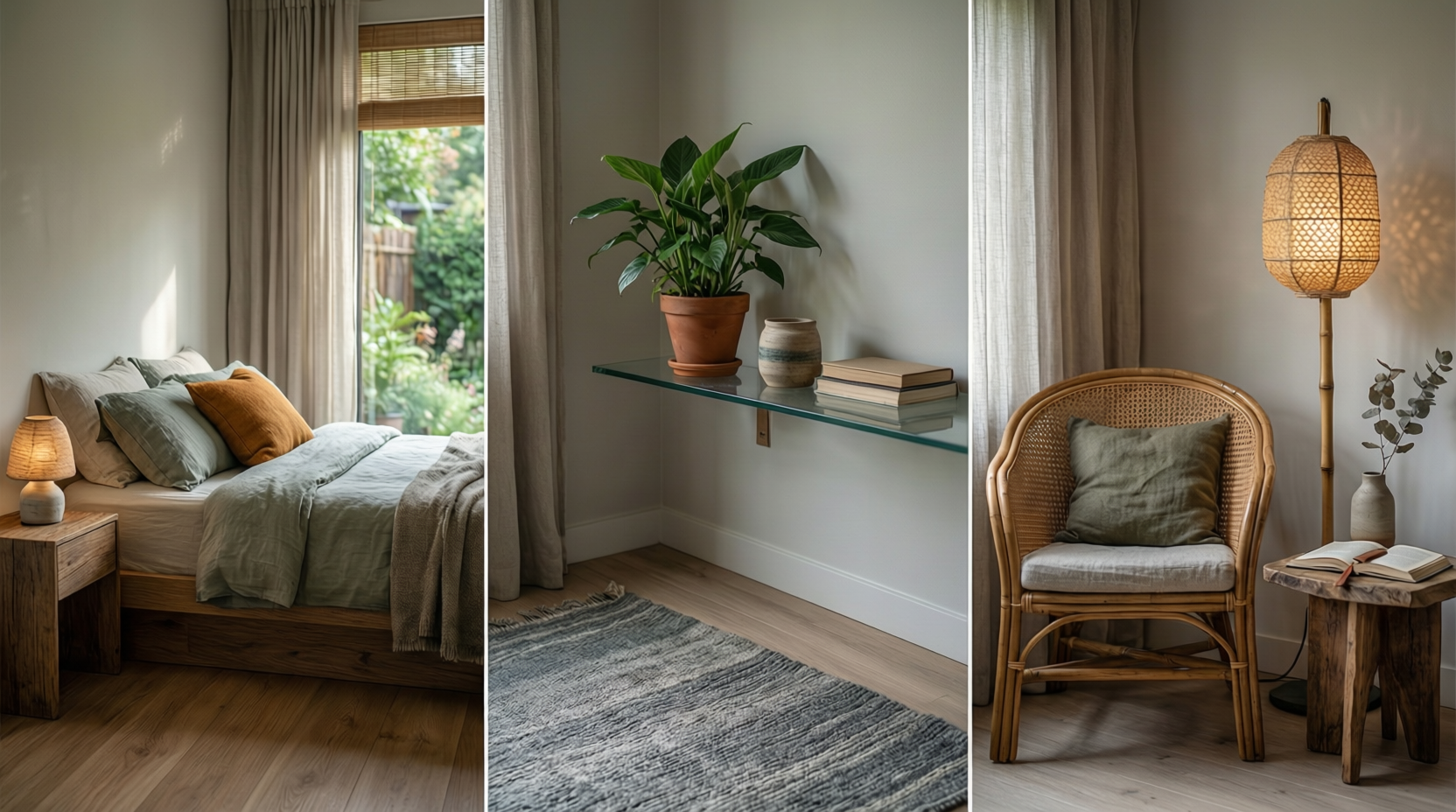
Eco-friendly bedroom decor supports better sleep through healthier materials, calmer colors, and cleaner air.
This guide shares practical eco-friendly bedroom decor tips using non-toxic fabrics, low-VOC finishes, and smart lighting choices that fit real family homes.
Small changes can improve comfort, cut odors, and support better sleep night after night.
9 Eco-Friendly Bedroom Decor Tips for Better Sleep
1. Choose Organic Cotton Bedding Layers
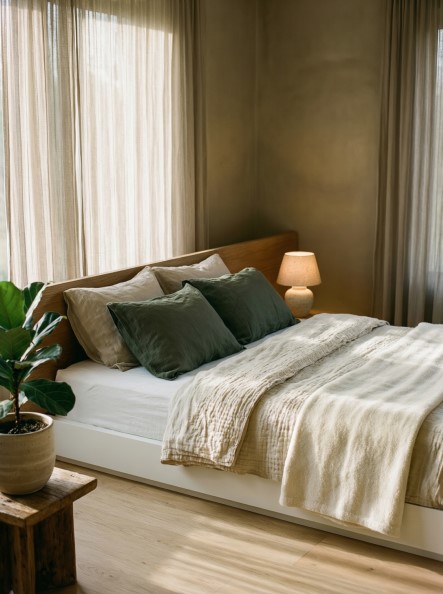
Image by our editorial team
Organic cotton bedding supports better sleep by reducing skin irritation and chemical exposure through breathable, untreated fibers.
Crisp off-white percale sheets layered with a lightweight quilt create a cool surface staying comfortable overnight.
Natural stitching, matte texture, and simple envelope pillowcases keep the bed visually calm while supporting steady body temperature.
2. Select Solid Wood Bed Frames
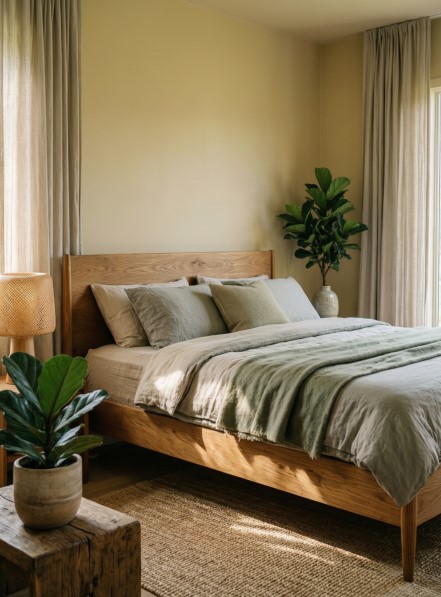
Image by our editorial team
Solid wood bed frames support better sleep by limiting off-gassing from adhesives and composite boards.
A simple oak frame with visible grain, finished in a water-based seal, grounds the room visually.
Exposed joinery, warm honey tones, and a low platform height reduce visual clutter while adding steady, natural weight near the floor.
3. Add Wool Area Rugs Underfoot
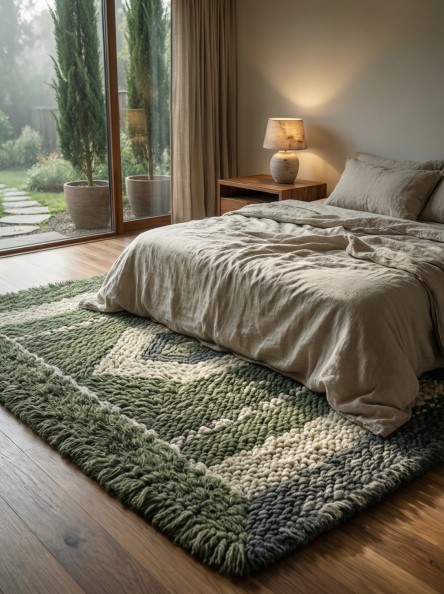
Image by our editorial team
Wool area rugs improve sleep comfort by regulating temperature and softening sound underfoot.
A flatwoven wool rug placed halfway under the bed cushions morning steps.
Cream or oatmeal fibers, tight loops, and a subtle border absorb noise and add warmth without synthetic padding or glossy finishes.
Dense pile construction supports joints and quiet nighttime movement gently.
4. Hang Breathable Linen Window Curtains
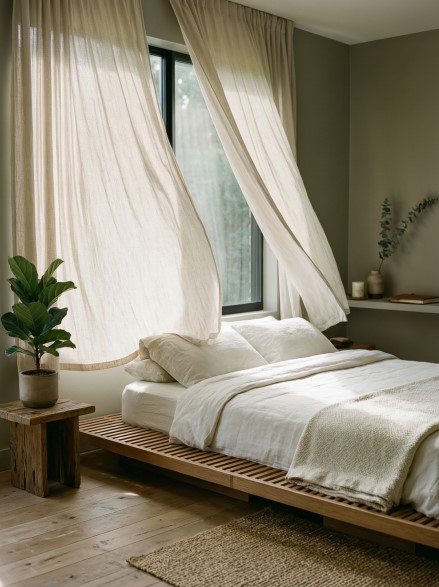
Image by our editorial team
Linen window curtains support better sleep by filtering light softly and improving nighttime airflow.
Floor-length linen panels hung just above the window frame create gentle folds.
Muted sand or pale gray fabric, paired with black metal rods, blocks glare while keeping the room breathable and visually relaxed.
Natural texture diffuses daylight without harsh contrast or plastic coatings.
5. Use Ceramic Lamps With Warm Light
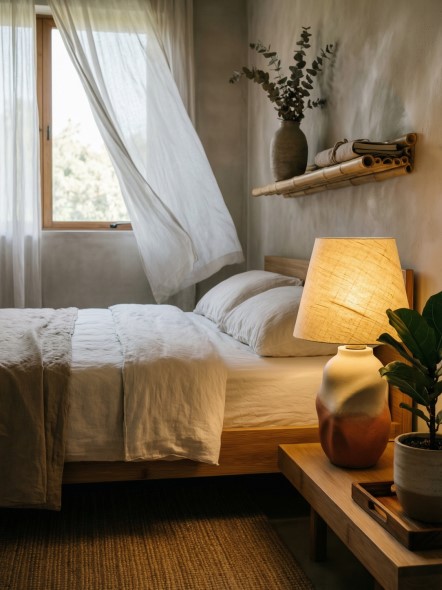
Image by our editorial team
Ceramic bedside lamps encourage better sleep by providing warm, steady evening light without harsh glare.
Hand-thrown clay bases with matte glaze sit low on nightstands.
Linen shades in ivory tones soften illumination, reduce eye strain, and create a clear signal for winding down after sunset.
Rounded forms and earthy finishes keep bedside surfaces calm and grounded.
6. Layer Natural Latex Mattress Toppers
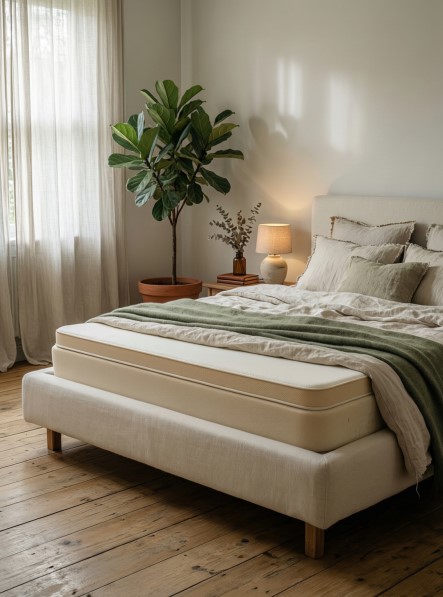
Image by our editorial team
Natural latex mattress toppers improve sleep quality by offering resilient support without petroleum-based foams.
A two-inch latex layer placed beneath cotton sheets adds gentle bounce.
Pin-core texture, pale cream color, and breathable structure help maintain alignment and reduce heat buildup during long nights.
Consistent pressure relief supports relaxed muscles across shoulders and hips evenly.
7. Paint Walls With Mineral Finishes
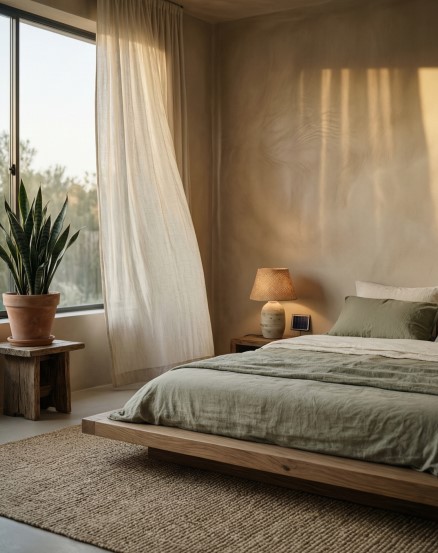
Image by our editorial team
Mineral-based wall paint supports better sleep by minimizing odors and airborne irritants overnight.
Soft sage or warm clay tones brushed across bedroom walls create depth without shine.
Chalky finishes, paired with white ceilings, absorb light gently and maintain a quiet, grounded atmosphere.
Even color coverage reduces visual noise during evening hours and early mornings.
8. Place Calming Low-Maintenance Bedroom Plants
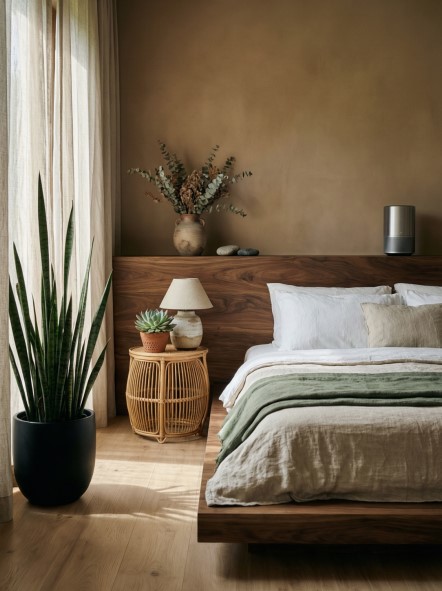
Image by our editorial team
Low-maintenance bedroom plants support better sleep by adding humidity and soft visual focus.
A snake plant placed near a window introduces upright lines and deep green color.
Matte leaves, simple clay pots, and uncluttered placement reduce stimulation while reinforcing a calm nighttime rhythm.
Living greenery balances hard surfaces such as wood and plaster gently.
9. Install Sound-Absorbing Cork Wall Panels
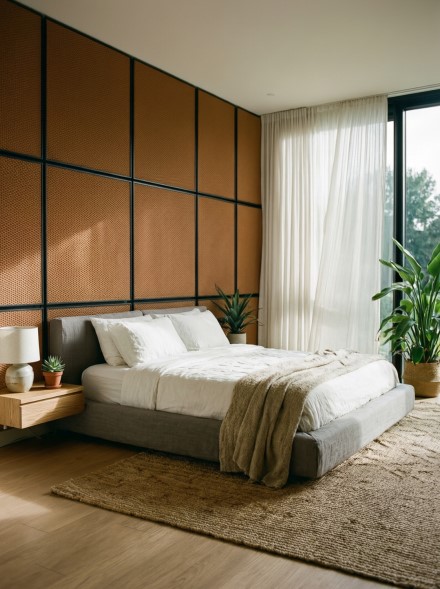
Image by our editorial team
Cork wall panels support better sleep by absorbing sound and softening room acoustics.
Thin cork tiles mounted behind the headboard add texture without bulk.
Warm brown tones, fine granule pattern, and grid layout reduce echo while keeping walls breathable and visually simple.
Renewable bark material brings quiet warmth close to the bed surface.
FAQs
1. Do eco-friendly bedroom materials really affect sleep quality?
Yes, material choices affect sleep quality.
Natural fibers reduce irritation, manage heat, and limit odors during rest hours.
Such conditions support deeper relaxation across long sleep cycles.
2. Which eco-friendly change helps sleep the fastest?
Improved lighting helps sleep the fastest. Warm-toned lamps reduce eye strain and signal evening calm.
Simple shade and bulb changes adjust mood without major room changes.
3. Can eco-friendly decor work in small bedrooms?
Yes, eco-friendly decor works well in small bedrooms.
Compact materials like cork panels, linen curtains, and low-profile wood frames save space.
Thoughtful placement keeps rooms breathable and visually calm.
The wind up
Eco-friendly bedroom choices build comfort through materials, light, sound, and texture that support rest night after night.
The guide 9 Eco-Friendly Bedroom Decor Tips for Better Sleep shows practical ways to shape calmer sleep spaces using honest materials.
Read related posts covering sustainable bedding, lighting habits, and low-impact room finishes.