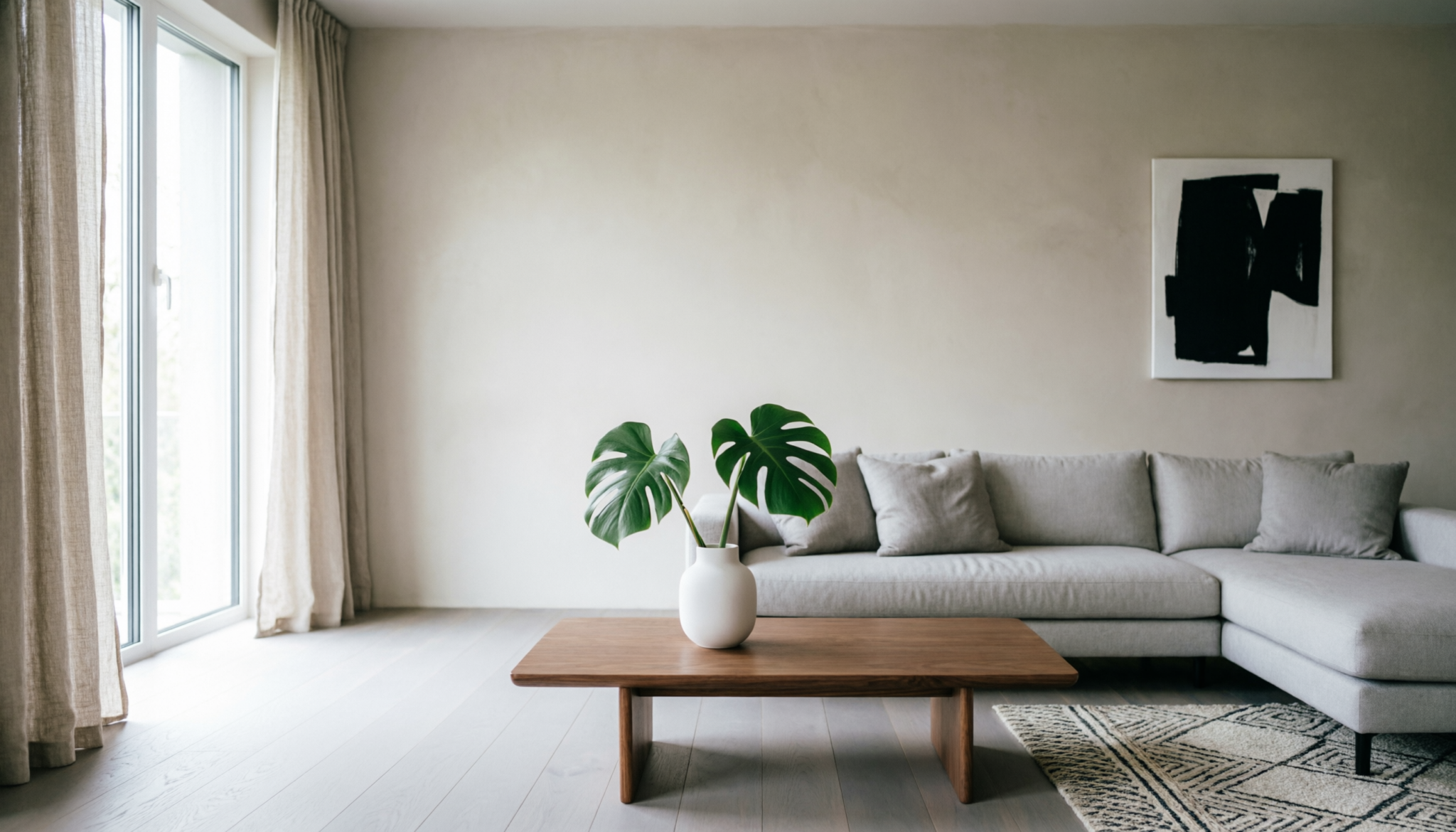
A calm, well-balanced room rarely comes from buying more. It comes from restraint.
Negative space, the empty areas around objects, shapes how a home feels at a glance.
Used well, it reduces visual stress, highlights what matters, and makes everyday spaces easier to maintain and enjoy.
The Short Answer
Negative Space (white space) is the empty area around an object that allows it to “breathe” visually. In home decor, overcrowding every surface leads to “Visual Noise,” which triggers stress.
By intentionally leaving 30% of shelves and walls empty, the remaining items gain clarity, purpose, and a quiet, gallery-like presence.
The 70/30 Rule of Surface Styling
Most clutter problems come from using 100% of available space. Every shelf, corner, and tabletop gets filled simply because it exists.
The fix is simple but uncomfortable at first: use only about 70% of any surface.
That remaining 30% is not wasted space. It is what makes everything else readable.
How this works in real homes:
- A shelf with gaps feels organized even if nothing changes
- A console table with fewer items becomes easier to clean and use
- A nightstand with space left over feels calmer at the end of the day
Where people get it wrong:
- Filling “just one more spot” because it looks empty
- Grouping too many small items instead of fewer, larger ones
- Treating storage and display as the same thing
Practical adjustment:
Remove items until the surface feels slightly underdone. That tension usually signals the right balance.
Why your ‘Blank Walls’ are actually a feature
Empty walls often get labeled as unfinished. In practice, they anchor a room.
A wall without decor gives the eye a place to rest. Without that pause, everything competes for attention.
What blank walls actually do:
- Frame nearby furniture and decor
- Reduce mental fatigue in busy spaces
- Make statement pieces feel intentional instead of crowded
Common mistake:
Hanging multiple small pieces to “fill space.” This creates fragmentation instead of cohesion.
Better approach:
- Use one larger piece instead of several small ones
- Leave clear space around artwork
- Allow at least one wall per room to remain mostly untouched
A room without any empty wall space usually feels smaller, even when square footage says otherwise.
The ‘One-In-One-Out’ Rule for Decorative Accents
Decor builds up quietly. A new vase here, a souvenir there, and soon surfaces feel crowded again.
The simplest way to control that buildup is a strict exchange rule.
How it works:
- Every new decorative item replaces an existing one
- No exceptions for small items
Why this matters:
- Forces a decision about what actually deserves space
- Prevents slow accumulation
- Keeps styling intentional rather than reactive
Reality check:
If removing an item feels difficult, that signals attachment, not necessity. In that case, rotate pieces seasonally instead of displaying everything at once.
The Negative Space Audit
| Surface | The Overcluttered Look | The Negative Space Fix |
|---|---|---|
| Bookshelves | Books packed edge-to-edge. | Leave 1/3 of the shelf for a single vase. |
| Coffee Table | 5 Remotes, 10 Coasters, 3 Books. | One tray, one book, one candle. |
| Kitchen Counter | Toaster, Blender, Spice Rack, Mail. | Clear everything except the daily coffee bar. |
FAQs
1. How much empty space is too much?
If a room starts to feel cold or unfinished, balance may have tipped too far. The goal is clarity, not emptiness. Keep meaningful pieces visible, but avoid filling every gap.
2. Does negative space work in small homes?
Small homes benefit the most. Limited space amplifies clutter quickly. Leaving areas open makes rooms feel larger and easier to move through.
3. What about sentimental items that feel important?
Not everything needs to be displayed at once. Store some items and rotate them. This keeps spaces fresh while still honoring meaningful pieces.
Final Thought
A well-kept home is not defined by how much it holds, but by how clearly it shows what matters. Empty space is not absence. It is structure. It gives every object a reason to exist, and every room a sense of calm that lasts beyond a quick tidy-up.