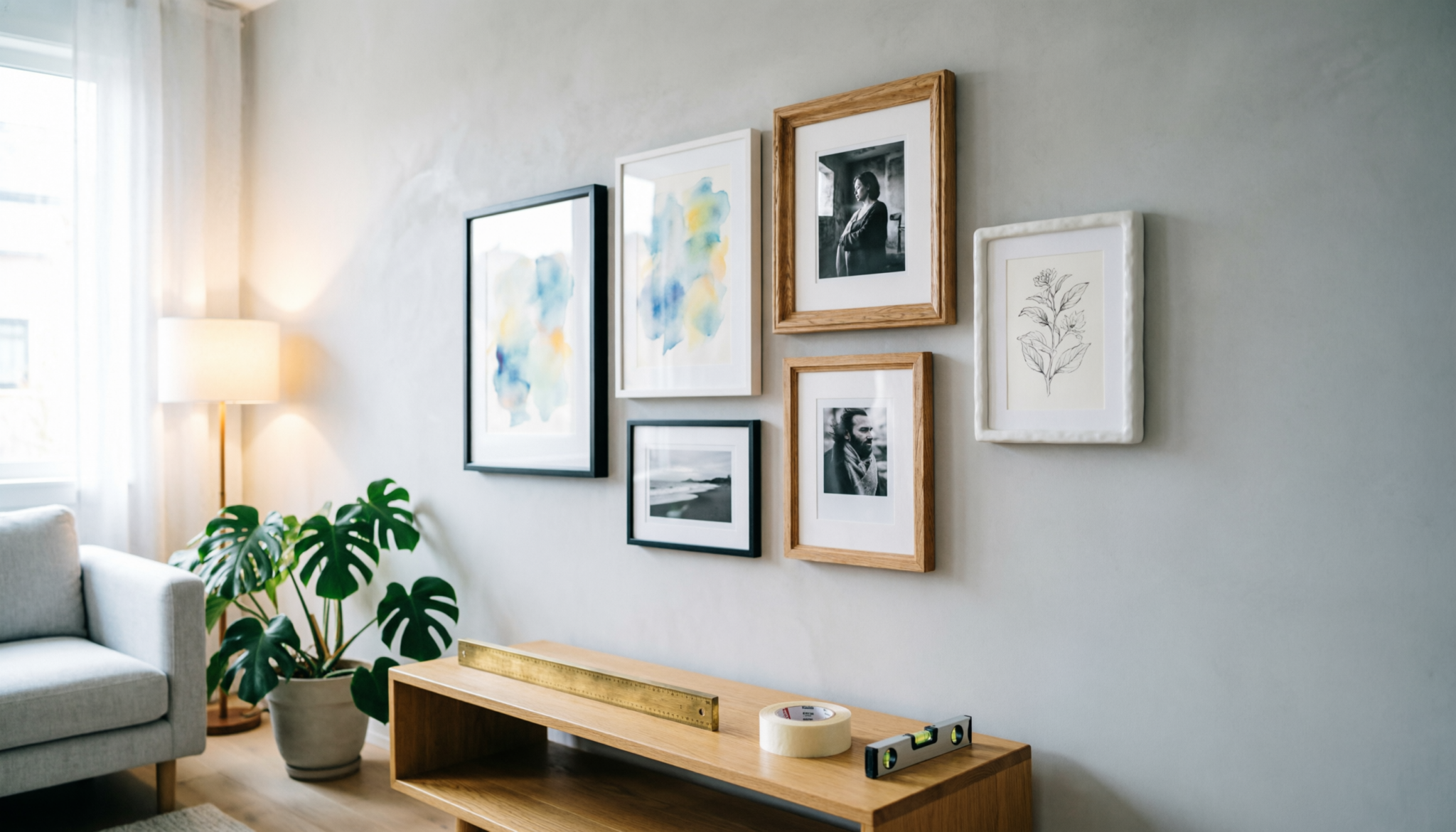
A balanced gallery wall comes down to placement, spacing, and patience, not guesswork.
The paper template method removes pressure by letting layouts happen before any holes go in.
It’s practical, forgiving, and ideal for real homes where walls are rarely perfect and measurements often mislead.
The Short Answer
The easiest way to hang a gallery wall is the Kraft Paper Method. Trace each frame onto brown paper, cut them out, and tape them to the wall using painter’s tape.
This allows you to visualize spacing and adjust the layout without drilling a single hole. Once satisfied, drive your nails directly through the paper templates.
How to Create a Balanced Gallery Wall without Measuring
From Floor Layout to Wall Execution
Start on the floor, not the wall. Lay out all frames in the desired arrangement. This gives a full view without strain and helps avoid awkward spacing later.
Keep edges aligned loosely, not rigidly. Walls shift perception, so a layout that feels slightly uneven on the floor often looks balanced once hung.
Trace each frame onto kraft paper. Label each piece so it matches the correct frame. Cut carefully, but perfection is not necessary.
Tape each template to the wall using painter’s tape. Step back often. Small adjustments make a big difference once everything is mounted.
Use a pencil to mark nail points directly on the paper. This avoids measuring errors. Hammer nails through the paper, then tear it away.
Frames go up exactly where planned, no second-guessing.
Tools that make this easier:
Painter’s tape – holds paper templates in place without damaging paint.
Kraft paper roll – used to trace and test layouts on the wall
Picture hanging strips – good for lightweight frames, no nails needed.
Laser level – keeps rows straight across wide walls.
Picture hanging kit – includes nails, hooks, and anchors for different weights
Why 2–3 inches between frames is the “Designer Standard.”
Tight spacing keeps a gallery wall feeling connected. Wide gaps break the visual flow and make each frame feel isolated.
A gap of 2–3 inches works because it balances breathing room with cohesion.
In smaller spaces, lean closer to 2 inches. Large walls can stretch slightly wider, but consistency matters more than exact distance.
Uneven spacing stands out faster than uneven frames.
Using a laser level vs. the “Two-Nail” method for stability.
A laser level helps keep rows straight, especially across wide walls. It saves time when multiple frames need alignment.
For heavier pieces, the two-nail method adds stability. Two anchor points prevent shifting and keep frames from tilting over time.
Lightweight frames work well with one nail or adhesive strips. Heavier frames need proper anchors.
Skipping this step leads to crooked walls within days, especially in homes with movement or humidity changes.
FAQs
1. Can this method work without kraft paper?
Yes, but accuracy drops. Newspaper or wrapping paper can work, though kraft paper holds shape better and tears less during marking.
2. What if the wall surface is textured?
Painter’s tape may not stick well. Press firmly or use low-tack masking tape. Avoid strong adhesives that can peel paint.
3. How to fix mistakes after hanging?
Small holes are easy to patch with filler and touch-up paint. For minor shifts, adjust frame placement slightly rather than redoing the entire layout.
Final Thought
A gallery wall should feel lived-in, not rigid. The paper template method removes pressure and replaces guesswork with clarity.
Careful planning on the wall saves time, prevents damage, and keeps spacing consistent.
A steady approach always beats rushing through measurements that rarely hold true in real spaces.