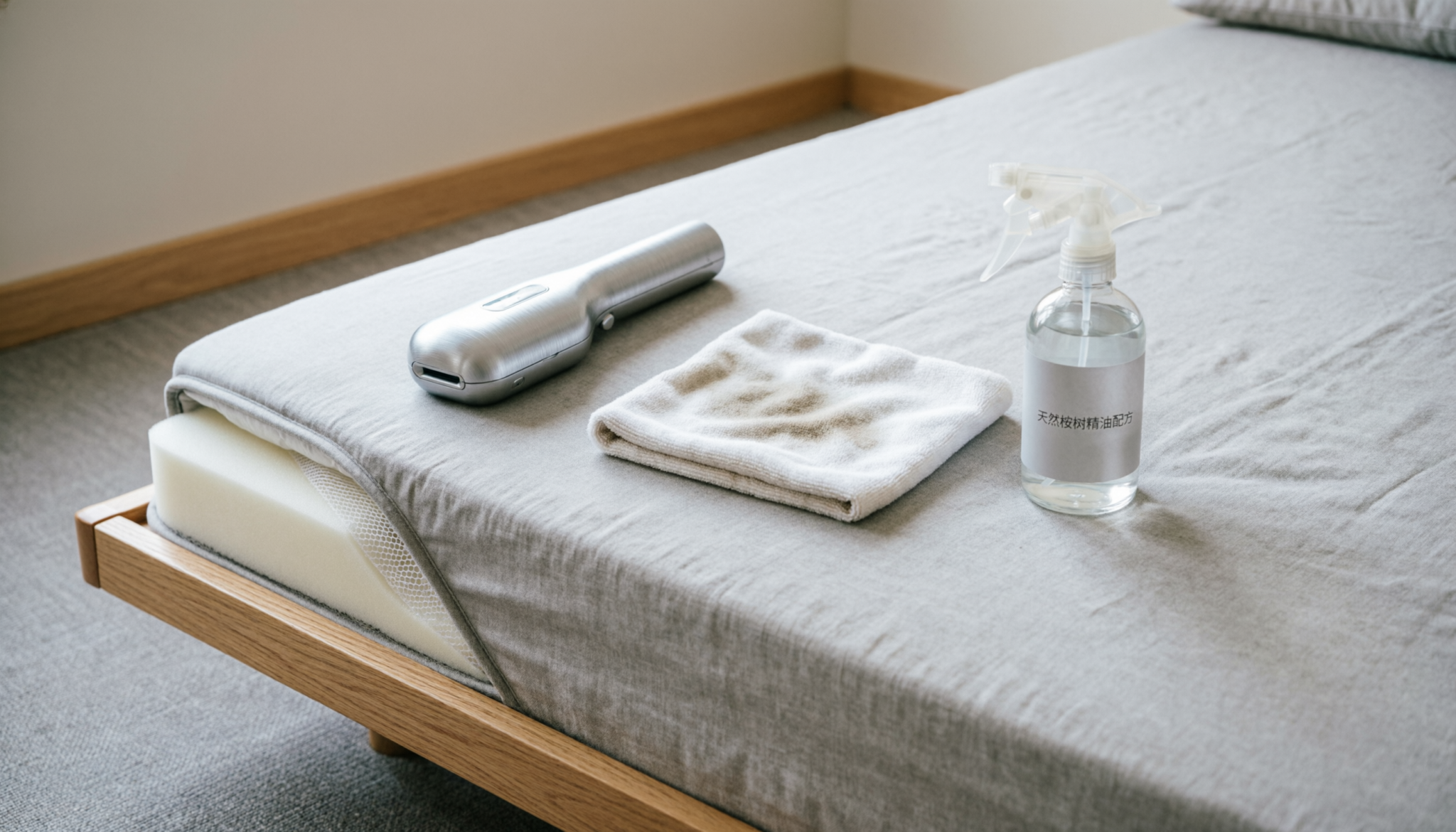
A mattress can hold dust mites, skin cells, and allergens that trigger flare-ups. Proper sanitation requires more than surface cleaning.
This guide lays out a proven five-step HEPA protocol that removes embedded irritants, improves air quality, and restores a healthier sleeping surface without damaging fabric or internal layers.
The Short Answer
To eliminate 99% of allergens, follow a three-stage process:
- De-humidify
- High-frequency agitation
- Sealed-HEPA extraction
A standard vacuum without a sealed HEPA system often blows fine particles back into the air, making symptoms worse instead of better.
How to Sanitize a Mattress After an Allergy Flare-up
Step 1: Strip and Heat-Wash All Bedding (140°F / 60°C Minimum)
Start by removing everything: sheets, pillowcases, protectors, and covers.
Why this matters:
Heat above 140°F kills dust mites and breaks down allergen proteins. Cold or lukewarm water only rinses surface debris.
How to do it right:
- Wash at 60°C or higher
- Use a regular detergent, avoid heavy fragrances
- Dry fully on high heat
Common mistake:
Skipping mattress protectors. These often trap the highest allergen load.
Step 2: Lower Moisture Before Cleaning
Moisture feeds mold and dust mites. A damp mattress traps allergens deeper.
What works:
- Open windows for airflow
- Use a fan or dehumidifier for 30–60 minutes
- Aim for a dry, slightly warm surface before vacuuming
Reality check:
Vacuuming a humid mattress locks allergens into the fibers instead of removing them.
Step 3: High-Frequency Agitation (Loosen What’s Embedded)
Allergens cling to fibers and padding. Agitation breaks that grip.
Effective methods:
- Use a vacuum with a motorized brush roll
- Lightly tap the surface with a clean, flat tool
- Work in small sections
Why this step matters:
Without agitation, even strong suction pulls only surface dust.
Weak approach:
Gliding a vacuum slowly without agitation. That leaves most irritants behind.
Step 4: The Cross-Hatch HEPA Vacuum Method
This is where real removal happens.
Technique:
- Use a sealed HEPA vacuum
- Vacuum in overlapping horizontal lines
- Repeat in vertical lines (cross-hatch pattern)
Why cross-hatching works:
It lifts particles from multiple angles, not just the direction of the pass.
Key detail:
Slow passes matter more than pressure. Speed reduces suction effectiveness.
Step 5: Spot Clean with a pH-Neutral Enzyme Cleaner
Stains and biological residue need targeted treatment.
What to use:
- pH-neutral enzyme cleaner
- Light mist, never soak
Process:
- Apply to stained area
- Blot gently with a clean cloth
- Allow to air dry completely
Why enzymes:
They break down proteins from sweat, skin cells, and spills, which standard cleaners often leave behind.
Risk to avoid:
Over-wetting. Excess liquid seeps into foam layers and creates odor or mold issues.
What Most Cleaning Routines Miss
- No HEPA seal: pushes allergens back into the room
- One-direction vacuuming: leaves deep particles untouched
- Skipping moisture control: encourages regrowth within days
These gaps explain why symptoms return quickly after basic cleaning.
Practical Maintenance Schedule
- Weekly: HEPA vacuum (quick pass)
- Monthly: Full cross-hatch protocol
- After flare-ups: Complete 5-step process
Add a washable mattress protector to reduce buildup between deep cleans.
Bottom Line
A mattress does not need replacement after an allergy flare-up. It needs a structured cleaning approach.
Dry conditions, proper agitation, and sealed HEPA extraction make the difference between temporary relief and lasting results.
Skip any one step, and allergens stay behind.