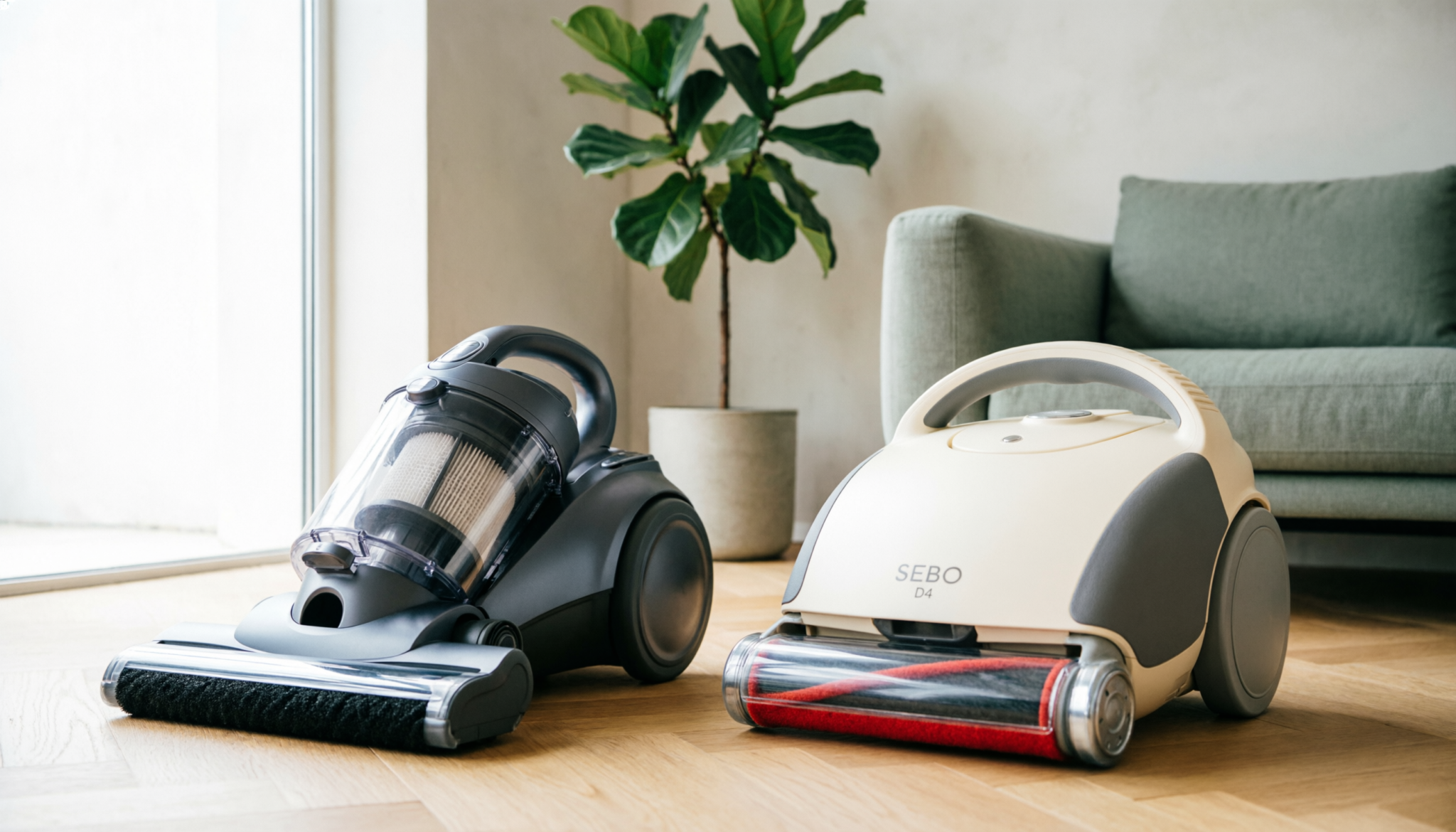
The Miele C3 vs Sebo D4 question often comes down to one thing: which vacuum handles high pile carpet better.
Thick carpet needs strong suction, steady airflow, and a brush that can dig deep without bogging down.
This guide compares how the Miele C3 and Sebo D4 perform on real high pile carpet.
Miele C3 vs Sebo D4: High-Pile Carpet Winner?
High-pile carpets expose weaknesses in many vacuums.
Thick fibers trap dust, pet hair, and grit deep below the surface.
When comparing the Miele Complete C3 and the Sebo Airbelt D4, the real question is simple: which one actually pulls debris out of dense carpet without turning vacuuming into a workout?
Don’t have time to read? Winner for High-Pile Carpet: Sebo Airbelt D4.
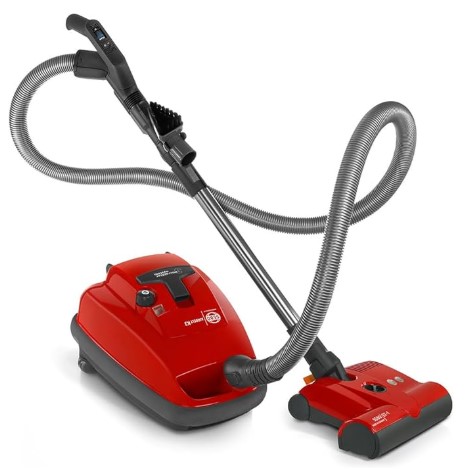
Its larger motor airflow, wide power head, and commercial-grade durability make it the stronger choice for thick carpeting.
Quick Comparison: Miele C3 vs Sebo D4
| Feature | Miele Complete C3 | Sebo Airbelt D4 |
|---|---|---|
| Price | Premium | Premium |
| Bag Capacity | 4.5 L | 6 L |
| Suction Power | ~1200W motor | ~1250W motor |
| Weight | ~12 lbs | ~15.9 lbs |
Note: Both brands prioritize airflow and sealed filtration rather than marketing “air watts,” so real-world performance depends more on their power heads and airflow design.
Is the Sebo D4 Too Big for a Typical Home?
The “Overkill” Question
The Sebo D4 is physically larger than the Miele C3. Its canister holds a 6-liter bag, one of the biggest in residential vacuums.
The upside is fewer bag changes and stronger airflow through thick carpet.
The downside appears in tight spaces.
The ruthless truth:
A bigger canister means more bulk when navigating small rooms.
If your home has narrow hallways, tight corners, or lots of furniture legs, the D4 can feel cumbersome compared to the slimmer C3.
But here’s the trade-off.
If your house has wall-to-wall plush carpeting, the larger airflow system and wider cleaning path start to make sense.
1. Suction Power vs Maneuverability
Sebo D4 Power vs Miele C3 Control
Both vacuums use high-quality motors and sealed filtration systems.
The difference is how they deliver power.
The Sebo D4 focuses on airflow volume. Its ET-1 power head digs aggressively into thick pile carpet and keeps airflow strong even when the bag fills.
The Miele C3, especially models with the SEB 228 or SEB 236 power head, emphasizes precision and maneuverability.
Here’s the honest question most buyers should ask:
Do you need maximum airflow or maximum control?
If your home has dense carpets that swallow debris, the Sebo D4’s airflow advantage shows up quickly.
If your rooms are tighter with mixed flooring, the C3 often feels easier to handle.
2. The Brushroll Battle: Which Cleans Deepest?
ET-1 vs SEB Power Heads
This is where the real competition happens.
Sebo ET-1 Power Head
- Adjustable height for thick carpet
- Extremely durable commercial design
- Easy brushroll removal
Miele SEB 228 / SEB 236
- Excellent edge cleaning
- Smooth pivot steering
- Strong agitation for medium to thick carpets
Reality check:
On very plush carpet, the Sebo ET-1 often wins because its height adjustment prevents the head from bogging down.
That single feature makes a huge difference on shag or deep pile rugs.
3. Bag Capacity Reality Check
4.5 L vs 6 L: Does It Matter?
Bag capacity affects maintenance more than cleaning power.
The Miele C3 bag holds about 4.5 liters.
The Sebo D4 bag holds 6 liters, roughly one-third larger.
In practice:
- A C3 bag may last 4–6 weeks in a busy home.
- A D4 bag can stretch 6–8 weeks or more.
The difference is convenience, not performance.
But larger bags also help maintain airflow longer, which benefits deep carpet cleaning.
4. Pros and Cons: Expert Comparison
Miele Complete C3
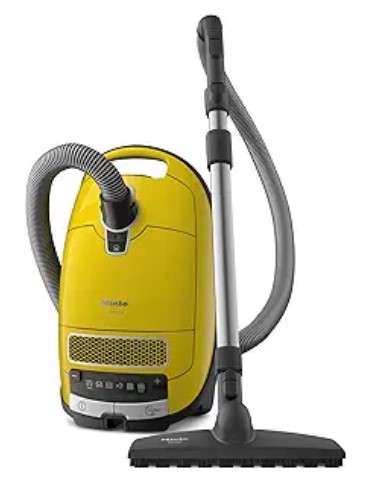
Pros
- Easier to maneuver in smaller rooms
- Extremely quiet operation
- Compact storage footprint
- Excellent sealed filtration
Cons
- Smaller bag capacity
- Power head height adjustment is limited
- Not quite as aggressive on deep plush carpet
Sebo Airbelt D4
Pros
- Massive airflow for deep carpet cleaning
- Large 6-liter bag capacity
- Durable commercial-grade components
- Adjustable brush height for thick carpets
Cons
- Heavier canister
- Bulkier for tight spaces
- Higher upfront price
5. Maintenance & Longevity
Which Vacuum Holds Up Longer?
Both brands have reputations for long lifespans, often 15–20 years with proper care.
But they approach durability differently.
Miele
- Highly refined engineering
- Excellent filtration system
- Parts availability is strong
Sebo
- Built like commercial equipment
- Brushrolls remove easily for cleaning
- Belts last significantly longer than most vacuums
One practical detail many owners appreciate: Sebo brushrolls can be removed without tools, making maintenance far easier.
Final Verdict: The High-Pile Carpet Winner
The Expert’s Choice
If your home has thick plush carpets, the Sebo Airbelt D4 usually performs better.
Its stronger airflow, adjustable power head, and large bag capacity are designed for exactly that environment.
The Miele C3 remains an excellent vacuum, especially for mixed flooring or smaller homes.
But when the goal is pulling debris out of dense carpet fibers, the Sebo D4 has the edge.
People Also Ask
1. Is Sebo better than Miele for carpet?
Sebo often performs better on very thick carpet because its power heads include adjustable height settings that prevent the brushroll from digging too deeply into plush fibers.
2. Does the Sebo D4 work on hardwood floors?
Yes. Switching to the parquet floor tool allows the D4 to clean delicate hard floors without scratching.
3. Which vacuum lasts longer, Miele or Sebo?
Both brands regularly last 15 years or more. Sebo models tend to be easier to repair, while Miele models focus on refined engineering and quieter operation.