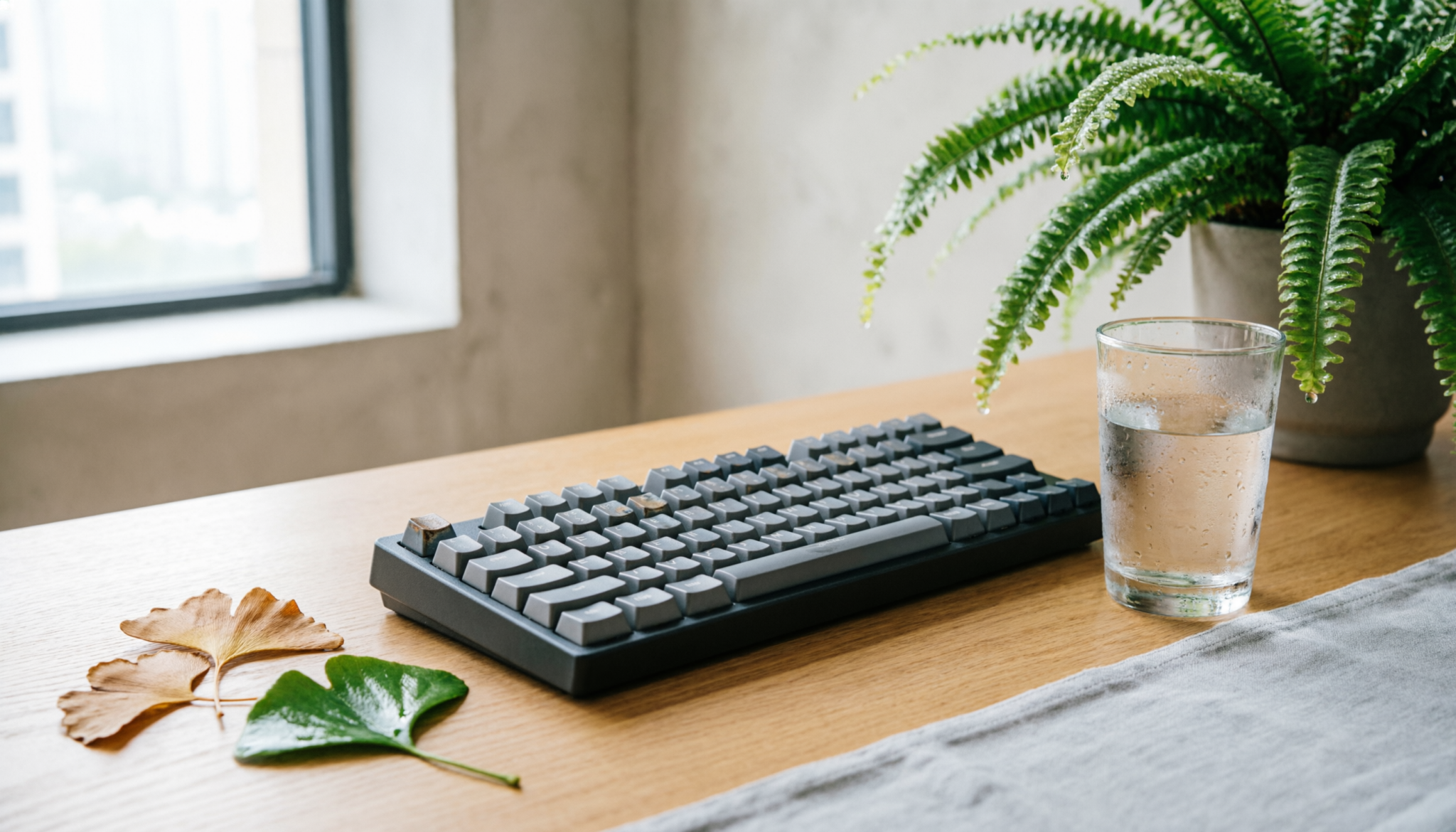
Dry indoor air changes far more than skin texture. Low humidity increases static electricity, accelerates moisture loss from joints and tendons, and stiffens connective tissue around fingers and wrists.
Long typing sessions inside overheated or air-conditioned rooms often amplify discomfort, reduce finger mobility, and increase repetitive strain symptoms across keyboards, mice, and touchpads.
Spatial Logic Summary
Maintain indoor humidity between 40% and 50% for extended typing sessions. Relative humidity below 30% increases skin dehydration, fingertip friction, and joint stiffness.Position humidifiers 3 to 6 feet from workstations to prevent condensation on electronics while stabilizing tendon flexibility and finger comfort during repetitive keyboard use.
Comparison Table
| Species | Light Tolerance | Humidity Requirement | Maintenance Level |
|---|---|---|---|
| Snake Plant | Low to bright indirect light | Moderate, 40% to 50% | Low |
| Boston Fern | Medium indirect light | High, 50% to 60% | Moderate |
| Areca Palm | Bright filtered light | Moderate to high, 45% to 55% | Moderate |
How Dry Air Affects Finger Joints During Typing
Typing requires rapid tendon movement across small joints inside fingers, wrists, and forearms. Dry indoor environments reduce moisture retention around skin and connective tissue.
Friction increases during repeated keystrokes. Finger stiffness often appears first during morning work sessions or after prolonged air-conditioner exposure.
Relative humidity below 30% creates several mechanical problems:
- Fingertips lose elasticity
- Skin cracks increase pressure sensitivity
- Tendons glide less efficiently
- Static buildup affects keyboard comfort
- Wrist joints stiffen during repetitive movement
Modern workspaces worsen these conditions. Sealed windows, central heating systems, and aggressive cooling cycles remove moisture from indoor air continuously.
Mechanical keyboards with higher actuation force intensify strain when finger joints already operate under dehydrated conditions.
Joint discomfort from typing rarely begins with severe pain. Early symptoms usually include:
- Mild finger stiffness
- Thumb tightness
- Reduced typing speed
- Tingling near knuckles
- Warm sensation around wrist tendons
- Hand fatigue after short sessions
Low humidity also thickens nasal passages and dries eye surfaces. Physical stress compounds across multiple systems.
Poor posture often follows because uncomfortable hands force awkward keyboard angles and wrist compensation.
Ideal Humidity Range for Productive Typing Environments
Indoor humidity affects biomechanics as much as ergonomics. Office furniture alone cannot compensate for dehydrated air.
The optimal humidity range for typing environments sits between 40% and 50% relative humidity. This range supports:
- Stable skin hydration
- Reduced static discharge
- Flexible connective tissue
- Comfortable respiratory function
- Lower keyboard friction
Humidity above 60% creates separate problems. Excess moisture encourages mold growth, dust mite activity, and electronic condensation. Balance matters more than maximum moisture output.
Digital hygrometers provide accurate readings within seconds. Placement matters significantly. Readings near windows or HVAC vents often misrepresent actual workstation humidity.
Several room conditions rapidly lower humidity:
| Environmental Factor | Humidity Impact | Typing Effect |
|---|---|---|
| Central heating | Severe moisture reduction | Finger stiffness |
| Continuous air conditioning | Moderate drying | Wrist fatigue |
| Poor ventilation | Uneven humidity pockets | Inconsistent comfort |
| Winter weather | Extreme dryness | Joint irritation |
| Large monitors with heat output | Localized drying | Hand dehydration |
Small offices and home workstations benefit from targeted humidity control rather than whole-house saturation.
Ultrasonic humidifiers work efficiently for desk zones because moisture disperses evenly without excessive heat.
Filtered or distilled water reduces mineral residue around keyboards and monitor surfaces. Hard water creates white dust accumulation that damages electronics over time.
Ergonomic Adjustments That Reduce Dry-Air Typing Strain
Humidity correction works best alongside physical workstation improvements. Air quality alone cannot overcome poor typing mechanics.
Keyboard height should keep elbows near 90 degrees. Elevated shoulders increase tension through wrists and finger joints.
Wrist extension compresses tendons and magnifies discomfort caused by dry connective tissue.
Important workstation corrections include:
- Maintain neutral wrist alignment
- Keep keyboards flat or slightly negative-tilted
- Use low-force keyboard switches
- Position monitors at eye level
- Maintain shoulder relaxation
- Alternate typing and mouse tasks every 30 minutes
Mechanical keyboards vary substantially in finger impact force.
Heavy tactile switches increase strain during dry conditions because joints absorb greater repetitive pressure.
Split ergonomic keyboards reduce ulnar deviation and improve forearm alignment. Reduced tendon tension helps compensate for moisture loss inside connective tissue.
Desk materials also influence comfort. Glass and metal surfaces increase perceived coldness and dryness around hands.
Natural wood surfaces maintain more stable thermal comfort during long sessions.
Expert’s Tip: Humidity Placement Around Electronics
Place humidifiers beside desks rather than directly behind monitors or keyboards. Direct moisture streams create condensation pockets inside switches and USB ports.
Maintain at least 36 inches of separation between humidifier output and primary electronics to stabilize air moisture without damaging internal circuitry.
Plants That Improve Workspace Humidity Naturally
Indoor plants support localized humidity through transpiration. Moisture released from leaves slightly stabilizes surrounding air conditions, especially inside compact workspaces.
Plant-assisted humidity works best when combined with proper ventilation and controlled humidifier use.
Single plants rarely raise room humidity dramatically, but clustered foliage creates measurable microclimate improvements around desks.
Several species perform particularly well near typing stations.
Snake Plant
Snake plants tolerate low light and irregular maintenance schedules. Thick leaves release moderate moisture slowly throughout the day. Upright growth also minimizes desk clutter.
Boston Fern
Boston ferns require higher humidity but actively contribute moisture through dense foliage. Placement near windows with filtered light improves long-term performance.
Areca Palm
Areca palms release significant moisture compared with many indoor species. Broad leaf surfaces improve surrounding comfort while softening dry HVAC airflow near desks.
Plant placement rules matter:
- Avoid blocking air circulation
- Prevent leaf contact with electronics
- Use trays to control water runoff
- Maintain indirect light exposure
- Rotate plants monthly for balanced growth
Overwatered plants create fungus gnat problems and unstable humidity spikes. Controlled moisture remains more effective than excessive watering.
Seasonal Humidity Shifts and Typing Performance
Winter creates the harshest typing conditions. Indoor heating systems reduce humidity dramatically once temperatures fall. Relative humidity inside heated rooms frequently drops below 20%.
Hands lose moisture faster during winter because cold outdoor air already contains limited water vapor before heating begins indoors.
Summer presents different risks. Air conditioners remove moisture continuously while cooling interior spaces.
Extended exposure causes gradual tendon stiffness even when temperatures feel comfortable.
Seasonal adjustment strategies improve consistency:
Winter Protocol
- Use humidifiers daily
- Monitor humidity twice per day
- Apply hand moisturizer before typing
- Reduce direct heater exposure
Summer Protocol
- Avoid excessive AC output
- Maintain ventilation balance
- Prevent overcooling work areas
- Use ceiling fans carefully to avoid skin drying
Portable hygrometers provide immediate environmental feedback and help identify problem zones near vents, windows, or heat sources.
FAQs
1. What humidity level feels best for typing comfort?
Most typing environments perform best between 40% and 50% relative humidity. This range supports skin hydration, tendon flexibility, and reduced finger stiffness without increasing mold risk.
2. Can dry air worsen repetitive strain symptoms?
Yes. Dry air increases tissue friction and reduces skin elasticity. Repetitive keyboard movement under dehydrated conditions can intensify wrist fatigue, tendon irritation, and finger discomfort.
3. Do humidifiers damage computer equipment?
Improper placement causes problems. Humidifiers positioned too close to keyboards or monitors may create condensation.
Maintain a minimum distance of 3 feet and avoid direct mist exposure toward electronics.
Final Take
Typing discomfort often originates from environmental conditions rather than keyboards alone. Dry indoor air stiffens connective tissue, increases fingertip friction, and magnifies repetitive strain across wrists and fingers.
Stable humidity between 40% and 50%, combined with ergonomic workstation design and controlled airflow, creates measurable improvements in comfort, endurance, and long-term typing performance.