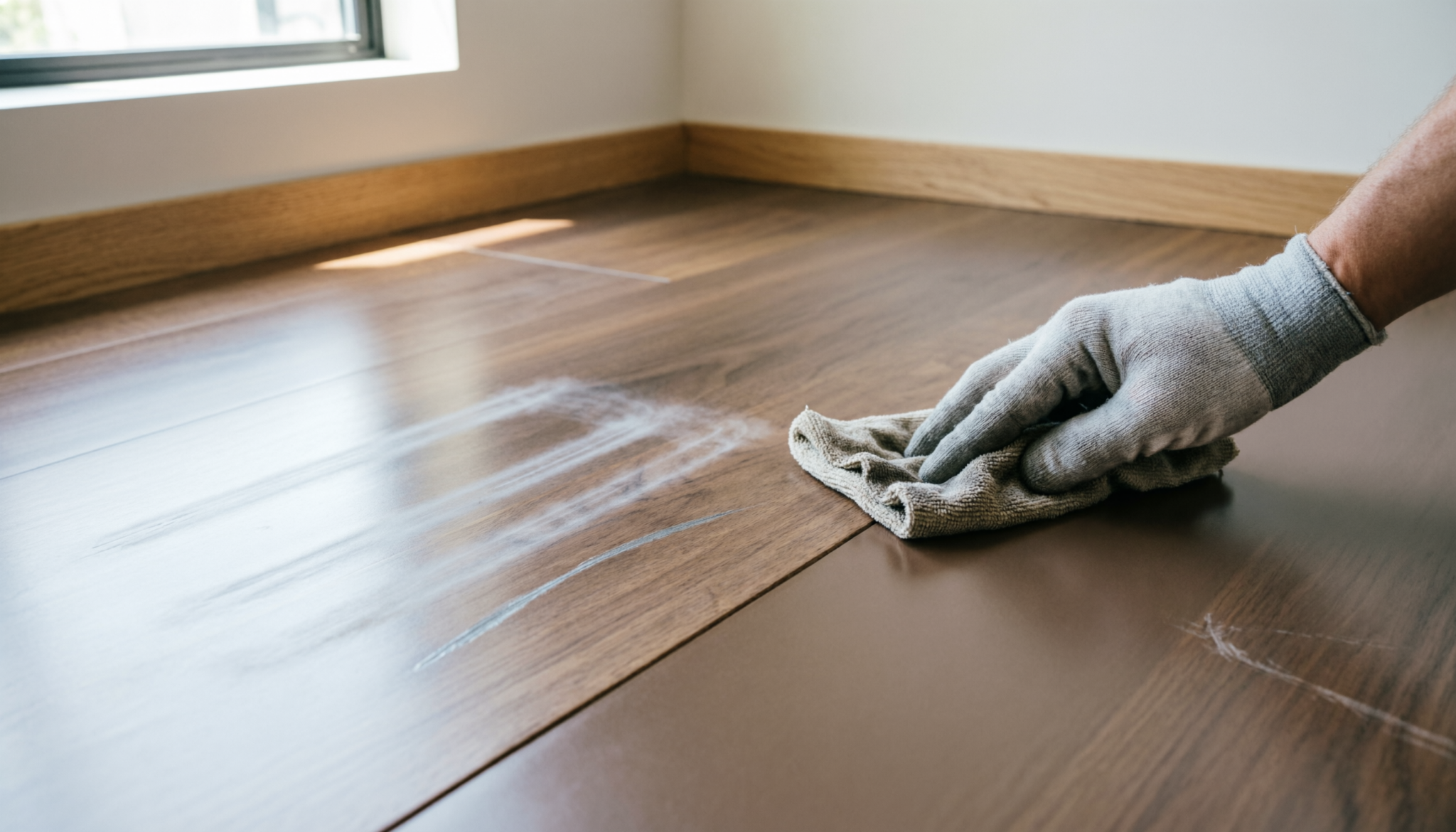
Polyurethane floors take a beating from daily vacuuming, especially from hard wheels and trapped grit.
Those dull streaks and faint lines may look the same at first glance, but they are not.
Fixing them correctly depends on knowing exactly what caused the mark and how deep it goes.
The Short Answer
The Critical Distinction:
Scuff marks are additions sitting on the surface, often rubber or plastic from vacuum wheels. These lift off with friction or a mild cleaner.
Micro-scratches are subtractions, meaning the finish is damaged. These need polishing or a controlled touch-up.
Non-negotiable rule: Wax and oil-based polishes sabotage future repairs by blocking proper adhesion.
Scuffs vs. Scratches: The Light-Angle Diagnostic
The Raking Light Test
Shine a flashlight low across the floor, almost parallel to the surface.
- A scuff looks like a flat smear with no depth.
- A scratch shows a shadow or edge because light catches the groove.
This single step prevents wasted effort using the wrong fix.
The Nail Test
Run a fingernail lightly across the mark.
- No resistance: surface scuff.
- Nail catches: topcoat damage.
If the nail drops into the line, it is no longer cosmetic cleaning. It is repair work.
Removing Vacuum Scuffs and Scratches from Polyurethane
Phase 1: The Scuff-Removal Protocol (The “Additive” Marks)
The Tennis Ball Hack
A standard tennis ball works because of its slightly abrasive felt. Press and rub over the scuff using steady pressure. The friction lifts rubber without stripping the finish.
This works especially well on vacuum wheel marks.
Baking Soda Paste
For stubborn residue, mix baking soda and water at a 3:1 ratio.
- Apply gently with a soft cloth
- Rub in small circles
- Wipe clean immediately
Baking soda cuts through plastic transfer without scratching when used lightly.
The Microfiber Wipe
Use a high-density microfiber cloth only. Cheap cloths drag grit and create new scratches.
Light pressure, straight-line wiping, and frequent rinsing prevent damage during cleaning.
Phase 2: Repairing Micro-Scratches (The “Subtractive” Damage)
Step 1: The #0000 Steel Wool Buff
Ultra-fine steel wool softens the edges of a light scratch.
- Rub with the grain, never across it
- Keep pressure controlled
- Focus only on the damaged line
This blends the scratch into the surrounding finish instead of widening it.
Step 2: Sheen Matching
Polyurethane comes in different sheens:
- Satin: low reflection, most forgiving
- Semi-gloss: moderate shine
- High-gloss: very reflective, shows every flaw
Using the wrong sheen creates a visible patch that looks wet or uneven. Always match the existing finish.
Step 3: The Precision Poly Fill
Apply a tiny amount of wipe-on polyurethane using a cotton swab.
- Fill only the scratch
- Do not spread beyond the line
- Allow proper drying before assessing
The goal is to eliminate the white line by restoring clarity, not building a thick layer.
The Refinishing Trap: When DIY Fails
If a mark appears grey or black, the problem has gone deeper than the finish. Moisture has reached the wood itself.
At this stage, surface fixes will fail. The only reliable solution is sanding the affected area or replacing the board entirely.
The Restoration Toolkit
| Type of Mark | Damage Level | Required Tool | Restoration Agent |
|---|---|---|---|
| Rubber Scuff | Surface only | Tennis Ball | Dry friction |
| White Line | Topcoat only | #0000 Steel Wool | Sheen-matched poly |
| Grey/Black Mark | Deep wood | Sandpaper (220 grit) | Professional refinish |
| Sticky Residue | Residue | Microfiber cloth | pH-neutral cleaner |
Prevention: Stop Fixing the Same Problem Twice
Most scuffs and micro-scratches trace back to one issue: hard plastic wheels grinding dirt into the floor. That turns every cleaning session into low-grade sanding.
Two practical fixes:
- Clean vacuum wheels weekly
- Upgrade to models with rubberized or felt-lined wheels
Pair that with a proper pH-neutral cleaner, and surface damage drops sharply.
Final Word
Scuffs wipe off. Scratches demand repair. Mixing those up wastes time and often makes the floor worse.
The real win is not better repair techniques. It is reducing the damage in the first place.
Clean wheels, soft contact points, and controlled cleaning habits keep polyurethane floors looking consistent for years.