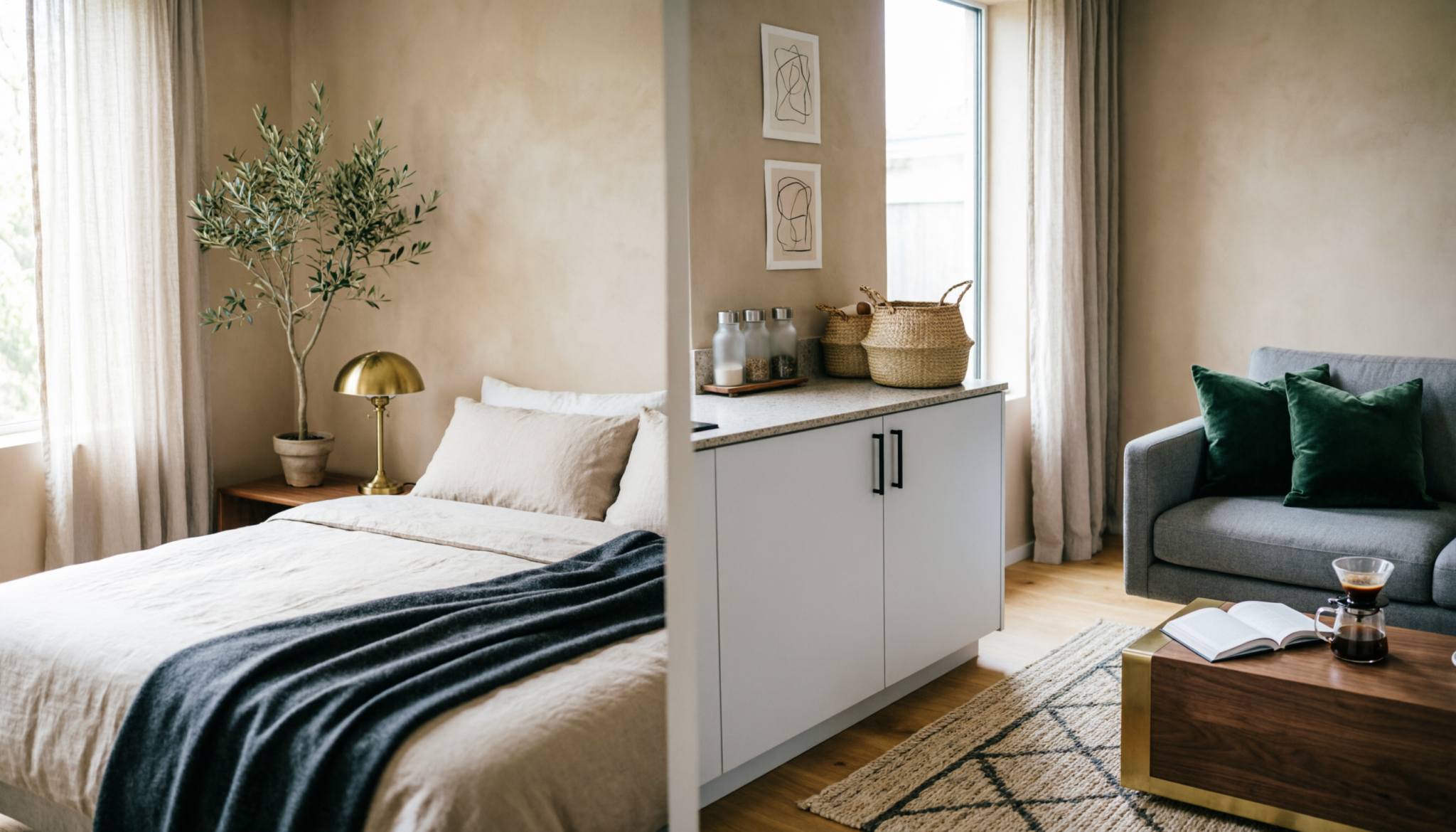
Quiet luxury in a home is not about price tags. It is about restraint, material choice, and how a space feels day to day.
A calm room with fewer, better things often reads richer than one filled with trendy pieces. Small, deliberate changes create that effect without overspending.
The Short Answer
Quiet Luxury in home decor is defined by understated quality. It avoids loud patterns and obvious branding, and instead leans on neutral tones, solid materials, and clean lines.
The focus shifts to texture, proportion, and order. Removing visual clutter and choosing natural finishes creates a space that feels calm, grounded, and quietly refined.
The Quiet Luxury Cheat Sheet
| Instead of This (Trendy/Cheap) | Choose This (Quiet Luxury) | Why? |
|---|---|---|
| Plastic Storage Bins | Woven or Linen Baskets | Adds natural texture. |
| High-Gloss “Gold” | Brushed Brass / Bronze | Looks like authentic metal. |
| Synthetic Fleece Throws | Chunky Knit or Wool | Suggests craftsmanship. |
The 5 Pillars of Quiet Luxury
1. Neutral Color Palettes (Cream, Taupe, Sage)
Color sets the tone before anything else. Loud contrast breaks the effect. Soft, layered neutrals feel settled and intentional.
How to do it on a budget:
- Stick to one main tone and vary shades
- Use paint for the biggest impact per cost
- Swap bright cushion covers for muted ones instead of buying new furniture
Common mistake: Mixing too many “safe” colors without contrast. Even quiet rooms need depth. Add one darker tone like charcoal or deep olive.
2. Tactile Textures (Velvet, Wool, Stone)
Flat surfaces feel cheap, even when new. Texture adds weight and interest without noise.
Budget-friendly swaps:
- Cotton throws → chunky knit or wool blends
- Smooth cushions → ribbed, woven, or lightly textured fabrics
- Plastic trays → wood or stone-look finishes
Reality check: Cheap velvet often looks shiny and thin. A well-made cotton with texture can look better than low-grade velvet.
3. High-Quality Lighting (No Plastic Shades)
Lighting is where many homes lose the look. Harsh light and plastic fixtures flatten everything.
Simple upgrades:
- Warm bulbs instead of cool white
- Fabric or glass shades over plastic
- One statement lamp instead of multiple weak ones
Watch out: Bright light is not the goal. Soft, layered lighting creates depth and calm.
4. Hidden Technology (Cables Out of Sight)
Visible wires and clutter instantly cheapen a room. Clean lines matter more than expensive furniture.
Fix it fast:
- Use cable clips or sleeves
- Store routers and boxes in baskets
- Mount power strips behind furniture
Hard truth: Even a high-end room looks messy with tangled cables. This step costs little but changes everything.
5. Intentional Furniture Placement
Spacing matters as much as the furniture itself. Overcrowding makes a space feel smaller and less considered.
Practical approach:
- Pull furniture slightly away from walls
- Leave breathing room between pieces
- Remove one item per room if it feels tight
Mistake to avoid: Filling every corner. Empty space signals confidence and control.
The “Stealth Wealth” Checklist: What to Remove Immediately
Start here before buying anything new:
- Overfilled shelves and surfaces
- Bright plastic storage in visible areas
- Peeling faux finishes (fake gold, fake marble)
- Thin, worn-out rugs
- Mismatched hardware (handles, knobs, fixtures)
Rule: If an item looks mass-produced or worn out, it pulls the whole room down.
FAQs
1. Can quiet luxury work in a small apartment?
Yes. Smaller spaces benefit the most. Fewer items, better spacing, and soft colors make a room feel larger and more settled. Scale matters more than size. Avoid bulky furniture and keep sightlines clear.
2. Does everything need to match?
No. Matching sets often look flat and store-bought. A mix of tones and materials works better, as long as the color palette stays controlled. Consistency in mood matters more than identical pieces.
3. What is the fastest upgrade with the biggest impact?
Lighting and clutter control. Warm bulbs, better lamp shades, and cleared surfaces can shift the entire feel of a room in a single afternoon.
Final Thought
Quiet luxury is less about buying and more about editing. A calm, well-ordered space with thoughtful materials always feels richer than a crowded room full of trends.
Focus on what stays, not what gets added. The result is a home that feels steady, comfortable, and quietly confident every single day.