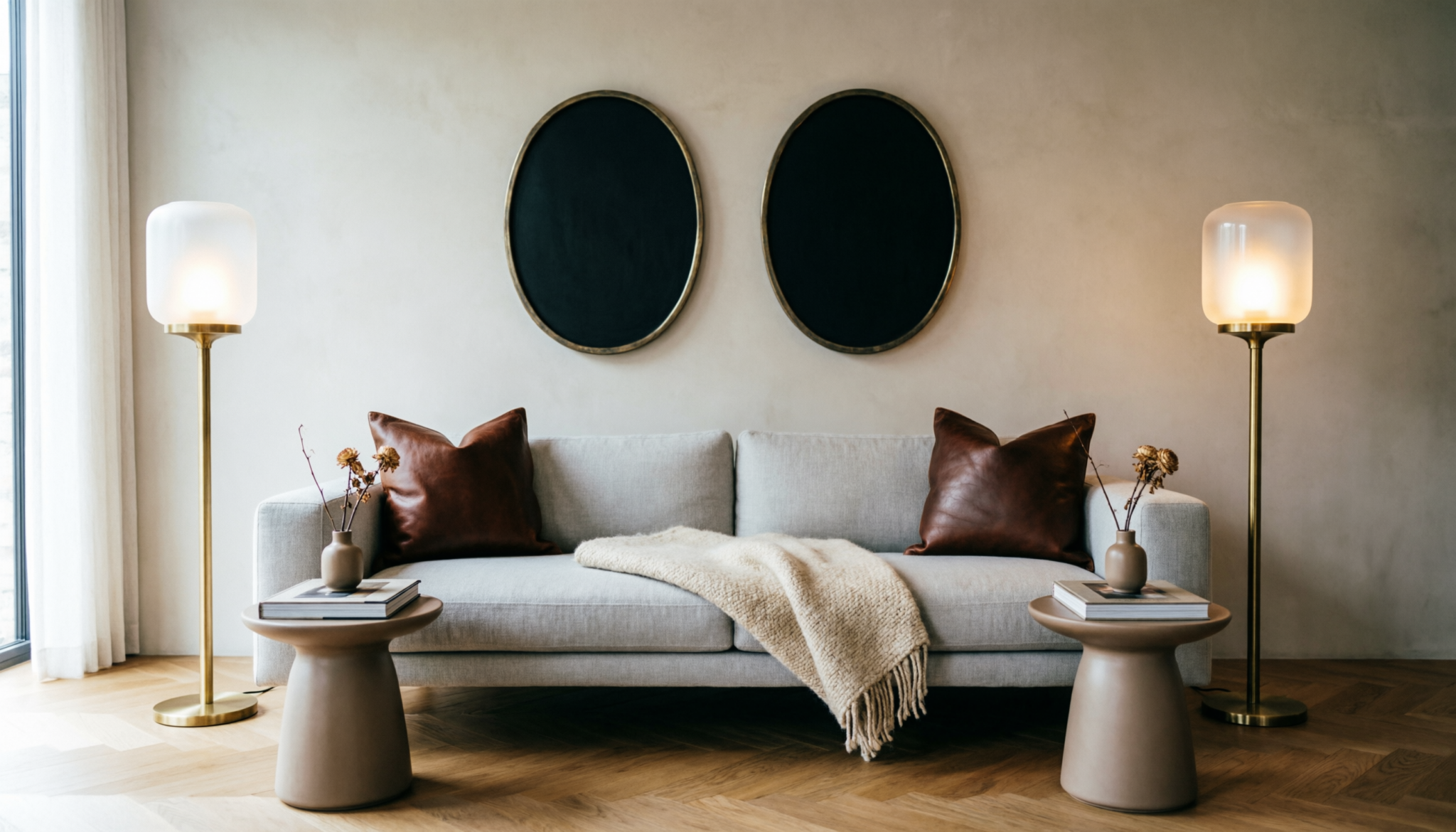
A well-balanced room feels calm, complete, and quietly polished. Matching lamps play a bigger role than most expect.
Placed with intention, a simple pair creates structure, improves lighting, and gives a space that “finished” look often seen in high-end interiors without adding clutter or unnecessary decoration.
The Short Answer
Human brains are hardwired to associate bilateral symmetry with order, stability, and high-end design. Matching pairs of lamps, pillows, or art create a focal point that signals intentionality.
This explains why upscale hotels and refined homes consistently rely on symmetrical layouts to anchor a room and make it feel complete.
The Symmetry Layout Guide
| Room Area | Symmetry Item | Placement Rule |
|---|---|---|
| Bedside | Matching Nightstands/Lamps | Flank the bed for a hotel vibe. |
| Console Table | Two Tall Sconces/Candlesticks | Frames the entryway art. |
| Sofa | Matching End Tables/Pillows | Creates a grounded living space. |
The Cognitive Comfort of Balance: Why your brain loves symmetry
Symmetry reduces visual effort. When both sides of a space mirror each other, the brain processes the layout faster. That ease translates into comfort.
In practical terms, a pair of matching lamps:
- Creates instant order, even in a busy room
- Anchors furniture so nothing feels out of place
- Softens visual chaos caused by mixed styles or clutter
Without symmetry, a room often feels slightly “off,” even when everything is technically well chosen. Balance fixes that quietly.
Symmetry vs. Asymmetry
Symmetry works best when a space needs structure and calm. Bedrooms, formal living rooms, and entryways benefit the most.
Use symmetry when:
- A polished, put-together look matters
- Furniture placement feels scattered
- A focal point needs strengthening
Asymmetry has its place too. It suits relaxed spaces like reading corners or creative studios.
Use asymmetry when:
- A casual, lived-in feel is preferred
- Variety matters more than structure
- Space layout does not allow perfect pairing
A common mistake is mixing both without intention. That creates tension instead of style. Pick one dominant approach per zone.
Why buying lamps in sets of two makes sense
Single lamps often feel like an afterthought. A pair feels planned.
Buying two matching lamps:
- Saves time trying to “balance” mismatched pieces later
- Guarantees consistent lighting on both sides
- Instantly upgrades nightstands, consoles, and side tables
Even simple, affordable lamps look elevated when paired. Cost matters less than consistency.
FAQs
1. Do matching lamps have to be identical?
Not always. Similar height, shape, and color usually work well. Small variations can add character without breaking balance.
2. What size lamps work best for symmetry?
Scale should match the furniture. Lamps too small get lost, while oversized pieces overwhelm the setup. A good rule: lamp height should relate closely to table height and seating level.
3. Can symmetry work in small spaces?
Yes. In fact, small rooms benefit even more. A balanced layout reduces visual clutter and makes the space feel organized rather than cramped.
Final Thought
Symmetry is less about rules and more about clarity. A pair of matching lamps brings quiet order to a room, making everything else feel intentional.
No complicated styling required. Just balance, consistency, and a clear focal point that holds the entire space together without effort.