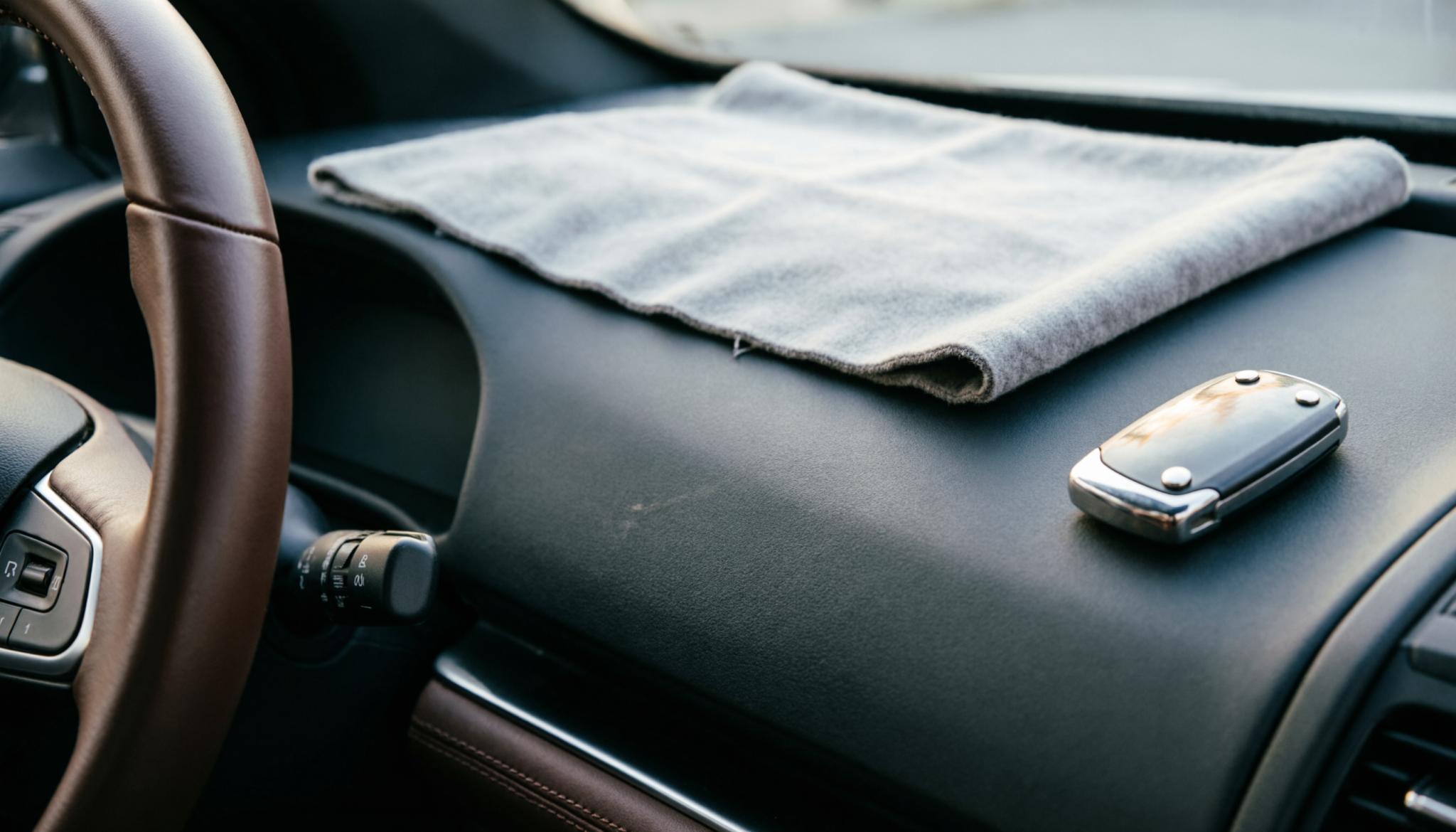
Fine dust keeps returning to your car dashboard because static electricity pulls it back.
Plastic surfaces build charge through friction, especially during cleaning. That charge attracts micro-dust like a magnet.
Without neutralizing it, every wipe or vacuum pass makes the problem worse instead of better.
The Short Answer
The Reason: Automotive plastics like ABS and vinyl are non-conductive, so they hold static charge.
Friction from plastic vacuum bristles or dry cloths builds that charge, which pulls in fine dust particles.
What Actually Works: Neutralize the charge first. Use conductive carbon fiber brushes or ionized air to discharge the surface before vacuuming.
The Friction Problem: Why “Dry Dusting” Makes It Worse
Most dashboards are made from textured plastics designed to resist glare and wear. That texture traps dust, but the real issue is invisible.
Every time a dry cloth or stiff plastic brush drags across the surface, friction builds static electricity.
Here’s where things go wrong:
- Plastic tools don’t release charge. They store it.
- Dry wiping increases friction instead of reducing it.
- Fine dust particles are light enough to be pulled back instantly.
The result looks clean for a few minutes, then dust reappears like nothing was done.
Cheap detailing routines fail here. They focus on removal but ignore the electrical charge holding dust in place.
That’s why repeated cleaning feels pointless.
The Solution: Carbon Fiber and Charge Control
Carbon fiber changes the equation. Unlike plastic, it conducts electricity, which allows static charge to dissipate instead of building up.
That matters because:
- Conductive fibers reduce static as they move across the surface
- Dust lifts without being pulled back immediately
- Cleaning becomes more efficient with fewer passes
Some high-end detailing brushes use carbon fiber filaments specifically for this reason.
The difference is subtle at first, but over time the dashboard stays cleaner longer.
Ionized air tools take it further by neutralizing charge without contact. This works well for vents, seams, and textured plastics where brushes struggle.
What Actually Works in Practice
A simple adjustment improves results fast:
- Lightly mist the surface with an anti-static interior cleaner
- Use a soft carbon fiber brush to loosen dust
- Follow with a vacuum using a soft, non-sparking attachment
- Finish with a damp microfiber cloth, not a dry one
Skipping step one or using dry tools brings the problem right back.
Tools That Solve the Root Problem
Standard vacuum kits rely on plastic bristles, which makes static worse. That design choice limits real cleaning performance.
Detailing kits with carbon fiber brushes address the actual cause.
Dyson’s specialized attachments are a strong example, built to reduce static while lifting fine debris from delicate surfaces.
Pair that with an anti-static interior cleaner to prevent charge buildup between cleanings.
Without that layer of protection, even the best tools lose effectiveness over time.
The Bottom Line
Dust isn’t just sitting on the dashboard. It’s being pulled there by static electricity. Cleaning without addressing that force guarantees frustration. Control the charge first, and the dust finally stays gone.