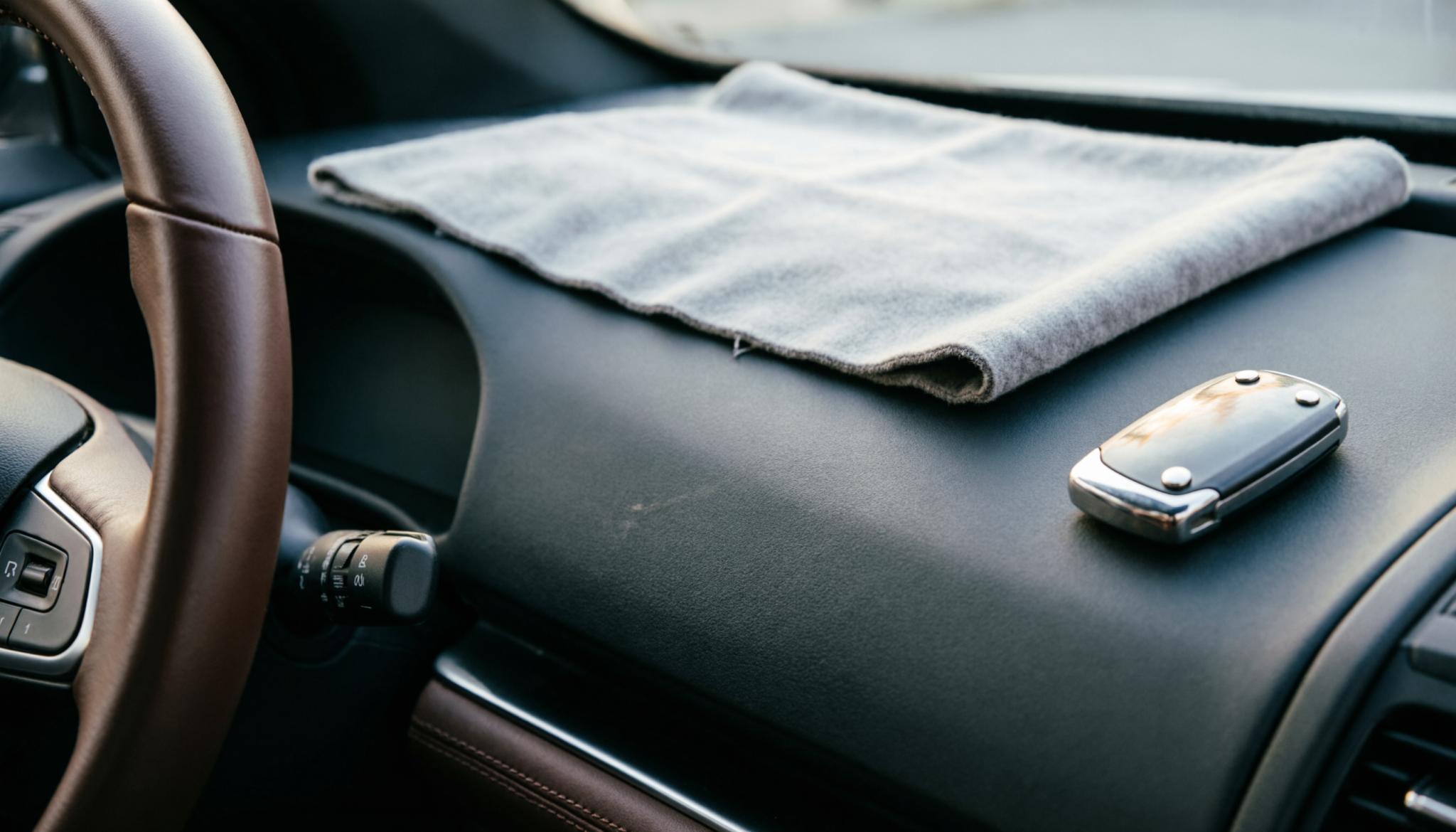
Diagnostic Summary: Static electricity forms when dashboard plastics rub against moving air, microfiber cloths, clothing fibers, and dry cabin conditions. Negatively charged surfaces attract lightweight airborne dust particles through electrostatic force.
Low humidity, UV-heated plastics, and poor cabin filtration accelerate the process, causing repeated dust accumulation across textured dashboard surfaces and electronic display panels.
Warning: Silicone-heavy dashboard dressings can worsen dust attraction by leaving an electrically active residue. Cheap glossy protectants also increase glare, trap oils, and accelerate plastic fading under direct sunlight.
Comparison Table
| Surface Condition | Particle Size Outcome | Dust Attraction Strength | Cabin Air Impact |
|---|---|---|---|
| Dry hard plastic dashboard | Fine PM2.5 particles remain suspended then cling rapidly | High | Increased visible dust and respiratory irritation |
| Humid interior surfaces | Larger particles settle before static attraction occurs | Moderate | Reduced airborne dust circulation |
| Anti-static treated dashboard | Lower retention of fine electrostatic particles | Low | Cleaner surfaces and improved cabin cleanliness |
The Friction Problem: Why “Dry Dusting” Makes It Worse
Most dashboards are made from textured plastics designed to resist glare and wear. That texture traps dust, but the real issue is invisible.
Every time a dry cloth or stiff plastic brush drags across the surface, friction builds static electricity.
Here’s where things go wrong:
- Plastic tools don’t release charge. They store it.
- Dry wiping increases friction instead of reducing it.
- Fine dust particles are light enough to be pulled back instantly.
The result looks clean for a few minutes, then dust reappears like nothing was done.
Cheap detailing routines fail here. They focus on removal but ignore the electrical charge holding dust in place.
That’s why repeated cleaning feels pointless.
The Science Behind Static Electricity Inside Vehicles
Static cling inside a vehicle follows the same physical principle seen in clothing fresh from a dryer. Friction creates electrical imbalance.
Inside a car cabin, several friction sources constantly generate static charge:
- Air flowing from vents
- Sliding clothing fabrics
- Plastic-on-plastic vibration
- Dry wiping with synthetic towels
- UV-heated dashboard materials
Most dashboards use thermoplastics such as ABS or PVC blends. These materials naturally resist electrical conductivity. Instead of releasing electrical energy harmlessly, the charge remains trapped on the surface.
Dust particles floating through the cabin carry microscopic electrical charges. Opposite charges attract. The dashboard becomes a magnet for airborne contaminants.
Fine particles smaller than 2.5 microns behave almost weightlessly in cabin air. Air vents continuously circulate these particles until electrostatic attraction pulls them onto nearby surfaces.
Textured dashboards worsen the issue. Tiny grooves increase surface area and create more friction points where dust can anchor itself.
Why Heat and Dry Air Make Dashboard Dust Worse
Hot weather dramatically increases static buildup inside vehicles.
During sunny afternoons, dashboard temperatures can exceed 160°F (71°C). Heat dries interior air and strips moisture from plastic surfaces.
Dry conditions allow static electricity to accumulate faster because humidity normally helps electrical charges dissipate.
Low humidity creates ideal conditions for electrostatic attraction.
Several conditions intensify dust buildup:
Cabin Airflow Turbulence
Air-conditioning vents continuously move airborne particles around the cabin. High fan speeds keep dust suspended instead of allowing particles to settle naturally onto floors.
UV Damage to Plastics
Sunlight slowly degrades dashboard polymers. Aging plastics become rougher and more porous. Rough surfaces trap more particulate matter.
Synthetic Cleaning Cloths
Cheap polyester cloths create friction while wiping. Instead of removing static, dry wiping often generates additional electrical charge.
Cabin Filter Failure
Dirty cabin air filters allow pollen, soot, road debris, and PM2.5 particles to circulate repeatedly through the ventilation system.
Technician’s Insight
Technician’s Insight: A dashboard that becomes dusty within hours after cleaning usually signals excessive cabin airflow contamination or low interior humidity. Static attraction alone rarely causes severe buildup.
A neglected cabin air filter, synthetic cleaning products, and overheated plastics normally create the worst electrostatic dust conditions inside modern vehicles.
Why Some Cleaning Products Make Dust Return Faster
Many dashboard sprays create a cosmetic shine but worsen long-term dust buildup.
Silicone oils leave behind a slick residue that attracts airborne particles. Glossy finishes also increase surface friction when wiped repeatedly.
Heavy solvent-based dressings create three major problems:
- Residue buildup
- Increased electrostatic attraction
- Accelerated UV deterioration
Matte anti-static cleaners work far better because they reduce electrical charge accumulation instead of masking dust temporarily.
Microfiber quality matters too.
Low-grade microfiber towels contain stiff synthetic fibers that scratch textured plastics and generate friction. High-density anti-static microfiber cloths reduce electrical buildup during cleaning.
Water quality also affects results. Hard water leaves mineral traces that attract additional particles once dried.
The Link Between Cabin Air Quality and Dashboard Dust
Dashboard dust is not just cosmetic. Cabin dust often contains harmful microscopic contaminants:
- Tire particles
- Road soot
- Pollen
- Skin cells
- Textile fibers
- Industrial pollution
- Brake dust
Urban driving increases PM2.5 contamination significantly. Vehicles parked near highways accumulate even higher concentrations of ultrafine particles.
Cabin air filters play a major role in controlling dashboard dust levels.
Higher-grade filters capture smaller contaminants before circulation through dashboard vents.
| Filter Grade | Particle Size Outcome | Capture Efficiency | Medical Application |
|---|---|---|---|
| Standard Cabin Filter | Captures large dust and pollen particles | 40–60% | General passenger comfort |
| Activated Carbon Cabin Filter | Captures odors, smoke, and finer contaminants | 60–80% | Allergy reduction support |
| HEPA Cabin Filter | Captures ultrafine PM2.5 particles and allergens | 99.97% | Medical-grade air purification environments |
A clogged filter reduces airflow efficiency while increasing contaminant recirculation. Dust then settles directly onto high-static surfaces such as infotainment screens and dashboards.
How to Reduce Static Cling on a Car Dashboard
Permanent elimination is unrealistic because vehicle interiors constantly generate airborne particles. However, several methods dramatically reduce buildup.
Use Anti-Static Interior Cleaners
Water-based anti-static formulas neutralize electrical charge instead of coating surfaces with silicone residue.
Replace Cabin Air Filters Regularly
Most cabin filters require replacement every 12,000–15,000 miles, especially in dusty urban areas.
Increase Cabin Humidity Slightly
Extremely dry interiors worsen electrostatic attraction. Balanced humidity helps electrical charge dissipate naturally.
Vacuum Interior Fabrics Frequently
Seats and carpets release fibers continuously. Upholstery acts like a dust reservoir during driving.
Avoid Dry Wiping
Lightly damp microfiber cloths reduce friction and trap particles more effectively.
Park in Shaded Areas
Lower dashboard temperatures reduce plastic degradation and static buildup.
FAQs
1. Why does dashboard dust return so quickly after cleaning?
Electrostatic attraction continuously pulls airborne particles toward heated plastic surfaces. Poor cabin filtration and dry interior air accelerate the process.
2. Does dashboard shine spray increase dust buildup?
Yes. Silicone-heavy dressings often leave electrically active residues that attract more airborne contaminants and increase glare.
3. Can cabin air filters reduce dashboard dust?
Yes. High-quality cabin filters capture microscopic particles before circulation through dashboard vents, reducing both airborne contamination and visible dust accumulation.
Bottom Line
Dashboard dust forms through a combination of static electricity, airborne particles, cabin airflow, and heat-damaged plastics. Dry conditions intensify electrostatic attraction, especially on textured dashboard materials.
Better cabin filtration, anti-static cleaning methods, reduced silicone residue, and proper interior maintenance significantly slow dust buildup while improving overall cabin air quality and long-term dashboard preservation.