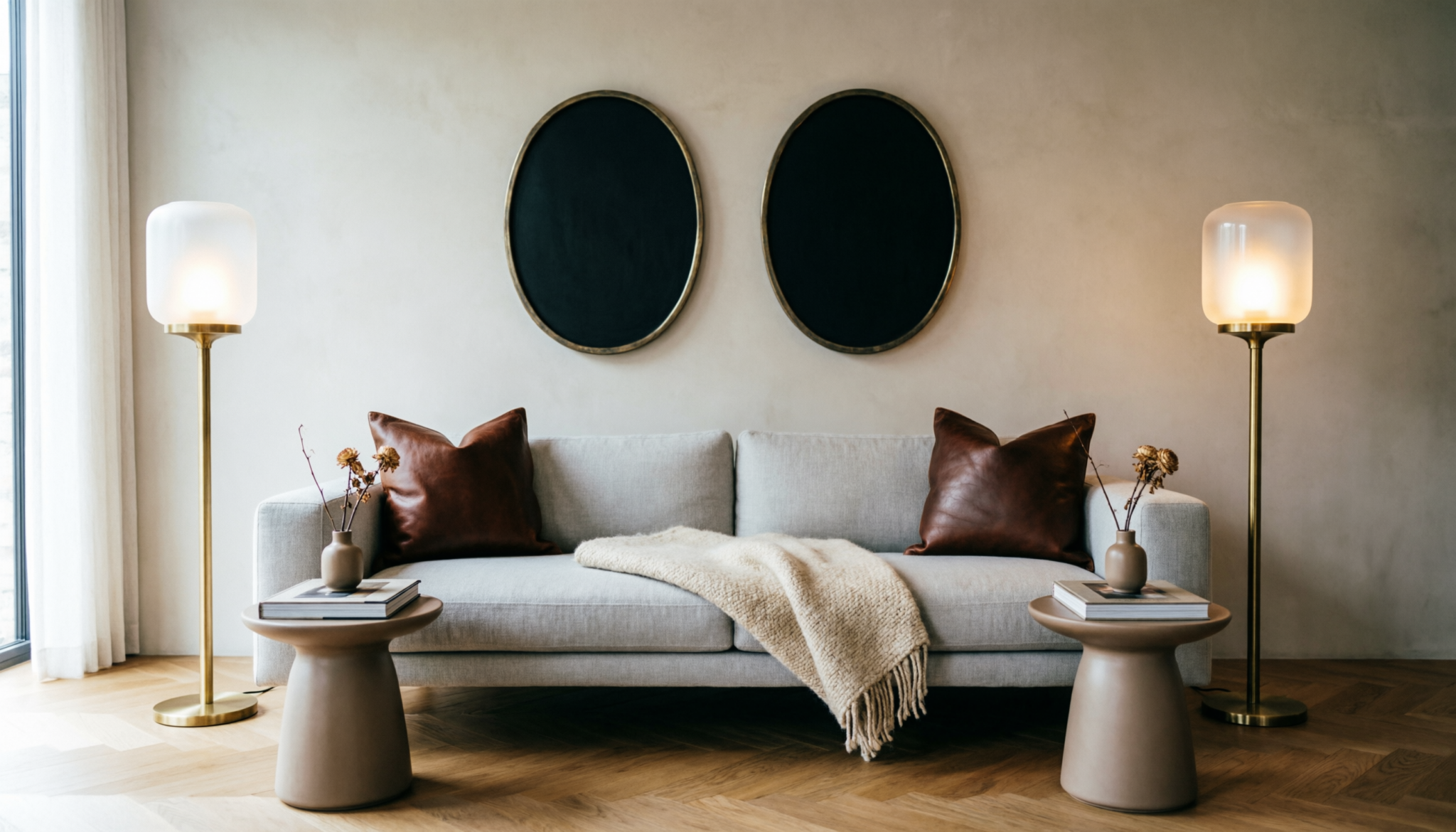
Luxury interiors rarely rely on expensive materials alone. Strong spatial balance creates visual order, reduces sensory clutter, and improves perceived architectural quality.
Symmetry guides the eye with precision, making ordinary furniture arrangements appear intentional and refined.
Aesthetic Design Protocol
Symmetry increases perceived room value by creating visual predictability and balanced spatial rhythm. Position matching furniture within 1 to 3 inches of equal spacing.
Maintain centered focal points on walls wider than 72 inches. Repeat shapes, finishes, and lighting heights across both sides of a room for consistent architectural cohesion.
Comparison Table
| Attribute | Perfect Symmetry | Soft Symmetry | Asymmetrical Design |
|---|---|---|---|
| Visual Balance | High and formal | Balanced with flexibility | Dynamic but visually uneven |
| Furniture Placement Precision | Exact alignment required | Slight variation allowed | No mirrored positioning |
| Luxury Perception | Strong upscale appearance | Relaxed luxury aesthetic | Artistic or casual impression |
| Maintenance Level | Moderate | Low | Moderate to high |
The Cognitive Comfort of Balance: Why your brain loves symmetry
Symmetry reduces visual effort. When both sides of a space mirror each other, the brain processes the layout faster. That ease translates into comfort.
In practical terms, a pair of matching lamps:
- Creates instant order, even in a busy room
- Anchors furniture so nothing feels out of place
- Softens visual chaos caused by mixed styles or clutter
Without symmetry, a room often feels slightly “off,” even when everything is technically well chosen. Balance fixes that quietly.
Symmetry vs. Asymmetry
Symmetry works best when a space needs structure and calm. Bedrooms, formal living rooms, and entryways benefit the most.
Use symmetry when:
- A polished, put-together look matters
- Furniture placement feels scattered
- A focal point needs strengthening
Asymmetry has its place too. It suits relaxed spaces like reading corners or creative studios.
Use asymmetry when:
- A casual, lived-in feel is preferred
- Variety matters more than structure
- Space layout does not allow perfect pairing
A common mistake is mixing both without intention. That creates tension instead of style. Pick one dominant approach per zone.
Why Human Eyes Associate Symmetry With Luxury
Symmetry creates immediate visual comfort. Balanced layouts reduce cognitive strain because the brain processes repeated forms faster than irregular arrangements.
Luxury hotels, historic estates, and premium retail spaces rely heavily on mirrored layouts for this reason.
A centered sofa with identical side tables creates stability. Matching lamps establish rhythm. Equal spacing between decor elements signals intentional planning rather than accidental placement.
High-end interiors often follow three core symmetry principles:
- Repetition of shape
- Equal visual weight
- Centralized focal points
Without symmetry, even expensive furniture can appear scattered. Rooms lose hierarchy and visual discipline.
Architectural symmetry also increases perceived ceiling height and room width. Vertical repetition draws the eye upward, while balanced horizontal spacing expands visual boundaries.
This effect matters especially in apartments and compact homes where square footage remains limited.
Symmetry Starts With a Dominant Focal Point
Every balanced room needs an anchor. Without a focal point, symmetry feels forced and mechanical.
Common focal points include:
- Fireplaces
- Large windows
- Beds with statement headboards
- Dining tables
- Media walls
- Oversized artwork
After establishing the focal point, surrounding elements should mirror proportion rather than exact decoration.
Example:
A living room with a centered fireplace benefits from:
- Two identical chairs
- Equal-height lamps
- Matching curtain lengths
- Balanced shelving weight
Perfect duplication is not mandatory. Visual equivalence matters more than identical objects.
A 36-inch side table can visually balance a tall floor lamp if both occupy similar visual weight.
Professional designers calculate “mass balance” constantly. Height, color density, texture, and shadow all influence perceived symmetry.
Furniture Placement Mistakes That Ruin Symmetry
Many homes fail visually because of spacing errors rather than poor furniture quality.
Common mistakes include:
Uneven Lighting Heights
One lamp placed 4 inches higher than another immediately disrupts visual harmony. Human vision detects vertical inconsistencies quickly.
Off-Center Rugs
A rug shifted even 6 inches away from the room center creates imbalance. Rugs should align with primary furniture edges whenever possible.
Mismatched Visual Weight
A bulky recliner opposite a slim accent chair creates tension instead of balance.
Ignoring Negative Space
Luxury interiors use controlled emptiness. Crowding one side of a room destroys symmetry instantly.
Misaligned Artwork
Artwork should align consistently with nearby furniture edges or architectural lines. Random placement weakens sophistication.
Expert’s Tip: Optical Balance
Perfect mathematical symmetry can feel sterile. Professional decorators offset rigidity by varying texture while maintaining equal visual mass.
Example: pair a ceramic lamp with a brass lamp of identical height and width. Texture variation prevents showroom stiffness while preserving balance.
Soft Symmetry Creates Modern Luxury
Classic symmetry often feels formal. Soft symmetry creates a more contemporary upscale appearance.
Soft symmetry maintains equal visual weight without exact duplication.
Examples include:
- Two different chairs with equal height
- Mixed table lamps sharing the same silhouette
- Floating shelves with balanced decor density
- Layered pillows in matching tonal families
This approach works especially well in modern apartments, Scandinavian interiors, and transitional homes.
Soft symmetry also accommodates practical living. Exact mirrored arrangements can feel restrictive in family homes with pets, children, or multifunctional spaces.
Balanced asymmetry works when three conditions exist:
- Consistent scale
- Coordinated color palette
- Controlled spacing
Without those controls, rooms drift into visual chaos.
Symmetry Makes Small Rooms Look Larger
Symmetry strengthens spatial efficiency. Balanced layouts simplify visual navigation, making compact rooms feel more expansive.
Several techniques produce this effect:
Matching Vertical Elements
Tall curtains on both sides of a window create height continuity.
Centered Furniture
Centering a bed or sofa improves perceived floor space because circulation pathways appear organized.
Repeated Reflective Surfaces
Matching mirrors or metallic accents amplify light distribution evenly across the room.
Equal Lighting Distribution
Dark corners shrink visual volume. Balanced lighting prevents uneven shadow pockets.
Small bedrooms benefit dramatically from symmetrical nightstand layouts. Even inexpensive bedside tables appear elevated when spacing remains equal and lighting matches precisely.
Color Symmetry Matters More Than Most Homeowners Realize
Symmetry extends beyond furniture placement.
Color distribution affects perceived balance heavily.
A navy sofa on one side of a room requires equivalent visual density elsewhere. Without balance, the room feels tilted.
Professional designers often distribute color using the “triangle method”:
- One dominant color anchor
- Two supporting repetitions
- Balanced sightline distribution
Example:
A black coffee table balances visually when black appears again in framed artwork and lighting hardware.
This repetition creates continuity and cohesion.
High-end homes rarely concentrate bold colors in one isolated zone. Color symmetry creates flow between architectural features.
Architectural Symmetry Creates Instant Elegance
Expensive homes often include built-in architectural symmetry:
- Double doors
- Matching sconces
- Repeated window placement
- Coffered ceilings
- Symmetrical millwork
Even without renovations, decorative symmetry can simulate architectural sophistication.
Simple upgrades include:
- Installing paired wall sconces
- Using identical curtain panels
- Flanking consoles with matching decor
- Centering artwork carefully
- Aligning furniture with room geometry
Alignment matters tremendously. Crooked spacing weakens perceived quality immediately.
A room with budget furniture but perfect symmetry usually appears more expensive than a room with luxury furniture arranged poorly.
Symmetry and Lighting Work Together
Lighting determines whether symmetry succeeds or fails.
Uneven brightness creates imbalance faster than uneven furniture placement.
Luxury interiors layer lighting symmetrically through:
- Matching table lamps
- Even recessed lighting spacing
- Centered chandeliers
- Balanced wall sconces
Spacing consistency matters.
Example measurements:
- Sconces: typically 60 to 66 inches from the floor
- Dining pendants: centered with 30 to 36 inches above the table
- Bedside lamps: matching heights within 1 inch
Warm light temperatures between 2700K and 3000K also reinforce upscale ambiance more effectively than cool white bulbs.
FAQs
1. Why does symmetry make a home look expensive?
Symmetry creates order, visual rhythm, and spatial clarity. Human vision associates balanced environments with architectural quality and intentional design.
Even affordable decor appears elevated when furniture, lighting, and spacing align consistently.
2. Can asymmetrical rooms still look luxurious?
Yes, but balance remains essential. Successful asymmetrical interiors use equal visual weight, controlled color repetition, and disciplined spacing. Random placement creates clutter rather than sophistication.
3. What is the easiest way to add symmetry to a room?
Start with lighting. Matching lamps, centered artwork, and equal furniture spacing create immediate visual improvement. Bedrooms and living rooms respond especially well to symmetrical layouts.
Final Take
Symmetry remains one of the most cost-effective luxury design principles available. Balanced layouts improve visual clarity, strengthen architectural presence, and elevate ordinary furnishings.
Precise spacing, repeated forms, and controlled visual weight create sophistication without excessive spending. Expensive-looking interiors rarely happen by accident.
Strong symmetry creates the structure that luxury design depends on.