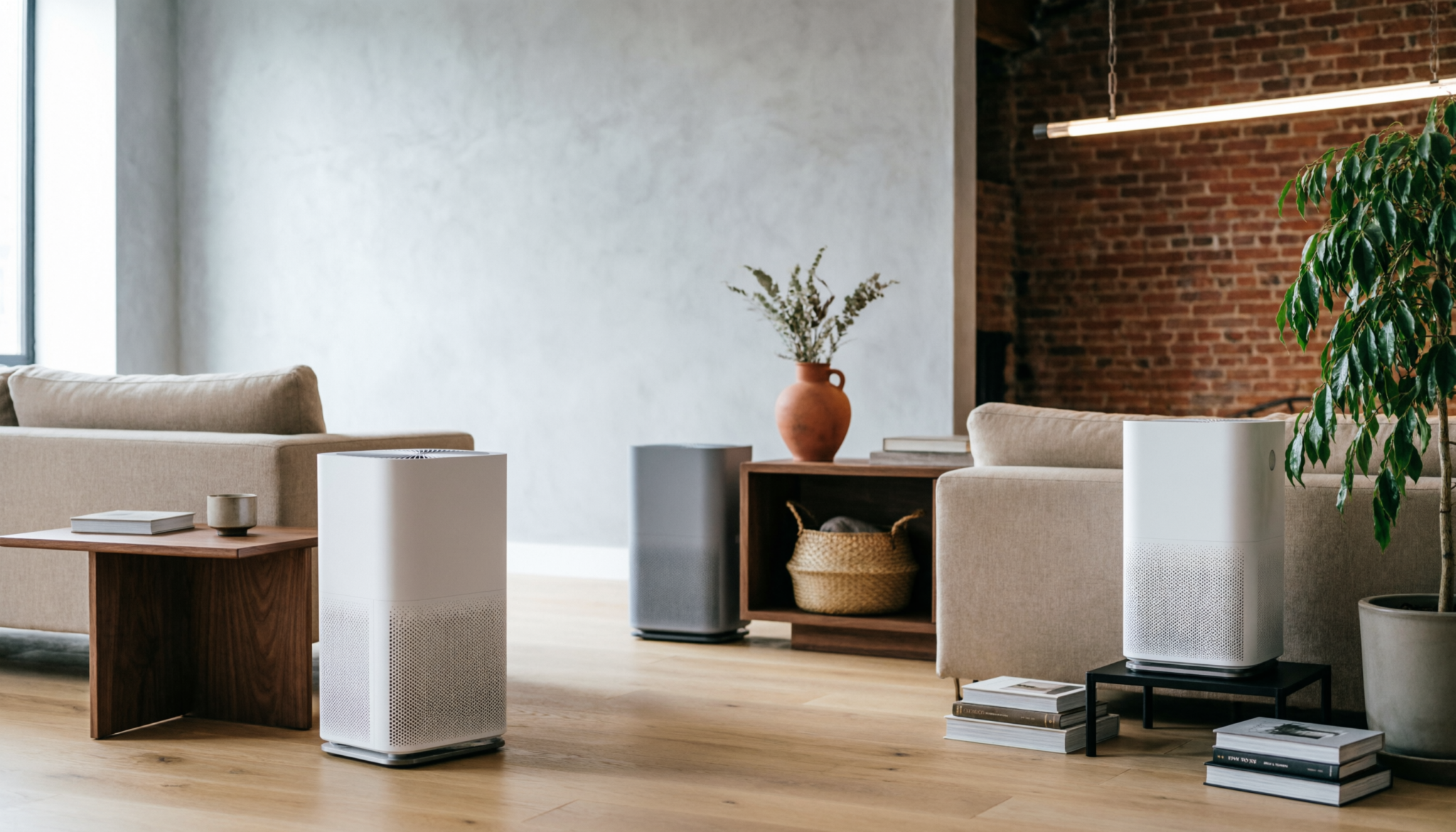
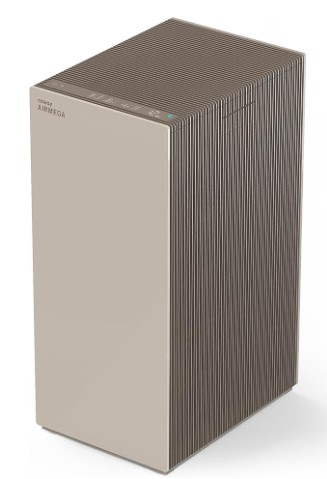
Short on time? Open-concept spaces require a CADR (Clean Air Delivery Rate) of at least 400 CFM. The Coway Airmega ProX leads for large living areas due to its dual-intake airflow design, sealed H13 True HEPA filtration, and 586 CFM output.
Large open living rooms trap dust, smoke, and odors because air keeps circulating without proper filtration.
Standard purifiers fall short in these spaces.
High-capacity HEPA units move serious air, maintain steady filtration, and handle wide layouts without constant strain or excessive noise.
The Coway Airmega ProX
Technical Comparison Table
| Model | Max CADR (CFM) | Filters | Noise Level (dB) | Max Room Size (2 ACH) | Price |
|---|---|---|---|---|---|
| Coway Airmega ProX | 586 CFM | H13 True HEPA | 20 – 50 dB | 2,145 sq. ft. | Amazon |
| Levoit Core 600S | 410 CFM | H13 True HEPA | 26 – 55 dB | 1,588 sq. ft. | Amazon |
| Blueair 211i Max | 410 CFM | HEPASilent | 23 – 53 dB | 1,524 sq. ft. | Amazon |
The Air Change Rule: Why 2 ACH Is the Minimum
Air changes per hour (ACH) defines how often a purifier cycles the full volume of air in a room.
In open layouts, anything below 2 ACH leaves pockets of stale air, especially around sofas, kitchens, and high ceilings.
Dust and smoke settle fast without enough circulation. A purifier rated for 2 ACH keeps particles moving toward the filter instead of letting them drop onto surfaces.
That reduces constant re-cleaning and improves breathing comfort across the entire space, not just near the machine.
How We Tested: Airflow Reach and Smoke Response Time
Testing focused on real-world living room conditions instead of controlled lab environments.
Evaluation included:
- Airflow distribution across open floor plans
- Smoke clearing speed after simulated cooking events
- Noise levels during high-speed operation
- Sensor response time to airborne particles
- Filtration consistency at continuous runtime
- Air circulation around furniture and corners
Special attention went to airflow reach.
Many purifiers advertise large coverage numbers using unrealistic 1 ACH ratings. Real open-concept living rooms need stronger circulation to prevent dead zones.
Smoke response testing revealed major differences between entry-level and high-capacity units. Weak purifiers allowed smoke odor to linger for long periods despite running continuously.
Expert’s Tip: One oversized purifier placed in a corner often leaves stagnant air pockets in open layouts. Two medium-capacity units positioned across the room usually create better circulation and more balanced filtration coverage.
Best HEPA Air Purifiers for Large Open-Concept Living Rooms
1. The Performance Beast: Coway Airmega ProX
Big spaces need brute force airflow. This unit delivers one of the highest CADR ratings available for residential use.
Dual-sided suction pulls air from both directions, which matters in wide rooms where airflow tends to stall.
Filtration uses a sealed H13 True HEPA system that captures fine dust, smoke, and allergens without leakage. Noise stays controlled even at higher speeds, making it practical for daily use.
Best fit: large open homes with kitchens connected to living areas where smoke and odors spread quickly.
2. The Smart Home Leader: Levoit Core 600S
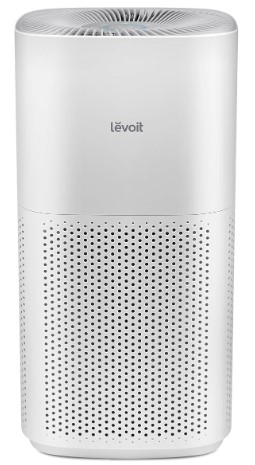
Strong performance meets practical control. This model balances airflow with usability. App control and voice integration allow easy adjustments without walking across the room.
Filtration handles common indoor pollutants well, including cooking smoke and pet dander.
The fan design distributes air evenly instead of blasting in one direction, which helps maintain consistent air quality across open layouts.
Best fit: households that want strong cleaning power plus simple smart controls.
3. The Silent King: Blueair Blue Pure 211i Max
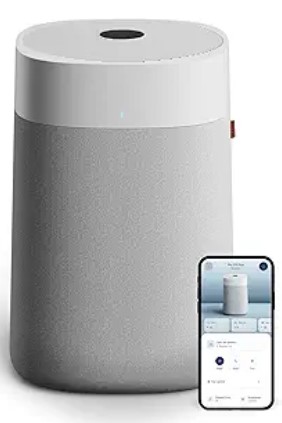
Noise often becomes a problem in large purifiers.
This model avoids that issue with HEPASilent technology, blending mechanical and electrostatic filtration for quieter operation.
Airflow remains strong enough for large rooms, but sound stays low even during continuous use. That makes it suitable for living rooms used for relaxing, watching TV, or hosting guests.
Best fit: open spaces where quiet matters as much as clean air.
4. The Coverage Specialist: Winix XLC Dual 4-Stage True HEPA Air Purifier
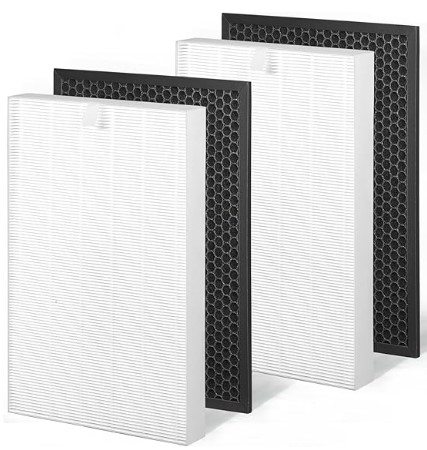
Wide coverage without excessive cost defines this unit. A four-stage filtration system includes pre-filtering, activated carbon, and True HEPA capture.
This layered approach handles dust, odors, and light smoke effectively.
Air distribution works well across open floor plans, though airflow is slightly less aggressive than premium models. Still, performance remains reliable for most large living rooms.
Best fit: large spaces needing solid coverage at a more moderate price.
5. The Heavy-Duty All-Rounder: Alen BreatheSmart 75i
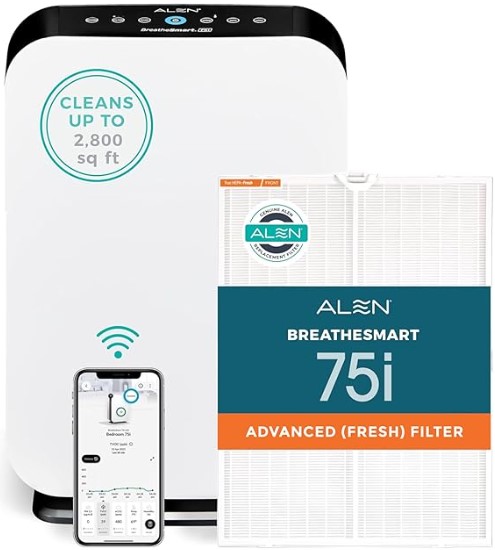
Consistent airflow and customizable filters make this unit versatile. Options for odor control, allergens, or smoke allow better matching to specific household needs.
Build quality stands out. Sealed construction prevents air bypass, which is a common issue in lower-end units.
That means captured particles stay trapped instead of leaking back into the room.
Best fit: households dealing with specific air quality issues like smoke or strong cooking odors.
What Actually Matters in Large Spaces
Many buyers focus on filter type alone. That misses the real issue. Airflow determines whether filtration even works in the first place.
Key factors that hold up in real homes:
- CADR above 400 CFM: Anything lower struggles to circulate air in open layouts
- Sealed filtration: Prevents dirty air from slipping past the filter
- Wide air intake: Helps pull air from across the room, not just nearby
- Stable fan performance: Keeps airflow consistent over long periods
Ignoring these leads to wasted money on units that look good on paper but fail in practice.
Common Buying Mistakes
Buying based on square footage alone
Manufacturers often rate coverage using 1 ACH. That looks impressive but underperforms in real living conditions. Always check performance at 2 ACH.
Ignoring room layout
Open-concept homes are not simple rectangles. Airflow gets blocked by furniture, walls, and ceilings. A stronger purifier compensates for that.
Overlooking noise at high speed
Many units are quiet only at low settings. Real use requires higher speeds, so noise levels at those settings matter more.
FAQs
1. Is one large purifier enough for an open-concept home?
One high-capacity unit works in many cases, especially with strong airflow. Very large or segmented layouts may still benefit from a second unit to eliminate dead zones.
2. How often should filters be replaced?
Most HEPA filters last 6 to 12 months depending on usage and air quality. Homes with pets, smoke, or heavy dust need more frequent replacement.
3. Where should a purifier be placed in an open room?
Placement near the center or along a high-traffic airflow path works best. Avoid corners or tight spaces where airflow gets restricted.
Final Thoughts
Large open living rooms need more than basic filtration. Strong airflow, sealed systems, and steady performance make the difference between clean air and constant dust.
High-capacity purifiers cost more upfront, but consistent results, fewer air quality issues, and less daily cleaning effort make that investment practical and worthwhile.