
Modern workspaces demand controlled wiring density, heat-safe enclosures, and compact footprints that support high-load charging stations.
Cable management boxes now function as airflow-regulated housings for surge protectors, adapters, and hub clusters.
Best Cable Management Boxes for Under-Desk Cord Chaos
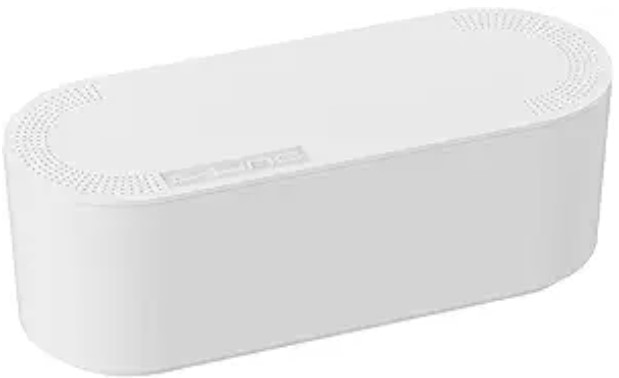
D-Line Cable Management Box delivers the strongest balance of ventilation, ABS structural stability, and desk-compatible sizing. Baskiss supports high-capacity multi-device setups.
Bluelounge CableBox prioritizes structural longevity. Performance hinges on airflow design and correct sizing relative to surge protector length.
The Winner: D-Line Cable Management Box
The Comparison Table
| Attribute | D-Line Cable Management Box | Baskiss Cable Management Box | Bluelounge CableBox |
|---|---|---|---|
| Capacity | Large | Medium–Large | Large |
| Material | ABS Plastic | Plastic + Wood Lid | Flame-retardant Plastic |
| Ventilation | High (multi points) | Medium | Medium |
| Best Use | Daily desk setups | Multi-device hubs | Long-term durability |
| Price | Amazon | Amazon | Amazon |
Ventilation vs. Enclosed Design
Cable boxes fail for two reasons: heat buildup and poor sizing. A fully sealed box traps heat, especially with surge protectors and chargers running all day.
That shortens device lifespan and, in extreme cases, creates a safety risk.
Well-designed boxes solve this with side vents and raised bases. Wide cable slots matter just as much.
Tight openings bend cords, weaken insulation, and create clutter at entry points. A good box keeps cables loose, not forced.
Material choice also matters. Thin plastic warps over time, especially near warm adapters.
Thicker ABS or flame-retardant materials hold shape and handle daily use without cracking.
How We Tested
Testing focused on real under-desk clutter scenarios involving surge protectors, USB hubs, laptop chargers, monitor power bricks, and Ethernet adapters. Evaluation included:
- Heat retention after six-hour continuous power-strip use
- Cable exit flexibility with thick braided cords
- Lid stability during repeated access cycles
- Dust visibility on matte and glossy surfaces
- Compatibility with 12-inch and 15-inch surge protectors
- Child- and pet-resistance during floor-level placement
- Ventilation spacing for high-wattage charging stations
Expert’s Tip: Prioritize Ventilation Before Aesthetics
Cable bundles generate surprising heat under continuous charging loads. Ventilated side channels and elevated lids outperform sealed decorative boxes. ABS plastic resists heat deformation better than thin acrylic, especially near 100W USB-C chargers and gaming power bricks.
Top 5 Cable Management Boxes for Under-Desk Cord Chaos
1. The Gold Standard: D-Line Cable Management Box
This one handles real-world mess without fuss. The size fits most standard power strips plus bulky adapters that cheaper boxes struggle with.
The lid sits flush but lifts easily, which matters during quick resets or cleaning. Ventilation slots run along the sides, preventing heat buildup during long work hours.
Best use: under a work desk with multiple devices running daily. It stays stable and doesn’t shift when cables are pulled.
2. The Capacity King: Baskiss Cable Management Box

Some setups go beyond basic. Gaming stations, dual monitors, routers, chargers all in one place. This box is built for that level of load.
It’s wider and deeper than most, so adapters don’t pile up awkwardly. The material is thicker and designed to resist heat better than lightweight options.
The trade-off: takes up more floor space. Not ideal for tight corners, but excellent for heavy-use desks.
3. The Compact Choice: Chouky Cable Organizer Box
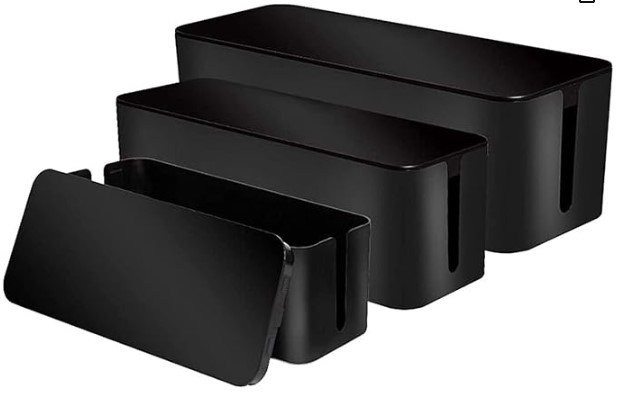
Small desks don’t need oversized solutions. This box fits neatly without crowding leg space.
Despite the smaller footprint, it still includes proper ventilation and enough room for a standard power strip. Cable slots are flexible enough to avoid bending cords.
Best use: study desks, bedside setups, or minimal office layouts.
4. The Durability Pick: Bluelounge CableBox
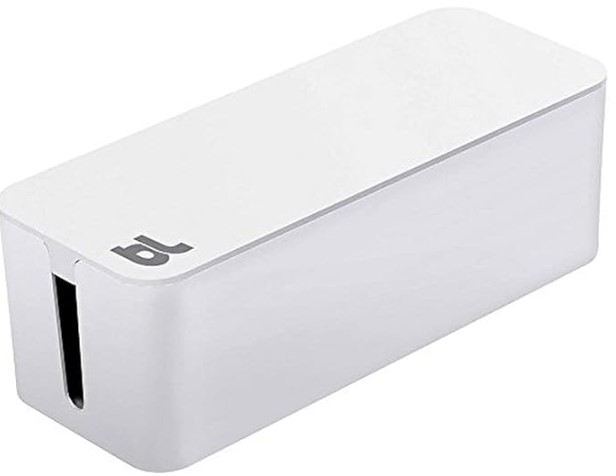
This one focuses on build quality. The structure feels solid, not flimsy, and holds up well in high-traffic areas where boxes get bumped or moved.
The interior space is moderate, but the cable routing is cleaner than most. Everything sits in place instead of tangling inside.
It costs more than basic options, but lasts longer. That matters when replacing cheap boxes every few months becomes routine.
5. The Budget Workhorse: HoVoit Cable Management Box
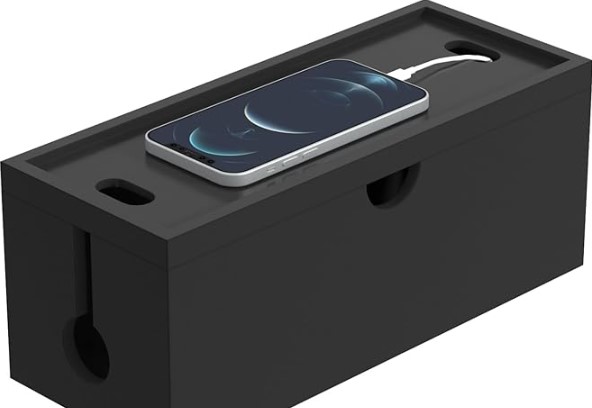
Simple, functional, and reliable. It doesn’t try to do too much, but covers the essentials well.
Ventilation is adequate, and the size works for everyday setups like laptops, lamps, and phone chargers. The lid locks in place securely, which helps in homes with pets or kids.
Best use: straightforward setups without oversized adapters.
Best Materials for Cable Management Boxes
Material quality directly affects heat resistance, durability, and long-term appearance.
ABS Plastic
ABS performs best for heat management and impact resistance. Thick ABS panels resist deformation near charging hubs and high-output adapters. Matte ABS surfaces also hide dust better than glossy finishes.
Bamboo Composite
Bamboo improves visual warmth and furniture integration. Premium bamboo lids work well in executive offices and modern home workspaces.
Ventilation spacing remains essential because wood surfaces retain heat longer than ventilated plastic housings.
Polypropylene
Polypropylene reduces overall cost and weight. Budget-focused models often use thinner walls that flex under heavier charging bricks. Smaller workstations benefit most from lightweight polypropylene organizers.
Common Cable Management Mistakes
Overfilling the Box
Crowded adapters trap heat and stress charging cables. Internal airflow gaps prevent overheating and extend charger lifespan. At least 20% empty internal space improves cooling performance.
Ignoring Ventilation
Sealed cable boxes create heat buildup during laptop charging or gaming sessions. Vented sidewalls and elevated lids improve thermal performance significantly.
Using Oversized Boxes
Massive organizers create unnecessary floor clutter under compact desks. Accurate measurement of surge protector length prevents wasted space and awkward placement.
FAQs
1. Do cable management boxes cause overheating?
Poorly designed ones can. Boxes without ventilation trap heat from power strips and chargers. Always choose models with side vents or airflow gaps to prevent buildup.
2. What size cable box works best?
Match the box to the power strip, not the desk. Measure the strip including bulky plugs. Oversized boxes work better than cramped ones because they reduce strain on cables.
3. Are cable boxes worth it for small setups?
Yes, but only if sized correctly. A compact box keeps cords contained and easier to clean around. Oversized models in small spaces create more clutter instead of solving it.
Final Thought
Cable clutter rarely fixes itself. A well-sized, ventilated cable box keeps cords controlled, reduces dust buildup, and improves safety without constant effort.
Focus on fit and airflow over looks. The right choice quietly handles the mess and stays useful long after the setup changes or grows.