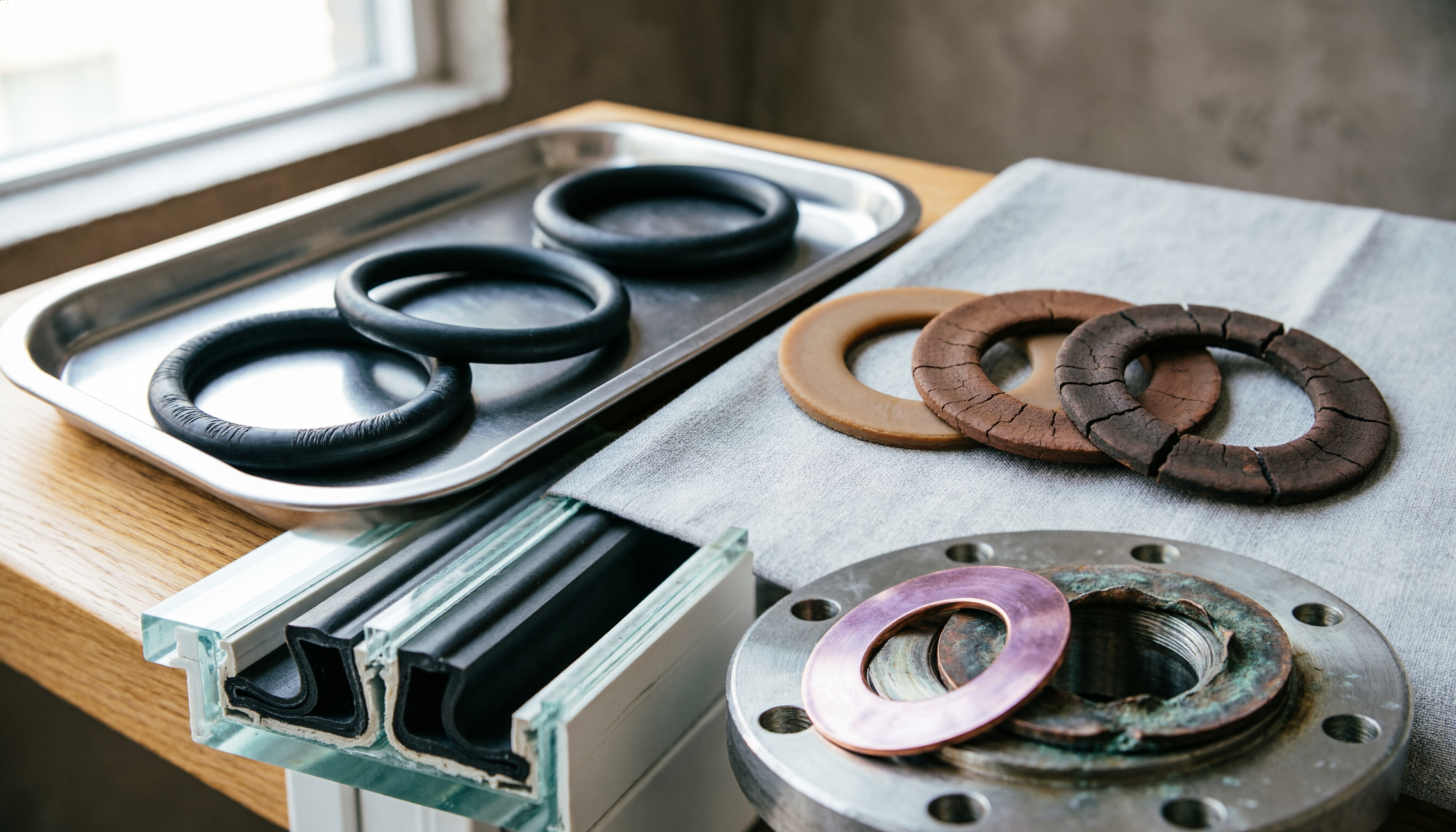
Maintenance Quick-Start: Replace vacuum seals and gaskets every 6 to 12 months in high-use environments, inspect for flattening, cracking, and loss of elasticity, and ensure proper seating to restore airtight suction performance across all intake joints and filter housings.
Routine inspection prevents airflow loss and maintains peak cleaning efficiency across systems consistently
Warning: Seal Failure Is a Hidden Performance Drop
Air leakage rarely appears dramatic at first. Small gasket deformation around filter housings or hose joints slowly reduces suction efficiency. Motor strain increases while dust bypasses filtration stages.
Continuous operation under degraded sealing conditions accelerates wear across airflow channels and internal bearings. Performance decline often gets misread as motor weakness instead of simple seal failure.
Comparison Table
| Part | Material | Replacement Interval | Symptom of Failure |
|---|---|---|---|
| Dust Cup Gasket | Rubber/Silicone | 2 Years | High-Pitched Whistling |
| Hose O-Rings | Rubber | 18 Months | Low Suction at Wand |
| Motor Seal | Compressed Foam | 3 Years | Dusty Smell / Hot Motor |
Identifying ‘Air-Bypass’: The Candle Test for Vacuum Leaks
Air bypass means outside air sneaks into the system instead of pulling debris from the floor. Loss of pressure follows, even when the motor sounds normal.
A simple candle test exposes these leaks:
- Turn the vacuum on in a quiet room.
- Hold a lit candle near joints, seams, and connection points.
- Watch the flame. Any flicker or pull toward a seam signals air entering.
Key spots to test:
- Dust bin lid and rim
- Hose connections
- Wand joints
- Filter housing edges
A steady flame means a tight system. A dancing flame points straight to the problem area. This method avoids guesswork and prevents unnecessary part replacements.
Common mistake: assuming clogged filters cause all suction loss. Filters matter, but leaks reduce performance even with brand-new filters installed.
Why Seals and Gaskets Control Suction Stability
Vacuum suction depends on airtight pressure balance. Seals and gaskets maintain that balance between motor-generated airflow and intake pathways.
Even minor flattening of rubber or silicone components disrupts pressure differentials.
Air leakage forces the motor to compensate continuously, reducing net suction at the nozzle. Dust collection efficiency declines even when filters remain clean.
Structural airflow integrity depends more on sealing condition than on motor power in most household systems.
Material fatigue typically appears at connection points first. Hose junctions, bin locks, and filter caps experience repeated mechanical stress.
These zones determine long-term suction stability more than any internal component upgrade.
Replacement Timing Based on Usage Conditions
Replacement intervals vary widely based on environmental load and cleaning frequency.
Light-use environments with weekly cleaning cycles often sustain seal integrity for up to 12 months. Moderate-use homes with pets or carpeted floors shorten that window to 6–9 months.
Heavy-use environments, including commercial or high-dust settings, require inspection every 3 months with replacement often within 4–6 months.
Heat exposure accelerates degradation. Motor heat transfer into surrounding housings causes rubber hardening. Cleaning agents with strong chemical content also reduce elasticity over time.
Compression fatigue from repeated locking and unlocking cycles further shortens functional lifespan.
Predictive replacement based on usage patterns prevents suction loss before performance decline becomes noticeable.
Expert Insight
Technician’s Insight: Visible dust trails around filter housings or bin seams indicate seal compression failure. Air bypass disrupts filtration stages and forces motor overcompensation.
Internal pressure imbalance increases thermal load and reduces particle capture accuracy across fine filtration layers within standard vacuum systems.
O-Rings vs. Flat Gaskets: Where Suction Escapes
Not all seals fail the same way. Understanding the difference helps target repairs instead of swapping random parts.
O-Rings (Round Seals)
- Found in hose couplings and wand joints
- Designed to compress into a groove
- Fail by flattening or cracking
- Symptoms: weak suction at the handle, air noise at joints
Flat Gaskets (Surface Seals)
- Found in dust bins, motor housings, and filter covers
- Create a seal between two flat surfaces
- Fail by hardening or shrinking
- Symptoms: whistling sound, dust escaping into compartments
Rubber ages even without heavy use. Heat, dust, and repeated compression slowly remove flexibility. Once elasticity drops, gaps form even when parts appear intact.
Important detail: a seal can look fine but still leak. Compression set cannot be seen easily. Loss of rebound is the real issue.
Practical replacement timing:
- High-use homes (pets, daily cleaning): closer to 12–18 months
- Moderate use: 18–24 months
- Light use: inspect annually, replace by year two regardless of appearance
Skipping replacement often leads to chasing problems in filters, brush rolls, or motors when the root cause sits in a worn seal costing very little.
Why WD-40 Damages Vacuum Seals
Lubrication seems helpful but often causes faster failure.
WD-40 and similar products:
- Break down rubber compounds
- Cause swelling, then cracking
- Attract dust, forming abrasive buildup
Proper care uses silicone-based grease only:
- Maintains elasticity
- Reduces friction during assembly
- Extends seal life without degrading material
Application method:
- Clean seal with dry cloth
- Apply a thin film of silicone grease
- Avoid excess; buildup attracts debris
Dry seals crack. Over-lubricated seals fail faster. Balance matters.
Another overlooked factor: heat. Motor areas run warm, accelerating breakdown of untreated rubber. This explains why motor seals often fail earlier than expected in compact vacuums.
Replacement Strategy That Actually Works
Blind replacement wastes money. A structured approach fixes performance faster.
- Start with the dust cup gasket
- Most frequent failure point
- Easy access, low cost
- Move to hose and wand O-rings
- Check for flattening or looseness
- Replace if any play exists
- Inspect motor seal last
- Harder to access
- Replace only after confirming no external leaks
- Re-test with candle method
- Confirms system integrity
This sequence targets high-probability failures first and avoids unnecessary teardown.
Signs That Seals Are the Real Problem
Several clues point directly to gasket failure:
- Sudden drop in suction without blockage
- High-pitched whistle during operation
- Dust escaping inside compartments
- Vacuum running hotter than usual
- Fine debris left behind after passes
Ignoring these signs strains the motor. Reduced airflow forces longer run times, increasing heat and wear.
FAQs
1. Can a vacuum still work with worn seals?
Yes, but efficiency drops sharply. Cleaning takes longer, fine debris remains, and motor strain increases. Long-term use under these conditions shortens overall lifespan.
2. Are universal seals a good option?
Only if size and material match exactly. Poor fit creates new leaks. Model-specific parts remain the safest choice for consistent performance.
3. Is replacing seals difficult?
Most external seals install easily with no tools. Internal motor seals require more effort but remain manageable with basic disassembly skills and careful handling.
Final Thought
Strong suction depends on airtight flow, not just motor strength. Small rubber parts quietly control performance.
Regular inspection and timely replacement prevent bigger problems, reduce strain on internal components, and keep cleaning results consistent.
A simple seal check often restores power faster than any expensive upgrade or complicated repair work.