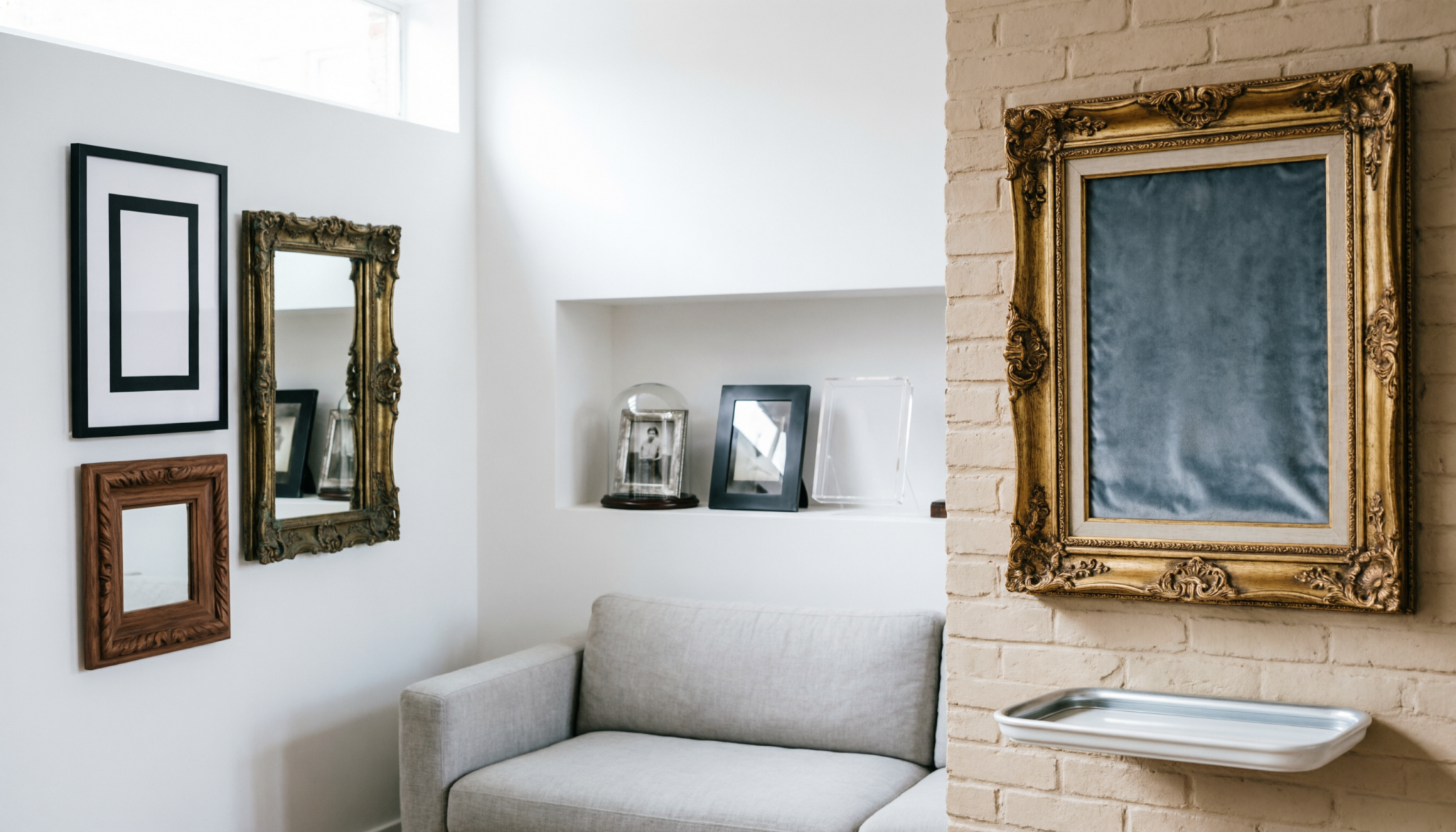
A mixed-frame wall works when contrast feels intentional, not random.
Clean modern lines paired with ornate vintage shapes add depth, but only if one element ties everything together.
Keep color, spacing, or matting consistent, and the wall reads as collected, not cluttered. Balance matters more than perfection here.
The Short Answer
To successfully mix frame styles, maintain one Unifying Element: either a consistent color palette (e.g., all gold tones) or a consistent matting style (e.g., all oversized white mats).
Combining sleek, black modern frames with ornate, gilded vintage frames creates a “Curated” look that feels collected over time rather than bought in a box.
Comparison Table
| Frame Style | Vibe | Best Art Pairing |
|---|---|---|
| Sleek Black Modern | Clean, structured | Photography, prints, typography |
| Ornate Gold Vintage | Warm, expressive | Portraits, classic art, sketches |
| Distressed Wood | Relaxed, lived-in | Nature prints, family photos |
| Metallic (Brushed) | Sharp, slightly bold | Abstract or monochrome pieces |
| White Minimal | Light, quiet, airy | Small art, line drawings |
Using a large modern piece to ground vintage clutter
Start with one large, simple frame. This is the visual anchor. Without it, a mixed wall drifts into chaos fast.
A clean black or metal frame gives the eye a place to rest. Everything else can be layered around it, including smaller vintage pieces with detail and age.
What works in real homes:
- Place the largest frame slightly off-center, not dead middle
- Build outward using smaller, more detailed frames
- Keep spacing tight (5–8 cm gaps) to avoid a scattered look
Weak approach to avoid:
Hanging many small vintage frames first. That creates visual noise with no structure. The wall ends up feeling accidental.
Why 3-inch mats make cheap frames look expensive
Matting fixes most mixing mistakes. A wide white mat instantly calms busy artwork and gives even inexpensive frames a finished look.
When styles clash, matting brings order.
Practical rules:
- Use thick mats (around 3 inches) for small art
- Keep mat color consistent across the wall
- Let vintage frames skip mats occasionally for contrast
Where people go wrong:
Mixing mat colors randomly. Cream, white, and grey together often looks like a mistake, not a choice. Pick one and commit.
Frame Finishes: Matte vs. Glossy vs. Distressed—How to blend textures
Texture is where the character lives. Flat modern frames alone feel cold. Too many distressed frames feel heavy.
The mix needs tension.
How to balance finishes:
- Matte black: grounding and quiet
- Glossy or metallic: adds light and contrast
- Distressed wood or ornate gold: brings warmth and age
A reliable formula:
- 60% simple modern frames
- 30% subtle texture (wood, brushed metal)
- 10% statement vintage pieces
Anything more than that, and the wall starts competing with itself.
FAQs
1. How many frame styles can work together without looking messy?
Three is a safe ceiling. Beyond that, the wall starts to feel unplanned unless spacing and color are tightly controlled.
2. Should all frames match in color when mixing styles?
Not all. One dominant color should repeat across at least half the frames. That repetition keeps the mix from falling apart.
3. Can modern art go inside vintage frames?
Yes, and it often looks better than expected. The contrast adds tension. Just keep matting simple so the pairing feels intentional.
Final Thought
A well-mixed frame wall is built, not rushed. Start with structure, repeat one element, and allow contrast in small doses.
When every piece feels slightly different but still connected, the wall holds attention without overwhelming the room. That balance is what makes it feel complete.