Tile damage often starts with the wrong cleaning method, not wear and tear.
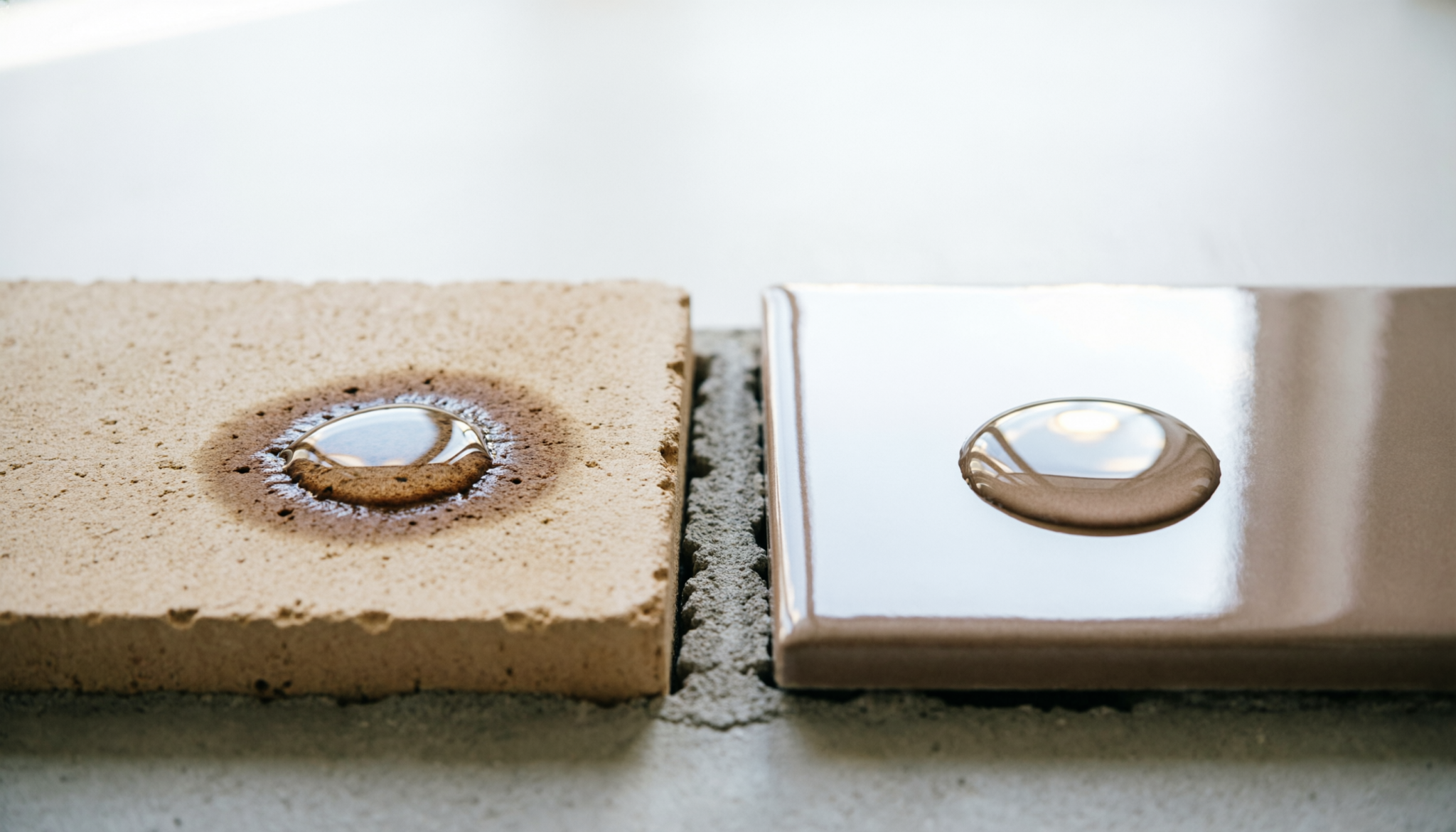
A simple water drop reveals what kind of surface sits underfoot.
Knowing whether tile is porous or glazed prevents dull spots, stains, and costly repairs, while guiding the right vacuum, brush, and cleaner choice from the start.
The Short Answer
The Test: Place a single drop of water on a clean tile surface and directly on the grout line.
- If water absorbs within 5 minutes → Porous tile (marble, travertine, slate). Requires soft rubber wheels and a pH-neutral cleaner.
- If water beads on the surface → Glazed tile (ceramic or porcelain). Handles firmer brushes and stronger mechanical cleaning.
The Water Drop Test That Actually Works
Most guides oversimplify this test. Surface dust, residue, or sealants can skew results. Accuracy depends on proper setup.
1. Clean a small area first
Use plain water and a cloth. Skip detergents. Residue can force water to bead even on porous stone.
2. Dry the surface completely
Any leftover moisture interferes with absorption timing.
3. Place one drop of water
Use a teaspoon or fingertip. No puddles. Precision matters.
4. Start timing immediately
Watch closely for 5 minutes.
5. Check both tile and grout
Grout often tells the truth faster than tile, especially on sealed surfaces.
What Results Actually Mean
Porous Tile (Water Absorbs)
- Surface darkens within minutes
- Texture often feels slightly rough or matte
- Common materials: marble, travertine, slate
Cleaning reality:
Porous tile absorbs not just water, but dirt, soap, and acids. Standard cleaners slowly stain or etch the surface.
Big mistake: Using multipurpose cleaners or stiff brush rolls. That combination grinds debris into the surface.
Glazed Tile (Water Beads)
- Water sits on top like a droplet
- Smooth, often shiny finish
- Common materials: ceramic, porcelain
Cleaning reality:
Protective glaze acts as a barrier. More aggressive scrubbing tools are safe here.
Big mistake: Assuming grout behaves the same way. Even with glazed tile, grout can remain porous and vulnerable.
Why Marble and Travertine Get Ruined So Easily
Acidic cleaners react with calcium-based stone. The result is not just dirt removal. The surface chemically breaks down.
What damage looks like:
- Dull patches that never polish out
- Chalky residue
- Uneven finish, especially in high-traffic paths
What causes it:
- Vinegar
- Citrus-based cleaners
- Bathroom descalers
Brush problem:
Stiff bristles scratch honed finishes. Damage builds slowly, then becomes obvious all at once.
Safer approach:
- pH-neutral cleaner only
- Soft microfiber or sponge rollers
- Vacuum wheels made of rubber, not hard plastic
How to Tell If Grout Protection Has Failed
Even glazed tile floors fail when grout loses its seal.
Quick check:
- Drop water on grout line
- If grout darkens quickly → sealant is gone
- If water sits for several minutes → seal still intact
Real-world pattern:
Entryways and kitchens lose seal faster due to foot traffic and frequent washing.
What happens when seal fails:
- Grout stains permanently
- Dirt spreads under the tile edges
- Cleaning becomes harder, not easier
Fix:
- Reapply grout sealer every 6–12 months in busy areas
- Spot-test first to avoid uneven finish
Choosing the Right Cleaning Setup
For Porous Tile
- Vacuum with soft rubber wheels
- Avoid beater bars or aggressive brush rolls
- Use pH-neutral stone cleaner only
- Mop with minimal water
For Glazed Tile
- Standard vacuum heads work fine
- Mechanical scrubbing is safe
- Mild alkaline cleaners are acceptable
- Steam cleaning works if grout is sealed
What Actually Helps (And What Wastes Money)
Most cleaning problems trace back to mismatched tools, not effort.
Worth buying:
- pH-neutral stone cleaner for porous surfaces
- Mop-vac combo with adjustable suction and soft rollers
- Grout sealer with applicator tip for precision
Skip:
- “All-purpose” cleaners for natural stone
- Vacuums with hard plastic wheels on delicate tile
- High-speed rotating brushes on marble or travertine
Bottom Line
One drop of water settles the question in minutes. Porous tile needs protection and gentle handling.
Glazed tile allows stronger cleaning methods but still demands attention to grout.
Misreading the surface leads straight to damage, and repairs cost far more than proper care.