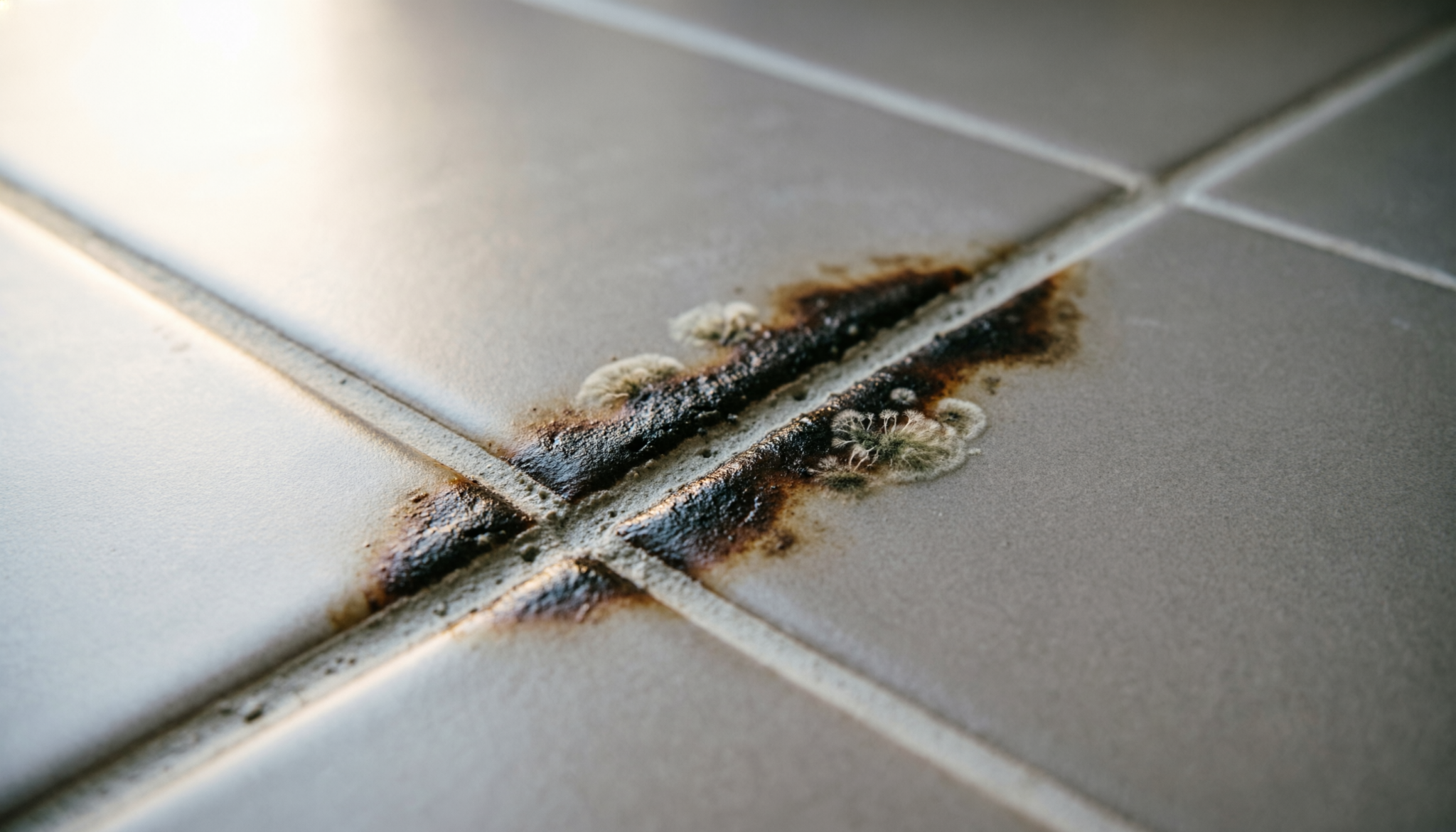
Diagnostic Summary: Black grout rarely starts as a tile problem. Most cases begin with airborne dust, oily residue, moisture, and poor vacuum filtration. Fine particles settle into porous grout lines, absorb humidity, and feed mildew growth.
Weak suction, leaking seals, clogged filters, and aggressive brush rolls accelerate the cycle by redistributing debris instead of removing it.
Warning: Black grout may contain mold spores, bacteria, skin cells, cooking grease, and carbon-based particulate matter. Disturbing contaminated grout without proper filtration can spread microscopic particles into surrounding rooms. Always use a sealed vacuum system with HEPA-level filtration before scrubbing grout manually.
Comparison Table
| Filter Grade | Particle Size Outcome | Capture Efficiency | Medical Application |
|---|---|---|---|
| Standard Foam Filter | Misses ultrafine dust below 10 microns | Low | Basic debris collection only |
| HEPA H13 | Captures particles down to 0.3 microns | 99.95% | Hospital isolation environments |
| ULPA Filter | Captures ultrafine contaminants below 0.12 microns | 99.999% | Pharmaceutical clean rooms |
The “Air Gap” Problem
High airflow (CFM) sounds impressive, but it fails in one critical situation: uneven surfaces.
Grout lines sit lower than tile surfaces. When a vacuum head glides across tiles, edges never fully seal against the floor.
That tiny gap allows outside air to rush in. Once that happens, suction pressure collapses exactly where it is needed most.
Here is the hard truth:
- Air always follows the easiest path
- Open gaps reduce resistance
- Reduced resistance kills suction force inside crevices
Instead of pulling dust out, airflow spreads it sideways. Fine particles settle into grout lines and stay there.
Brushrolls make it worse. Rotating bristles flick debris with force. On flat surfaces, that helps loosen dirt.
Over grout, that same motion drives particles straight into porous channels.
Result: deeper contamination after every pass.
The Hidden Link Between Vacuum Dust and Black Grout
Most homeowners blame moisture first. Moisture matters, but black grout often begins with dry soil contamination.
Every footstep grinds microscopic debris into flooring. Carpet fibers release lint. Pet dander circulates through the air.
Cooking oils drift across kitchens and settle near tile surfaces. Cheap or poorly maintained vacuums fail to contain these particles.
Instead of trapping dust, failing vacuums leak fine debris through weak seals and saturated filters. Exhaust airflow spreads contaminants across floors and into grout pores.
Once humidity enters the room, the trapped organic material becomes food for mildew and bacteria.
Bathroom grout darkens faster because steam creates constant moisture exposure. Kitchen grout blackens from grease combined with airborne dust.
Entryway tile absorbs outdoor carbon particles, soil, and moisture from shoes.
The grout itself acts like a sponge. Cement-based grout contains microscopic pores that trap oils and particles deep below the surface.
Surface mopping cannot fully remove embedded contamination once buildup hardens.
Vacuum failure accelerates the entire process.
Why Weak Filtration Creates Dirty Floors Even After Cleaning
Many vacuum cleaners advertise strong suction while ignoring filtration integrity. Suction alone does not guarantee clean floors.
A vacuum with poor sealing leaks microscopic debris through joints, hose connections, dust bins, and exhaust vents. Large debris enters the bin, but ultrafine particles escape back into the room.
This creates a false-clean effect.
Floors appear clean immediately after vacuuming because visible crumbs disappear. Meanwhile, fine dust settles back into grout lines within hours. Over time, dark buildup becomes permanent staining.
Several mechanical failures commonly contribute to black grout:
- Saturated filters restricting airflow
- Cracked internal seals
- Damaged hose gaskets
- Overfilled dust bins
- Worn brush rolls scattering debris
- Clogged cyclonic chambers
- Weak motor airflow under load
Bagless systems often struggle most with seal degradation because repeated bin removal stresses rubber gaskets. Fine drywall dust, ash, and baking flour accelerate wear by penetrating internal motor pathways.
High humidity worsens the issue because damp particles adhere aggressively to porous grout.
Technician’s Insight
Technician’s Insight: If black residue reappears within 24 hours after mopping, vacuum filtration failure is usually occurring upstream. Airborne particles continue settling onto tile surfaces even after cleaning.
Grout lines near kitchen edges, bathroom thresholds, and HVAC vents often reveal the earliest signs because airflow patterns concentrate microscopic debris there first.
The Role of Brush Rolls in Grout Contamination
Brush rolls help remove embedded carpet debris, but hard flooring changes the equation.
Aggressive brush agitation on tile often scatters particles sideways instead of lifting them cleanly into airflow channels. Cheap brush rolls create turbulence that drives fine grit directly into grout seams.
Hard floor cleaning requires controlled airflow rather than aggressive agitation.
Soft rollers work better because they maintain surface contact while reducing particle scatter. Stiff bristles frequently push dust into grout instead of extracting it.
Several warning signs indicate brush-roll-related contamination:
- Dust clouds visible near the vacuum head
- Grit remaining along grout lines
- Fine debris accumulating behind wheels
- Black edges forming near tile transitions
- Powdery residue after vacuuming
Wheel design also matters.
Hard plastic wheels can grind abrasive particles into grout and textured tile surfaces. Rubberized wheels reduce friction and particle pressure during movement.
Vacuum head height affects performance too. Heads sitting too high lose airflow concentration. Heads sitting too low create drag that pushes debris outward.
Both conditions increase grout contamination.
Moisture, Biofilm, and Why Grout Turns Permanently Dark
Black grout does not always mean mold alone. Biofilm often plays a larger role.
Biofilm forms when bacteria, oils, soap residue, dust, and moisture combine into a sticky layer. This layer bonds tightly to porous surfaces and protects microbial growth underneath.
Bathrooms create ideal conditions:
- Steam raises humidity
- Soap leaves fatty residue
- Skin cells feed bacteria
- Weak ventilation traps moisture
- Poor vacuum filtration spreads contaminants
Kitchen grout develops similar buildup through aerosolized cooking oils.
Once biofilm hardens, standard mopping spreads residue instead of removing it. Dirty mop water often deepens staining because contaminated liquid settles directly into porous grout channels.
Vacuuming before wet cleaning matters more than most people realize.
Dry particulate removal prevents mud-like slurry formation during mopping. Without proper vacuum extraction first, moisture pushes particles deeper into grout pores.
That explains why some grout lines darken more after cleaning attempts.
How to Stop Black Grout From Returning
Surface scrubbing alone rarely solves the underlying problem.
Long-term control requires interruption of the contamination cycle.
Focus on four areas first:
Improve Vacuum Filtration
Use sealed filtration systems capable of trapping ultrafine particles. Washable filters require complete drying before reinstallation. Damp filters encourage bacterial growth and airflow restriction.
Vacuum Before Mopping
Dry extraction removes loose particulate matter before moisture exposure. This prevents muddy residue from settling into grout.
Reduce Indoor Humidity
Bathroom exhaust fans should run during showers and at least 20 minutes afterward. Kitchens require proper ventilation during cooking.
Clean Grout With Controlled Moisture
Overwetting grout weakens sealants and increases microbial growth. Steam cleaning works best when followed by rapid drying airflow.
Grout sealing also helps, but sealants are not permanent. Most residential grout sealers degrade gradually under foot traffic, detergent exposure, and humidity.
Maintenance matters more than initial application.
FAQs
1. Why does grout turn black so quickly after cleaning?
Poor vacuum filtration often redistributes ultrafine dust into the air. Moisture then binds particles into porous grout lines. Mopping alone cannot stop recurring contamination if airborne debris continues settling onto floors daily.
2. Can vacuum exhaust spread mold spores?
Yes. Vacuums with weak seals or poor filtration can release microscopic spores and fine debris through exhaust airflow. This contamination settles into grout, carpet fibers, upholstery, and HVAC circulation zones.
3. Does steam cleaning permanently fix black grout?
No. Steam cleaning removes biofilm and residue temporarily, but contamination returns if airflow, filtration, and humidity problems remain unresolved. Prevention depends on proper particulate removal and moisture control.
Bottom Line
Black grout usually signals a filtration and moisture problem rather than simple dirt buildup. Weak vacuum sealing, poor airflow control, saturated filters, and high humidity create ideal conditions for embedded contamination.
Effective grout maintenance starts before mopping begins. Proper vacuum performance determines whether floors stay clean or continuously recycle microscopic debris.