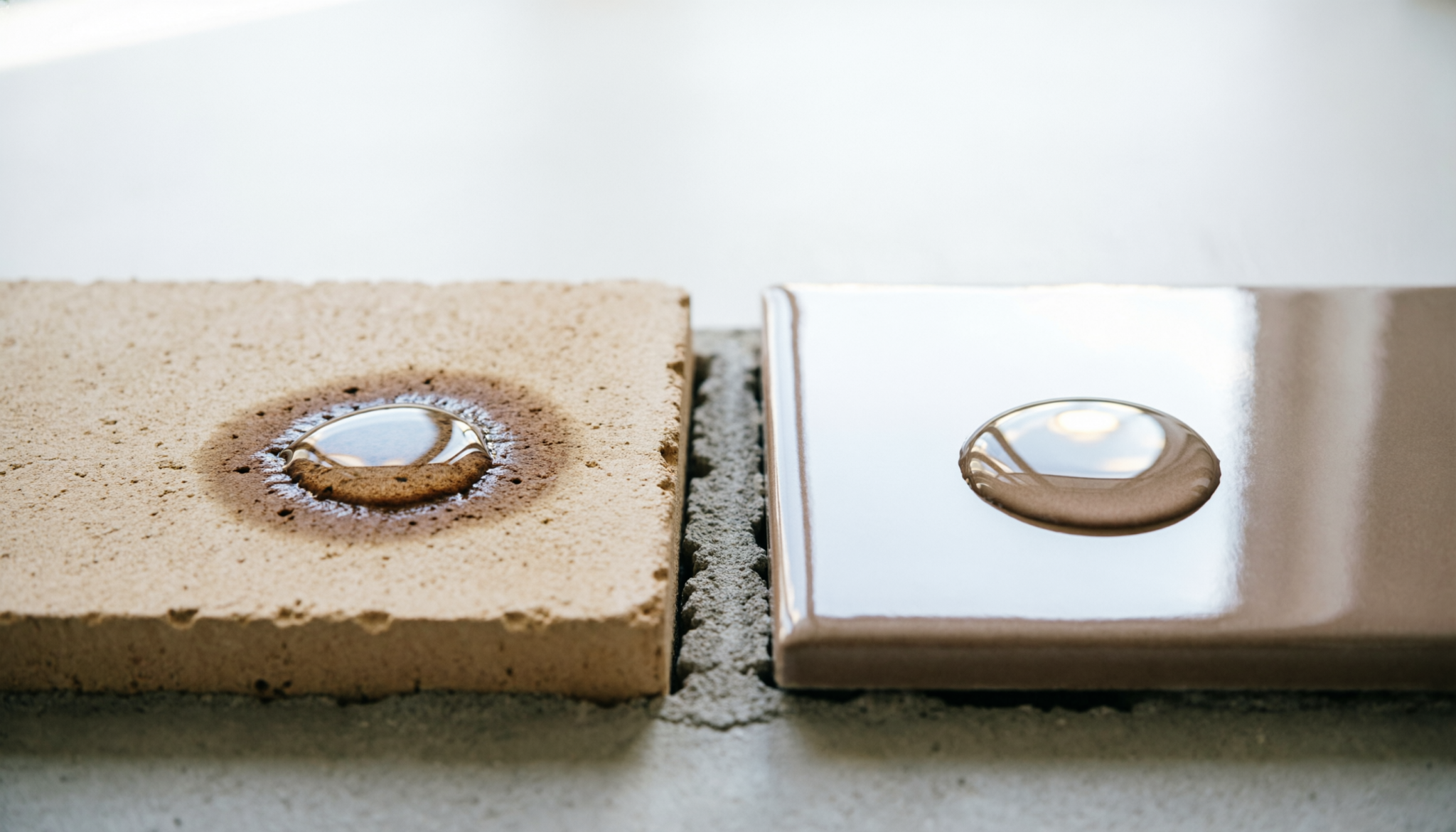
Maintenance Quick-Start: Place several drops of water on a clean tile surface and wait five minutes. Darkening, absorption, or spreading indicates porous tile. Beading or unchanged color confirms a glazed or sealed surface.
Correct identification prevents surface etching, grout damage, and moisture retention during vacuum-assisted floor cleaning.
Warning: Moisture Damage Often Starts Quietly
Steam mops, wet vacuums, and aggressive scrubbing tools can permanently damage porous tile.
Water entering unsealed clay or stone may lead to mildew beneath flooring layers, weakened grout joints, and white mineral staining called efflorescence.
High-suction vacuums with stiff brush rolls can also scratch glazed coatings if abrasive grit remains trapped under the head.
Always test cleaning methods on a small hidden section before full-floor cleaning.
Tile Surface Comparison Table
| Filter Grade | Particle Size Outcome | Capture Efficiency | Medical Application |
|---|---|---|---|
| Standard Foam Filter | Captures visible debris only | Low | General household dust control |
| HEPA H13 Filter | Captures particles down to 0.3 microns | 99.95% | Allergy-sensitive environments |
| HEPA H14 Filter | Captures ultrafine airborne particles | 99.995% | Clinical and laboratory sanitation |
Why Tile Porosity Changes Cleaning Methods
Porosity refers to the number of microscopic holes inside a tile surface. Porous tiles absorb liquids, cleaning chemicals, and soil particles. Glazed tiles contain a protective glass-like coating that blocks absorption.
This difference changes everything about safe maintenance.
Porous tile surfaces require:
- Lower moisture levels
- Softer vacuum heads
- Neutral-pH cleaners
- Faster drying times
- Frequent grout maintenance
Glazed surfaces tolerate more aggressive cleaning because moisture remains on the surface instead of penetrating into the material.
Common porous tile materials include:
- Terracotta
- Limestone
- Slate
- Unglazed ceramic
- Travertine
Common glazed tile types include:
- Glazed porcelain
- Gloss ceramic
- Factory-sealed ceramic wall tile
Many homeowners mistake textured tile for porous tile. Texture alone proves nothing. Some textured porcelain tiles remain completely sealed.
The water drop test removes guesswork.
How the Water Drop Test Works
The test works because porous material absorbs moisture into microscopic air pockets. Glazed surfaces block water penetration.
Follow this exact process:
Step 1: Clean the Tile First
Dust, soap film, and oils interfere with accurate results. Vacuum the floor thoroughly using a soft-floor attachment before testing.
Avoid rotating brush rolls on delicate tile finishes.
Step 2: Place Several Water Drops on the Surface
Use plain room-temperature water. Add three to five droplets across different sections of the tile.
Focus on:
- High-traffic areas
- Edge sections near grout
- Spots exposed to sunlight
- Areas near kitchens or showers
Step 3: Wait Five Minutes
Do not wipe immediately. Porous tile absorbs slowly.
Observe for:
- Darkening
- Spreading edges
- Partial absorption
- Matte patches
Step 4: Check the Result
Results usually fall into three categories:
Fully Glazed or Sealed Tile
Water remains rounded and unchanged.
Surface stays identical in color and texture.
Safe for:
- Damp mopping
- Wet vacuum systems
- Standard hard-floor suction heads
Mildly Porous Tile
Water partially absorbs and leaves a darker mark.
Surface may feel slightly cool or damp afterward.
Requires:
- Limited moisture exposure
- Fast drying
- Soft vacuum wheels and pads
Highly Porous Tile
Water disappears completely or absorbs rapidly.
Surface darkens noticeably.
Needs:
- Minimal water use
- Immediate drying
- Sealant maintenance
- Non-abrasive vacuum tools
Technician’s Insight
Technician’s Insight: Fine grit acts like sandpaper on glazed tile finishes. Vacuum wheels coated with construction dust or pet litter often cause permanent swirl marks.
Soft rubber wheels and microfiber hard-floor heads reduce friction and prevent microscopic scratching that slowly removes the protective glaze layer.
Best Vacuum Practices for Porous Tile Floors
Vacuum choice matters more than most homeowners realize. Incorrect airflow, wheel material, or brush agitation can damage vulnerable surfaces over time.
Use Soft Hard-Floor Attachments
Felt-lined or microfiber heads reduce abrasion.
Avoid:
- Stiff rotating brushes
- Beater bars
- Aggressive carpet heads
Porous tile traps fine grit inside pits and grooves. Hard bristles grind debris against the surface repeatedly.
Reduce Excessive Suction
High suction sounds impressive but creates problems on delicate tile.
Extreme airflow can:
- Pull loose grout particles
- Stress weakened grout joints
- Scatter abrasive sand beneath wheels
Adjustable suction settings work better on older tile installations.
Vacuum Before Any Moisture Cleaning
Dry soil removal prevents mud formation.
Wet cleaning before vacuuming forces grit into:
- Grout pores
- Tile texture
- Microscopic surface imperfections
Professional tile maintenance always starts with dry extraction first.
Monitor Vacuum Wheel Condition
Cracked plastic wheels scratch polished finishes quickly.
Inspect for:
- Embedded stones
- Sharp debris
- Worn wheel edges
Small wheel damage often causes large visible scratch patterns across reflective tile surfaces.
Common Misidentification Mistakes
Many cleaning problems start because tile type gets identified incorrectly.
Mistaking Shine for Glaze
Some polished natural stones appear glossy but remain porous.
Polished marble still absorbs moisture without proper sealing.
Assuming Porcelain Never Absorbs Water
Most porcelain resists absorption, but low-quality manufacturing or damaged glaze layers create vulnerable areas.
Ignoring Grout Behavior
Even fully glazed tile may contain highly porous grout lines.
Water entering grout can still:
- Cause mildew
- Lift dirt
- Weaken joints
- Produce odor
Vacuuming grout regularly matters just as much as cleaning tile surfaces.
Overusing Steam on Porous Floors
Steam cleaners create hidden moisture migration beneath unsealed tile.
Repeated exposure may weaken adhesive layers or discolor natural stone.
Steam works best only on fully sealed surfaces.
Safe Cleaning Schedule Based on Tile Type
Porous Tile
- Vacuum: Daily or every other day
- Damp cleaning: Weekly
- Sealing: Every 1–2 years
- Immediate spill cleanup required
Glazed Tile
- Vacuum: Weekly
- Damp cleaning: As needed
- Seal inspection: Occasionally
- More tolerant of moisture exposure
Floor traffic changes cleaning frequency significantly. Homes with pets, children, or outdoor footwear require more frequent dry debris removal.
FAQs
1. Does darker tile always mean porous tile?
No. Color has no connection to porosity. Many dark porcelain tiles remain fully glazed, while pale natural stone may absorb water rapidly.
2. Can porous tile become sealed permanently?
Sealants reduce absorption but require maintenance. Most penetrating sealers wear down gradually from foot traffic and chemical exposure.
3. Should robot vacuums run on porous tile?
Robot vacuums work safely if soft wheels and hard-floor settings are used. Avoid models with aggressive rotating brushes or excessive downward pressure.
Bottom Line
The water drop test remains the fastest and safest method for identifying porous versus glazed tile. Correct identification prevents moisture damage, scratching, grout deterioration, and cleaning failures.
Safe tile care starts with understanding how the surface reacts to water, suction, and abrasion before selecting any vacuum attachment or cleaning method.
What Actually Helps (And What Wastes Money)
Most cleaning problems trace back to mismatched tools, not effort.
Worth buying:
- pH-neutral stone cleaner for porous surfaces
- Mop-vac combo with adjustable suction and soft rollers
- Grout sealer with applicator tip for precision
Skip:
- “All-purpose” cleaners for natural stone
- Vacuums with hard plastic wheels on delicate tile
- High-speed rotating brushes on marble or travertine
Bottom Line
One drop of water settles the question in minutes. Porous tile needs protection and gentle handling.
Glazed tile allows stronger cleaning methods but still demands attention to grout.
Misreading the surface leads straight to damage, and repairs cost far more than proper care.