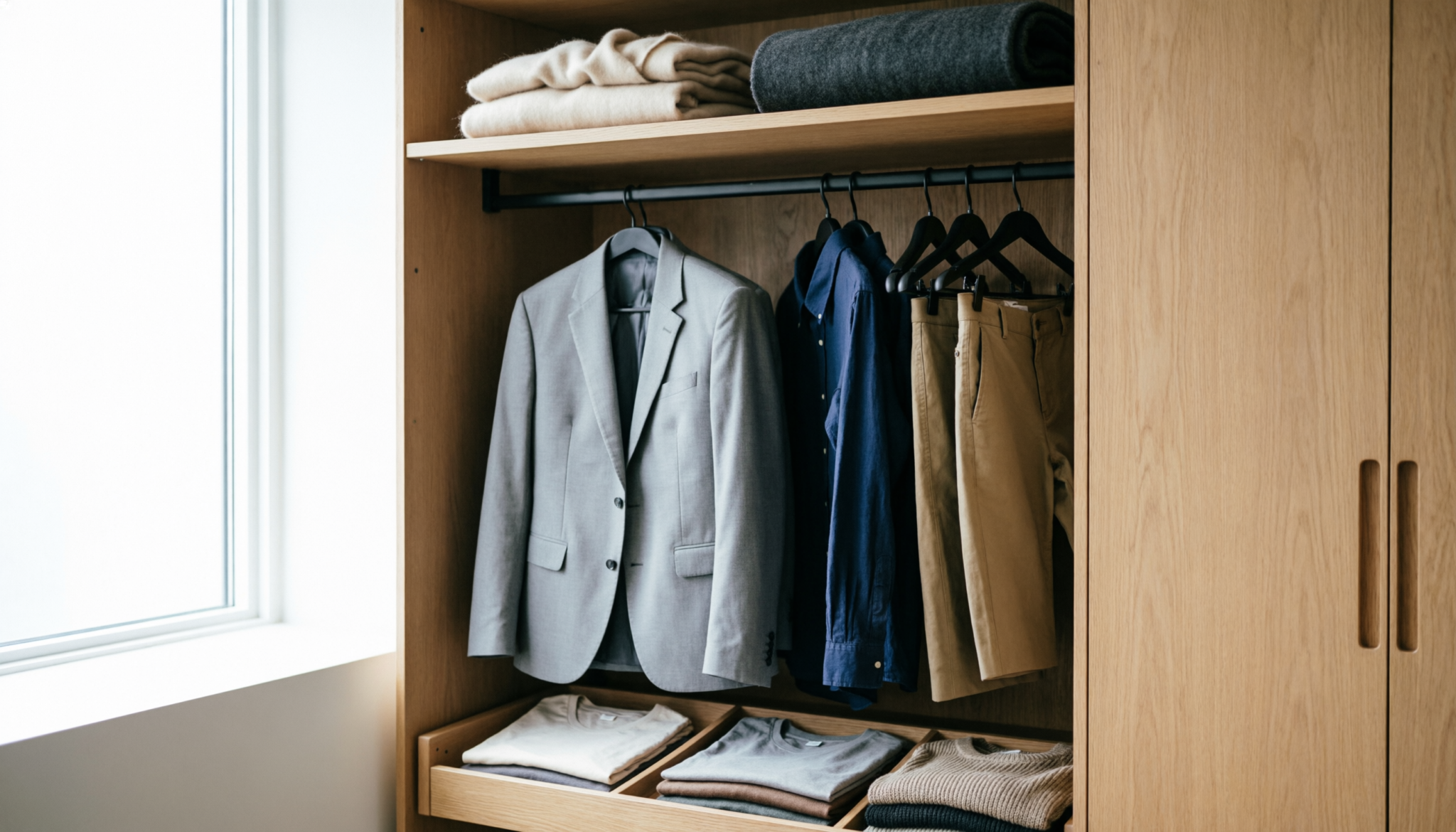
A closet works best when it reflects real habits, not ideal ones. Most wardrobes are cluttered because everything is treated equally.
Sorting by how often items are actually worn brings order fast.
The result is less time spent searching, fewer forgotten clothes, and a closet that feels manageable every day.
The Short Answer
Capsule wardrobe organization relies on the 80/20 Rule: 80% of the time, 20% of clothes get worn. These “Primary” items belong in the Prime Real Estate Zone (eye level, easy reach).
“Secondary” pieces move to Deep Storage Zones (high shelves or under-bed). Sorting by frequency cuts decision fatigue and preserves high-use garments.
The Frequency Zone Table
| Zone | Height Range | Items to Store | Storage Tool Needed |
|---|---|---|---|
| Active Zone | 3ft – 6ft | Daily Wear / Basics | Slim Hangers |
| Secondary Zone | Floor Level | Shoes / Jeans | Pull-out Bins |
| Deep Zone | 6ft+ | Seasonal / Formal | Vacuum Bags |
Prime Real Estate vs. Deep Storage: Mapping Your Closet Zones
Most closets fail because everything gets prime space. That’s the mistake.
Think of the closet as real estate with strict rent rules:
Prime Real Estate (Eye to Hand Level)
This is the money zone. Only daily wear belongs here.
- Work clothes worn weekly
- Favorite jeans
- Go-to tops
- Reliable layers
If an item hasn’t been worn in the last two weeks, it doesn’t belong here. Simple as that.
Secondary Zone (Lower Reach or Floor Level)
This area handles support roles.
- Extra jeans
- Occasional shoes
- Backup basics
These items are useful but not essential every day.
Deep Storage (High Shelves or Hidden Spaces)
This is where most people get lazy and create chaos. Be stricter.
- Seasonal clothing
- Formal wear
- Rare-use items
If something sits here for a full year untouched, it’s not storage. It’s avoidance. Remove it.
The Hanger Flip Trick: An Automated Way to Track Frequency
This method works because it removes guesswork.
How it works:
- Turn every hanger backward.
- After wearing an item, return it facing forward.
- Wait 60–90 days.
What remains flipped tells the truth.
What this reveals:
- Clothes kept out of guilt
- Wrong-size items
- “Someday” outfits that never happen
Most people assume they wear more variety than they actually do. This trick proves otherwise.
What to do next:
- Keep forward-facing items in Prime Zone
- Move untouched items to Deep Storage or remove entirely
No spreadsheets. No apps. Just behavior tracking that runs itself.
Organizing the “Capsule”: Color vs. Category vs. Season
This is where people overcomplicate things.
Sorting by color alone looks neat but slows daily use.
A black shirt buried between dress shirts and gym wear wastes time.
Sorting by category is more practical:
- Tops together
- Bottoms together
- Outerwear grouped
Within each category, frequency still rules.
Seasonal sorting works only after frequency sorting is done.
Otherwise, unused items just rotate in and out without purpose.
Best approach (tested in real homes):
- Sort by category first
- Within each category, arrange by frequency
- Use color only as a final visual layer, not the main system
This keeps the closet functional, not just tidy.
Practical Picks That Actually Earn Their Space
Not every organizer helps. Some create more clutter. These earn their keep:
Slim Velvet Hangers
- Maximize hanging space
- Prevent slipping
- Keep visual order tight
Clear Pull-Out Storage Bins
- Work for jeans, shoes, and folded items
- Visibility prevents “out of sight, out of mind”
Under-Bed Storage Containers
- Ideal for seasonal rotation
- Keeps bulk out of daily zones
Vacuum Storage Bags
- Useful, but only for true off-season items
- Overuse leads to forgotten clothes
Shelf Dividers
- Stop stacks from collapsing
- Keep categories separated without constant refolding
Avoid buying organizers before sorting. Otherwise, clutter just gets rearranged into prettier clutter.
FAQs
1. How many clothes should stay in the Active Zone?
Only what gets worn weekly. For most closets, that’s about 20–30% of total clothing. If the section feels crowded, too much has been promoted to “daily wear.”
2. What about sentimental clothing?
Keep it out of the main closet. Store it separately. Mixing emotional items with functional ones creates hesitation and slows daily decisions.
3. How often should frequency sorting be done?
Every 3–4 months works well. Seasonal changes naturally prompt a reset, making it easier to reassess what actually gets worn.
Final Thought
A well-organized closet reflects real habits, not ideal versions of them. Frequency-based sorting removes friction from daily routines and exposes what truly earns space.
When placement matches use, everything becomes easier to find, maintain, and wear. Order stops being a project and starts becoming a quiet, reliable part of everyday life.