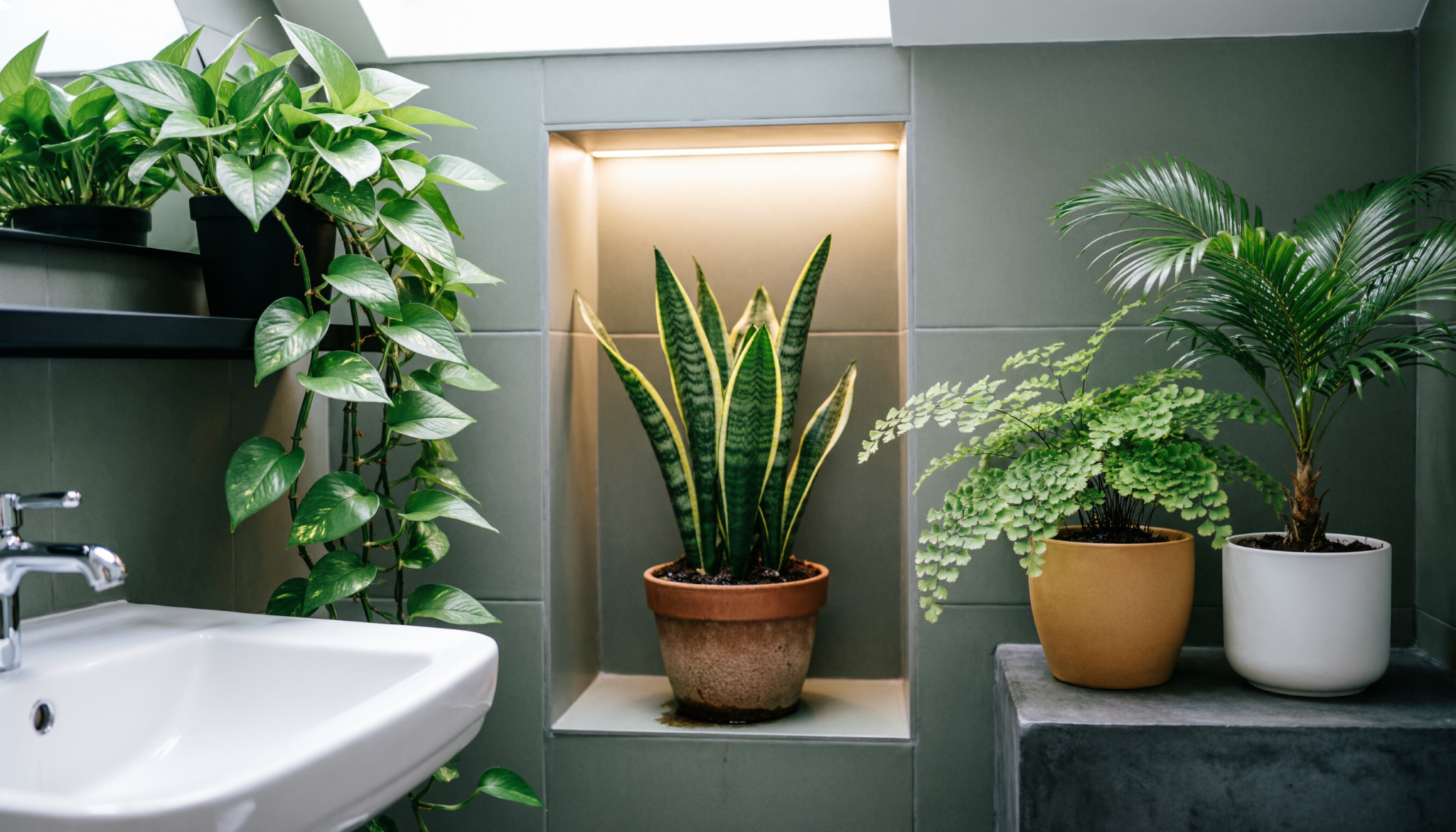
Windowless bathrooms feel stale fast. Damp air, no sunlight, and constant temperature swings make most houseplants fail within weeks.
A small group of tough species can handle these conditions with minimal care. This guide breaks down what actually works, why most plants struggle, and how to keep greenery alive long-term.
The Verdict
No plant survives in complete darkness forever. However, ZZ Plant and Snake Plant tolerate very low light by slowing growth and conserving energy.
In windowless bathrooms, survival depends on indirect ambient light or a basic grow bulb. These species also handle humidity better than most indoor plants.
The Survival Table
| Plant Species | Light Tolerance | Humidity Need | Watering Frequency |
|---|---|---|---|
| ZZ Plant | Ultra-Low | Moderate | Once a month |
| Snake Plant | Ultra-Low | Low | Every 3 weeks |
| Peace Lily | Low | High | Weekly |
The Low-Light Myth: “No Light” vs. “Low Light”
“Low light” gets misunderstood all the time. Low light still means some light exists. Think hallway spillover, a cracked door, or a ceiling fixture left on for part of the day.
“No light” means exactly that. Total darkness. No plant survives that long-term.
Here’s where many setups fail:
- Bathrooms kept shut all day with lights off
- Decorative plants placed far from any light source
- Assumption that humidity replaces light
Humidity helps with leaf health, not energy production. Without light, photosynthesis stops. Even the toughest plants slowly decline.
Practical fix: ensure at least 6–8 hours of indirect or artificial light daily.
Low-Light Plants: The best species for windowless bathrooms
1. ZZ Plant (The Immortal)
Thick, waxy leaves store water and tolerate neglect better than almost anything.
Why it works:
- Handles extremely low light
- Rarely complains about missed watering
- Compact growth suits small bathrooms
Watch for:
- Overwatering, which causes root rot quickly
2. Snake Plant (The Air Purifier)
Upright, structured leaves make it ideal for tight corners and narrow shelves.
Why it works:
- Survives in very dim conditions
- Tolerates dry and humid air
- Slow growth means less maintenance
Watch for:
- Water sitting in the base of leaves
3. Pothos (The Trailer)
Trailing vines soften hard bathroom surfaces and add movement.
Why it works:
- Adapts to different light levels
- Grows even under artificial light
- Easy to propagate if stems get leggy
Watch for:
- Thin, stretched vines in very dim setups
4. Cast Iron Plant (The Indestructible)
Built for neglect, low light, and inconsistent care.
Why it works:
- Tolerates deep shade better than most
- Handles temperature swings well
- Leaves stay upright and neat
Watch for:
- Slow growth, which can test patience
5. Peace Lily (The Humidity Lover)
Adds a softer look with dark leaves and occasional white blooms.
Why it works:
- Thrives in humid air
- Shows clear signs when water is needed
- Works well near sinks or showers
Watch for:
- Drooping leaves if watering is delayed
How to Use a $15 Grow Light Bulb in a Standard Bathroom Fixture
A basic grow bulb solves most light problems without complicated setups.
Simple approach:
- Replace the regular bulb with a full-spectrum grow bulb
- Keep the light on for 8–10 hours daily
- Position plants within 1–2 meters of the fixture
What works best:
- Warm white grow bulbs blend with normal lighting
- Timers prevent forgetting to switch lights on
Common mistake:
- Installing the bulb but rarely turning it on long enough
Consistency matters more than intensity.
FAQs
1. Can any plant live in a completely dark bathroom?
No. Even the toughest plants decline without light. Artificial lighting or occasional exposure to brighter areas keeps plants alive.
2. How often should plants be rotated out of a dark bathroom?
Every 2–4 weeks works well. Move plants to a brighter room for recovery, then return them.
3. Why do leaves turn yellow in a bathroom setting?
Most cases come from overwatering combined with low light. Reduce watering and improve light exposure.
Final Thought
Windowless bathrooms challenge even experienced plant keepers. Success comes down to realism, not optimism. Choose resilient species, control watering, and add a simple light source.
Ignore these basics and plants fail quietly. Follow them, and even the darkest bathroom holds steady, healthy greenery without constant effort or guesswork.