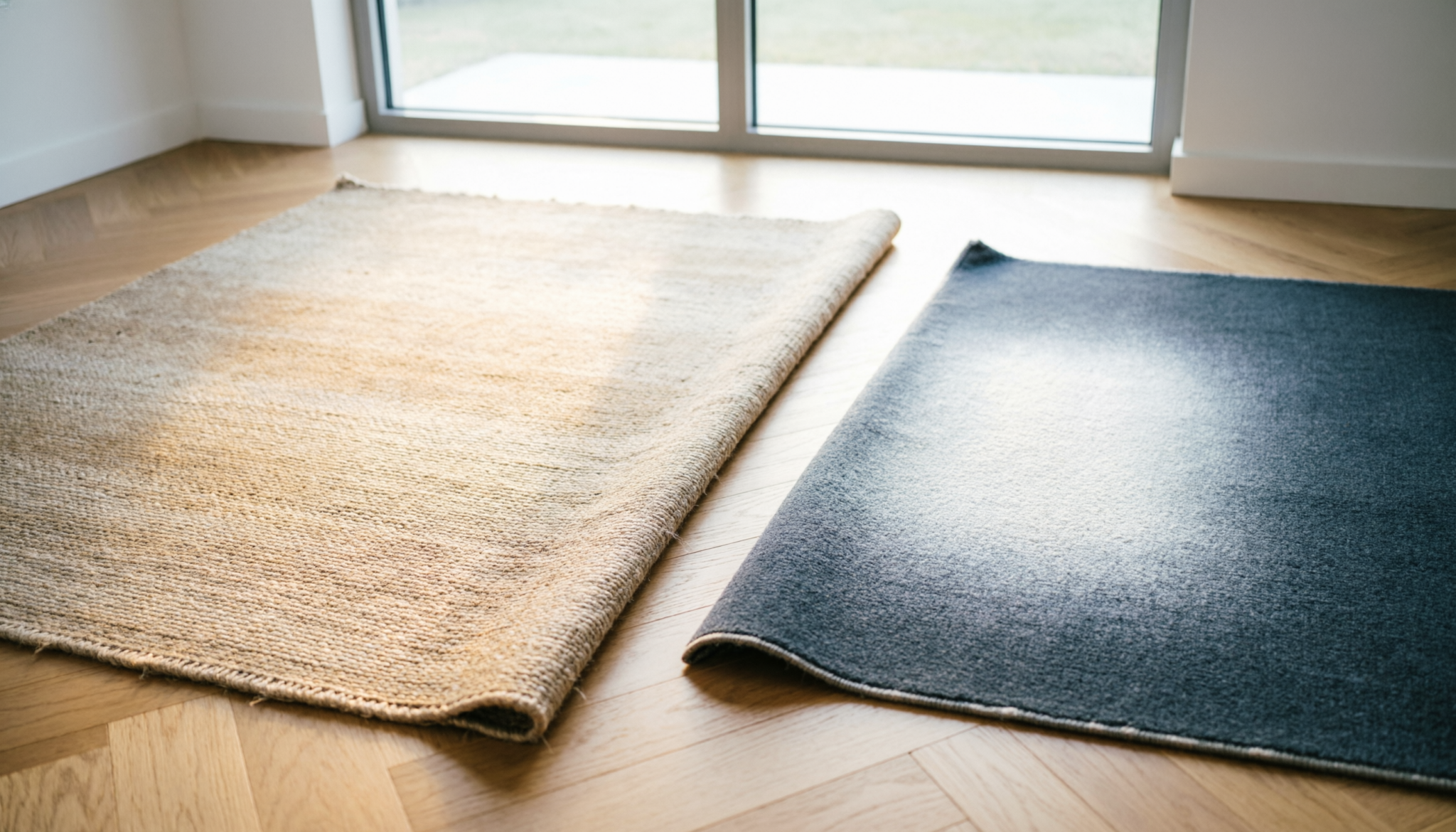
Direct sunlight quietly wears down rug fibers day after day.
Some materials hold their color and strength for years, while others fade, dry out, and weaken within months.
Choosing the right fiber makes the difference between a rug that lasts and one that quickly looks tired and brittle.
The Short Answer
Synthetic fibers like solution-dyed polypropylene are the most reliable choice for high-sunlight areas because the color runs through the entire fiber, not just the surface.
Natural fibers like jute and silk break down faster under UV exposure, often fading and weakening within 6–12 months.
The Comparison Table
| Fiber Material | UV Resistance | Moisture Resistance | Softness | Best Application |
|---|---|---|---|---|
| Polypropylene | ☀️☀️☀️☀️☀️ | High | Moderate | Sunrooms / Patios |
| Wool | ☀️☀️☀️ | Moderate | High | Living Rooms |
| Jute / Sisal | ☀️ | Low (Rot Risk) | Low (Scratchy) | Low-Sun Mudrooms |
| Polyester (PET) | ☀️☀️☀️☀️ | High | High | Bedrooms |
The Chemistry of Fading
Sunlight carries ultraviolet (UV) radiation, which breaks molecular bonds inside fibers and dyes. This is not just surface damage. It reaches into the structure of the material.
Natural fibers such as wool, jute, and silk rely on organic compounds. UV rays attack these compounds, causing:
- Color fading (sun-bleaching)
- Loss of strength
- Dryness and brittleness
Synthetic fibers are engineered differently. Many resist UV damage because their chemical structure is more stable.
Some even include built-in UV inhibitors that slow degradation.
That difference shows up fast in real homes. A jute rug in a bright sunroom can look worn within a year.
A polypropylene rug in the same spot can hold steady for several years with minimal fading.
Solution-Dyeing vs. Piece-Dyeing
This detail matters more than most people realize.
Solution-Dyeing
Color is added during the fiber creation process. Pigment becomes part of the fiber itself.
What this means in practice:
- Color goes all the way through
- Fading happens slowly and evenly
- Strong resistance to sunlight and cleaning
Piece-Dyeing
Color is applied after the rug is made.
What this means:
- Dye sits mostly on the surface
- Faster fading under direct sunlight
- More noticeable color loss in patches
For sunrooms and outdoor rugs, solution-dyed fibers consistently outperform piece-dyed options. The difference becomes obvious within months in bright spaces.
What Actually Holds Up in Real Homes
Outdoor rugs and sunroom setups reveal the truth quickly.
- Polypropylene handles intense sun, spills, and humidity without much fuss. It is the safest long-term choice for bright spaces.
- Polyester (PET) holds color well and feels softer, but can flatten over time in high-traffic areas.
- Wool performs better than expected in moderate sunlight but still fades gradually. Not ideal for full-day exposure.
- Jute and sisal struggle the most. They fade fast and can weaken or rot if moisture enters the mix.
A common mistake is choosing based on feel alone. Softness matters, but in direct sunlight, durability decides how long a rug stays usable.
FAQs
1. How long does a natural fiber rug last in direct sunlight?
Most natural fiber rugs start showing visible fading within 6 to 12 months in strong sunlight. Structural weakening can follow soon after, especially with jute and sisal.
2. Can fading be slowed down?
Yes, but not stopped. Use window coverings, rotate rugs every few months, and avoid placing delicate fibers in full-day sun. Even with these steps, material choice still matters most.
3. Is polypropylene safe for indoor use in sunrooms?
Yes. Modern polypropylene rugs are widely used indoors. They resist fading, handle moisture well, and clean easily, making them practical for bright, high-use spaces.
Final Thought
Sunlight is relentless, and not all fibers are built to handle it. Natural materials offer charm but struggle under constant UV exposure.
Synthetic options, especially solution-dyed polypropylene, hold their color and strength far longer. In bright spaces, durability should come first, or replacement becomes a regular expense rather than a rare one.