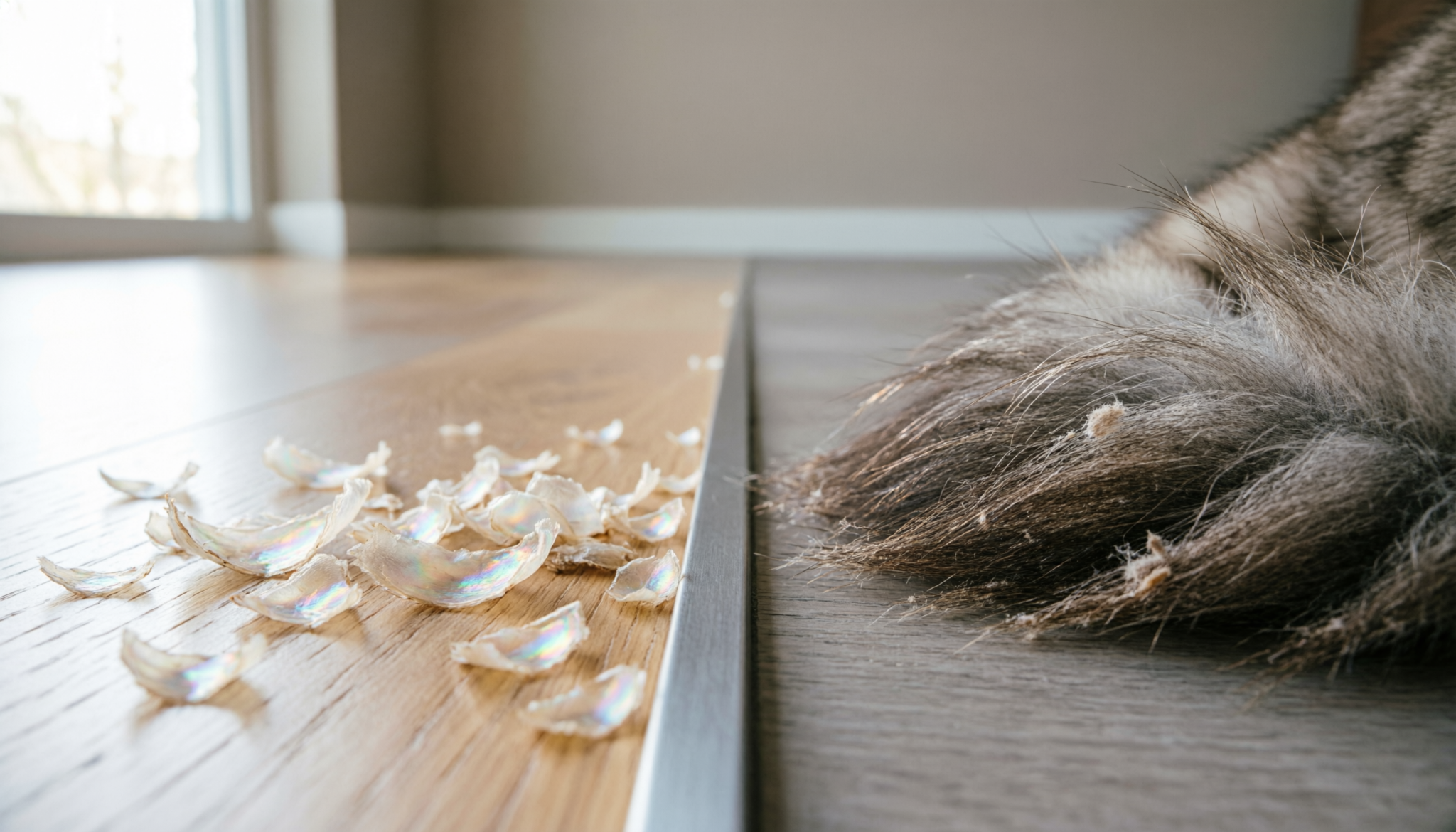
Most homes treat pet hair as the problem, but allergies tell a different story.
Tiny skin flakes float unseen, slip through weak filters, and get blown back out during vacuuming.
That exhaust cloud can undo cleaning efforts and irritate lungs, eyes, and sinuses more than the visible mess on floors.
The Short Answer
The Warning: Visible pet hair is cosmetic; pet dander is the health issue.
Dander particles measure 1–10 microns, small enough to pass through poor filters and re-enter the room through the vacuum’s exhaust.
What actually works: A certified sealed system paired with true HEPA filtration.
This forces all airflow through the filter media, preventing leaks that quietly spread allergens back into the air.
The Static Bond: Why Dander Clings to Everything
Dander behaves differently from fur. Hair sits on top of surfaces. Dander embeds itself.
Here’s what’s really happening:
- Electrostatic charge: Dander carries a slight charge that makes it cling to fibers like carpet, upholstery, and curtains
- Microscopic size: It slips deep into pile and padding where suction alone can’t reach
- Oil content: Skin flakes carry oils that help them stick to surfaces and resist airflow
Where most vacuums fail:
Strong suction without agitation only skims the surface. It pulls loose debris but leaves bonded dander behind.
What actually removes it:
- A motorized brush roll that beats and lifts fibers
- Consistent brush contact with the floor (not floating above it)
- Multiple passes in slow, overlapping strokes
Technical benchmarks prove this: agitation breaks the bond, suction removes the debris. One without the other is incomplete.
The Exhaust Problem: Where Cleaning Goes Wrong
A vacuum that leaks turns cleaning into redistribution.
When airflow escapes before reaching the filter, it carries fine particles back into the room.
That includes dander, dust mites, and other allergens small enough to stay airborne for hours.
Common weak points:
- Loose seals around the dust bin
- Gaps in hose connections
- Poorly fitted filters
- Foam or mesh filters marketed as “HEPA-like”
If air can escape, dander will escape with it.
The Exhaust Test: Check If Your Vacuum Is Making It Worse
A quick test reveals more than marketing claims.
Step-by-step check:
- Vacuum a small, dusty area for 2–3 minutes
- Turn off the machine
- Stand still and watch the air in sunlight or near a window
- Place a clean hand near the exhaust port
Red flags:
- A visible haze or fine dust cloud
- A musty or “warm dust” smell
- Irritation in the nose or throat immediately after vacuuming
For a clearer signal, use a simple white tissue:
- Hold it near the exhaust while the vacuum runs
- Any grey residue means particles are escaping filtration
That’s not harmless dust. That’s what just got blown back into the room.
What Actually Fixes the Problem
Ignore branding claims and focus on design reality.
Non-negotiables:
- Sealed system construction (no bypass airflow)
- True HEPA filter rated for 0.3 microns
- Tight gasket seals around every connection point
- Enclosed dust bin that doesn’t leak when removed
Nice to have, but not enough alone:
- High suction power
- Cyclonic separation
- Lightweight design
Without proper sealing, even powerful machines spread allergens.
Hard Truth Most People Miss
A vacuum can make a home look clean while quietly worsening air quality.
That gap between visible cleanliness and breathable air is where allergy problems start.
Fixing it isn’t about more power. It’s about controlling airflow, sealing leaks, and actually capturing what can’t be seen.
Bottom Line
Pet hair is easy to remove. Dander isn’t.
If exhaust air isn’t fully filtered and contained, cleaning becomes circulation.
The right vacuum doesn’t just pick up dirt. It keeps it from coming back out.