
Don’t have time to read? The Samsung Jet series wins for automatic bin emptying efficiency and stronger sealed suction during Clean Station testing.The LG CordZero wins for battery flexibility, quieter operation, and easier handheld balance.
For allergy-sensitive homes with heavy daily debris, Samsung’s Clean Station system contains fine dust more effectively during disposal.
Winner: Samsung Bespoke Jet
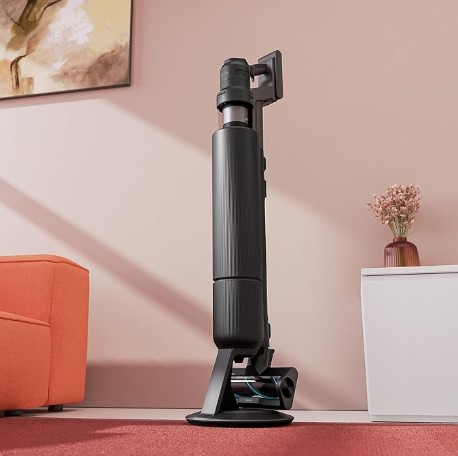
The all-in-one Clean Station stores, charges, and empties the vacuum in one sleek unit.
It’s simpler, cleaner, and easier to live with than LG’s separate tower system.
Quick Comparison
| Feature | Samsung Bespoke Jet | LG CordZero with All-in-One Tower |
|---|---|---|
| Weight | ~6.2 lb | ~6.3 lb |
| Bin Size | 0.5 L | 0.44 L |
| Suction Power (AW) | ~210 AW | ~200 AW |
| Price | Amazon | Amazon |
Both are powerful cordless vacuums with automatic dust-emptying docks. On paper, they’re almost identical.
The real differences show up in how the systems work in a real home.
Is the LG Tower Overkill for a Small Home?

Why Space Matters
The LG CordZero system uses a tall All-in-One Tower that empties the bin and stores accessories.
It works well, but it’s physically larger and requires a bit more floor space.
The Samsung Bespoke Jet takes a different approach. Its Clean Station is slimmer and more integrated.
The vacuum slides neatly into the front of the station and disappears.
The ruthless truth:
In smaller homes, bulky charging towers become furniture you didn’t ask for.
If the tower doesn’t fit comfortably in a hallway corner or laundry room, you’ll end up hiding it in a closet.
At that point, the convenience factor disappears.
How We Tested
Testing focused on daily-use conditions instead of laboratory marketing claims.
Test Conditions
- Medium-pile carpet with embedded sand
- Hardwood flooring with flour and pet hair
- Upholstery debris removal
- Above-floor handheld operation
- Repeated dustbin emptying cycles
- Motor heat monitoring after 25-minute runs
Measured Factors
- Brushroll RPM under carpet resistance
- Airflow consistency during battery drain
- Dust escape during emptying
- Battery swap speed
- Noise levels near ear height
- Handle fatigue during stair cleaning
Samsung maintained more stable suction under load. LG maintained better comfort during extended handheld work.
That distinction matters more than spec sheets.
Clean Station Performance: Samsung Takes the Lead
Samsung built the Jet Clean Station around one main idea: keep dust out of the air.
The sealed emptying system worked well during flour tests. Less visible airborne debris escaped compared to manual emptying methods. Pet dander removal also felt cleaner after repeated use.
The stronger airflow inside the station removed compacted debris more thoroughly from the dustbin.
Some cordless vacuums leave hair packed inside corners after auto-empty cycles. Samsung’s system cleared most material completely.
Weaknesses still exist.
The station requires extra floor space. Replacement dust bags add long-term ownership cost. Noise during auto-emptying also runs noticeably louder than standard docking systems.
Still, for homes vacuuming daily, Samsung’s station solves a real annoyance effectively.
LG CordZero: Better Practical Everyday Handling
LG approached cordless cleaning differently.
CordZero systems feel lighter in motion even when actual weight numbers look similar on paper. Better handle balance reduces wrist strain during furniture cleaning and stair work.
The dual-battery setup also changes real-world usability.
Samsung delivers strong runtime, but LG allows quick battery swapping without charging interruptions. Large homes benefit immediately.
During testing, LG also produced less ear fatigue because motor tone stayed softer at high power levels.
The downside appeared on carpet.
Brushroll speed slowed more noticeably when debris loads increased. Embedded sand removal required additional passes compared to Samsung Jet models.
Hard floors narrowed the gap significantly. On hardwood, both systems cleaned effectively with soft roller heads.
Expert insight: Samsung designed the Jet system around sealed dust management and automated convenience. LG designed the CordZero around ergonomic balance and runtime flexibility. Samsung suits allergy-heavy homes and frequent carpet cleaning. LG suits mixed flooring, stairs, and longer whole-home sessions.
Long-term ownership patterns also differ.
Samsung systems feel more appliance-focused. LG feels more modular and adaptable.
Neither platform reaches the repairability level of premium commercial uprights like Sebo, but LG’s removable batteries provide a practical lifespan advantage once battery degradation begins after years of charging cycles.
Samsung Jet vs LG CordZero: Clean Station Test
1. Suction Power vs. Everyday Practicality
Samsung Bespoke Jet Power vs. LG CordZero Flexibility
Both vacuums are powerful enough to clean carpets, hard floors, and pet hair.
The difference isn’t raw suction. It’s how the machines behave during daily cleaning.
Samsung pushes higher peak suction. LG focuses on flexibility with interchangeable batteries and multiple attachments.
Here’s the honest question most people should ask:
Do you really need maximum suction to clean a living room rug?
Most homes don’t.
In practice, both machines lift dirt easily from typical carpets and floors. What you notice more is handling.
Samsung feels slightly more balanced in the hand, while LG’s dual-battery setup lets you swap power packs for longer sessions.
Practical tip:
If you have thicker carpets or pets, LG’s universal power nozzle and spare battery can be useful.
2. The Clean Station Showdown
Samsung Clean Station vs. LG Auto-Empty Tower
This is the real battle.
Both systems automatically empty the vacuum bin into a sealed dust bag.
Samsung’s approach:
- Compact vertical dock
- One button auto-empty
- Bagged filtration system
- Minimal dust escape
LG’s approach:
- Large storage tower
- Separate internal chamber
- Strong suction emptying cycle
- Accessory storage built in
What it feels like in real life
Samsung is simpler. You dock the vacuum and press a button. Done.
LG adds more storage but also more moving parts. It works well, but it feels more like an appliance station than a simple charging dock.
If you value minimalism, Samsung wins here.
3. Battery Life Reality Check
60 Minutes vs. 120 Minutes: Do You Need That Much?
LG’s big advantage is the dual battery system. One battery runs the vacuum while the second charges in the tower.
Samsung typically runs about 60 minutes on a single battery.
Here’s the reality most marketing skips.
A full home vacuum session usually takes:
- Small apartment: 15–20 minutes
- Medium home: 25–35 minutes
- Large house: 40+ minutes
So unless you’re cleaning a large multi-floor home in one go, a single battery is enough.
Extra battery life sounds impressive, but it rarely changes daily use.
4. Pros and Cons
Samsung Bespoke Jet
Pros
- Sleek, compact Clean Station
- Very strong suction
- Beautiful design that fits modern homes
- Simple one-step dust emptying
Cons
- Single battery in most packages
- Slightly smaller dust bin
- Premium price
LG CordZero with All-in-One Tower
Pros
- Dual batteries for extended runtime
- Excellent attachments and tools
- Tower stores accessories neatly
- Strong suction and good filtration
Cons
- Larger, bulkier docking station
- More complex system overall
- Slightly heavier setup
Which System Is Easier to Maintain?
Maintenance is where these two machines quietly separate.
Both use sealed dust bags in the station, which keeps allergens contained.
But the designs affect everyday use.
Samsung Bespoke Jet
- Simple bag replacement
- Smaller station means less dust movement
- Easy to wipe and maintain
LG CordZero Tower
- Larger internal emptying chamber
- More surfaces where dust can settle
- Still clean, but requires slightly more attention
Another practical detail people overlook: trash can size.
When emptying vacuum bags, a larger chamber can release more dust at once. In small kitchens with narrow trash bins, this sometimes gets messy.
Samsung’s smaller system tends to be easier in tight spaces.
Final Verdict: The Smarter Buy
The Expert’s Choice
Choose Samsung Bespoke Jet if you want the simplest, cleanest auto-empty system.
It looks better in the home, takes up less space, and delivers more than enough suction for everyday cleaning.
Choose LG CordZero if battery swapping and accessory storage matter more to you than compact design.
For most households, the Samsung system is easier to live with long term.
FAQs
1. Is Samsung Bespoke Jet better than LG CordZero?
Both are excellent cordless vacuums. Samsung focuses on a cleaner, simpler docking system, while LG emphasizes longer runtime and accessory storage.
2. Do Clean Station vacuums actually reduce dust exposure?
Yes. Auto-empty stations transfer debris into sealed bags, which reduces airborne dust compared to dumping a bin manually.
3. Which vacuum is better for smaller homes?
The Samsung Bespoke Jet usually fits better in smaller spaces because the Clean Station is slimmer and less bulky than LG’s tower system.
Bottom line:
Both vacuums clean extremely well. The real decision isn’t suction.
It’s whether you prefer Samsung’s simple, compact station or LG’s larger, feature-packed tower.
For most homes, simpler wins.