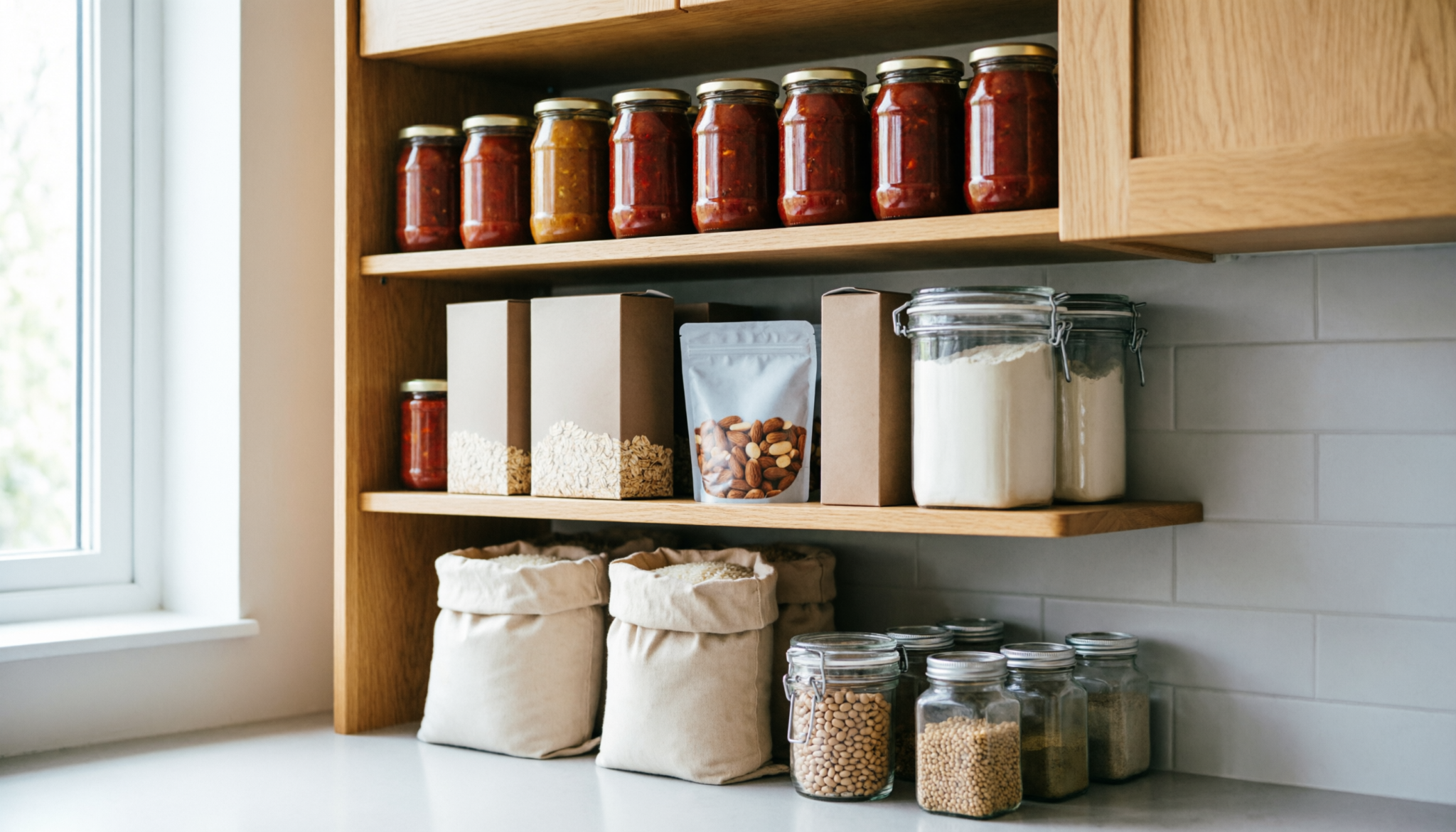
A tidy pantry is not about neat rows. It is about movement. The FIFO method keeps food flowing so nothing sits forgotten.
With one simple habit, everyday groceries stay fresh longer, waste drops fast, and weekly shopping stretches further without extra effort or complicated systems.
The Short Answer
FIFO (First In, First Out) is a simple inventory system where older items move to the front so they get used before newer ones.
At home, it comes down to one habit: “New Back, Old Front.” Kitchens that follow this consistently waste far less food and stretch grocery budgets noticeably.
The “FIFO Habit” Checklist
| Step | Action | Why it Works |
|---|---|---|
| Rotate | Pull old items forward before putting new ones away. | Prevents back-of-shelf waste. |
| Label | Mark opened dates, not just expiration dates. | Tracks freshness after opening. |
| Visible | Use clear containers for all decanted items. | Removes guesswork and confusion. |
Implementing FIFO after every grocery run
Most systems fail because they feel like work. FIFO works because it takes two minutes, not twenty.
After unpacking groceries, pause before placing anything on a shelf. Pull older items forward first. Then place the new items behind them.
That small pause prevents food from disappearing into the back where it gets forgotten.
Skip this once, and clutter begins. Skip it often, and food starts expiring unnoticed. Consistency matters more than perfection here. Even a rushed version keeps the system alive.
Dividing by category vs. expiration date
A pantry without zones becomes a hiding place. FIFO needs structure to hold.
Start with categories that match real cooking habits. Grains together, canned goods together, snacks in one place.
This keeps daily use simple. Within each zone, arrange items by date, with the oldest at the front.
Trying to organize purely by expiration date sounds smart but fails in practice. It forces constant rearranging and slows down daily use. Category first, rotation second works better in real kitchens.
Fridges follow the same idea. Dairy in one section, leftovers grouped together, produce visible. FIFO only works when food is easy to see and easy to reach.
FIFO Tools: Making rotation automatic instead of manual
Manual rotation works, but tools make it easier to stick with.
Gravity-fed can racks do most of the work. New cans load from the top or back, while older cans roll forward automatically. This removes the need to think about rotation every time.
Clear storage bins solve a different problem. They remove visual confusion. When contents are visible, nothing gets lost at the back. Labels add clarity, especially for opened packages or decanted staples.
Stackable bins, turntables for sauces, and simple shelf risers also help keep everything in sight. Hidden food is wasted food, every single time.
FAQs
1. Does FIFO really make a difference in small households?
Yes. Smaller households often waste more per item because food sits longer. FIFO keeps usage intentional, so even small quantities get used before spoilage.
The impact shows quickly in reduced trash and fewer last-minute grocery runs.
2. What foods benefit most from FIFO?
Dairy, leftovers, packaged snacks, and canned goods benefit the most. These items are easy to forget and often pushed to the back.
Fresh produce also improves when kept visible and rotated regularly in the fridge.
3. How to maintain FIFO without overthinking it?
Keep it simple. Focus on the two-minute rule after shopping and basic visibility. Avoid complex labeling systems or constant reorganization.
If the system feels heavy, it will not last. The goal is consistency, not perfection.
Final Thought
A pantry that works is not about perfect shelves. It is about steady habits. FIFO turns everyday groceries into a system that quietly saves money and reduces waste.
Keep food visible, rotate without fail, and the kitchen starts running smoother without extra effort or strict routines.