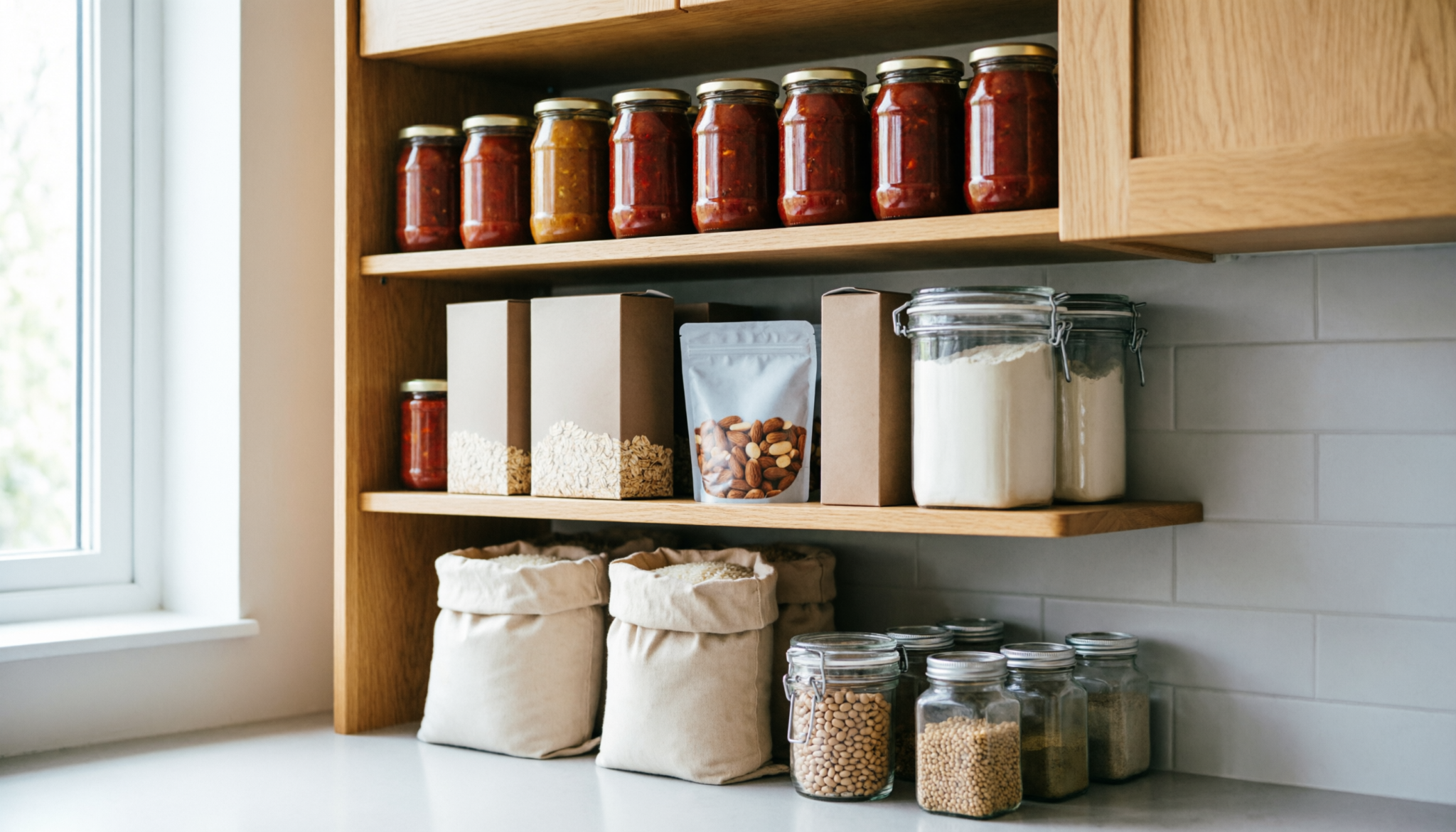
Efficient food storage depends on controlled rotation, visibility, and access hierarchy. The FIFO method reduces spoilage, stabilizes pantry inventory, improves meal planning accuracy, and increases usable storage capacity through disciplined product sequencing.
FIFO storage places older food at the front and newer food at the back. Consistent rotation reduces waste, prevents expired inventory buildup, improves visibility, and creates predictable household consumption patterns across pantry, refrigerator, and freezer zones.
FIFO operates through four principles:
- Oldest inventory receives first access
- New inventory enters from the rear
- High-frequency products occupy prime ergonomic zones
- Labels remain visible without product displacement
Without structured rotation, hidden food becomes expired inventory. Expired inventory becomes wasted money, nutritional loss, and unnecessary replacement spending.
A successful FIFO system converts passive shelves into active inventory channels.
Comparison Table
| Storage Tier | Frequency of Use | Height Placement | Visual Accessibility |
|---|---|---|---|
| Daily Use Zone | Multiple times daily | Eye to waist level | Maximum visibility |
| Weekly Rotation Zone | Several times weekly | Shoulder to knee level | Moderate visibility |
| Long-Term Reserve Zone | Monthly or emergency use | High shelves or low bins | Controlled visibility |
Implementing FIFO after every grocery run
Most systems fail because they feel like work. FIFO works because it takes two minutes, not twenty.
After unpacking groceries, pause before placing anything on a shelf. Pull older items forward first. Then place the new items behind them.
That small pause prevents food from disappearing into the back where it gets forgotten.
Skip this once, and clutter begins. Skip it often, and food starts expiring unnoticed. Consistency matters more than perfection here. Even a rushed version keeps the system alive.
Structuring Pantry Shelves for FIFO Efficiency
Shelf arrangement determines FIFO success or failure.
Flat shelving without directional flow creates inventory congestion. Products migrate randomly. Expiration tracking collapses under stacking pressure.
FIFO shelving requires linear movement.
Older products remain at the front edge. Newly purchased products move directly behind existing inventory. Forward movement occurs naturally during removal.
Effective pantry zoning includes:
- Breakfast products grouped together
- Baking supplies isolated by category
- Canned goods arranged by expiration date
- Snacks positioned by consumption frequency
- Bulk staples stored in refill containers
Vertical stacking reduces visibility and disrupts rotation. Single-layer placement improves recognition speed and lowers duplicate purchasing.
Clear bins improve containment but require front-facing labels. Opaque containers reduce inventory awareness and increase forgotten stock.
Ergonomic shelf hierarchy matters equally.
Eye-level shelves support fastest retrieval speed. High-frequency products belong between shoulder and waist height because repetitive reaching increases friction and decreases compliance.
Low shelves support heavy items:
- Bottled beverages
- Bulk grains
- Large oils
- Canned reserve inventory
Top shelves support low-turnover products:
- Seasonal ingredients
- Emergency food storage
- Specialty appliances
- Backup paper goods
FIFO fails when retrieval effort exceeds convenience tolerance.
Refrigerator Rotation and Expiration Control
Refrigerator disorder creates rapid spoilage because short shelf-life products degrade quickly under inconsistent airflow and temperature exposure.
FIFO refrigerator systems prioritize:
- Visibility
- Date control
- Air circulation
- Consumption sequencing
Prepared foods require front-row placement because perishability windows remain short.
Fresh produce benefits from shallow bins instead of deep drawers. Deep produce compartments encourage hidden decay under layered storage.
Dairy products require rotational alignment by expiration date. New containers belong behind current inventory.
Condiment clutter creates major refrigerator inefficiency. Half-used bottles consume premium shelf space while masking active products.
Condiment reduction improves airflow, visibility, and usable capacity.
Refrigerator door storage works best for stable products:
- Sauces
- Pickled items
- Carbonated beverages
Highly perishable products belong near central cooling zones rather than fluctuating door compartments.
Freezer FIFO systems require labeling discipline.
Unlabeled frozen food becomes untraceable inventory within weeks.
Effective freezer labels include:
- Product name
- Freeze date
- Portion quantity
Flat storage increases visibility and improves thermal efficiency. Vertical freezer piles conceal older inventory and extend retrieval time.
Expert’s Tip: FIFO Label Positioning
Front-facing labels improve retrieval speed and reduce unnecessary product handling. Consistent label placement also strengthens inventory recognition patterns and accelerates expiration audits during weekly restocking cycles.
Small-Space FIFO Systems for Apartments and Compact Kitchens
Small kitchens require tighter inventory control because spatial inefficiency compounds quickly.
FIFO becomes more important as storage volume decreases.
Compact storage systems depend on:
- Narrow categories
- High turnover rates
- Controlled purchasing
- Aggressive visibility management
Bulk purchasing often fails inside small kitchens because excess stock overwhelms retrieval pathways.
Storage density without access efficiency creates hidden waste.
Expandable shelf risers improve vertical usability while maintaining front visibility. Turntables improve corner access but work best for condiments and small containers rather than stacked goods.
Overfilled cabinets reduce usable capacity because blocked visibility slows product identification.
Open space supports operational efficiency.
Small-space FIFO systems benefit from quantity limits:
- Two cereal varieties maximum
- Single open snack category
- Controlled canned inventory
- Limited duplicate condiments
Inventory restraint reduces expiration risk.
Closet-adjacent overflow storage works best with category separation:
- Dry backup goods
- Beverage reserves
- Seasonal cookware
- Emergency supplies
Mixed-category overflow storage destroys retrieval efficiency and weakens replenishment accuracy.
Inventory Auditing and Consumption Tracking
FIFO requires scheduled auditing.
Without recurring inspection, storage systems drift into disorder through gradual placement errors and inconsistent purchasing habits.
Weekly inventory reviews maintain control.
Effective audits include:
- Expiration inspection
- Duplicate identification
- Open-package evaluation
- Meal-planning alignment
- Waste-source analysis
Expired inventory patterns reveal purchasing inefficiencies.
Repeated waste within one category signals:
- Over-purchasing
- Poor meal forecasting
- Low household demand
- Storage visibility failure
Inventory tracking also improves budgeting precision.
High-visibility inventory reduces duplicate purchasing and limits emergency shopping behavior.
Meal planning becomes faster because available ingredients remain visible and logically grouped.
FIFO also supports nutritional efficiency.
Accessible healthy foods receive higher consumption rates than hidden products buried behind processed snacks or oversized containers.
Placement influences consumption behavior.
Front-facing produce increases utilization. Hidden produce increases spoilage probability.
Organized storage systems reduce decision fatigue because retrieval pathways remain predictable.
Predictability improves long-term compliance.
FAQs
1. How does FIFO improve closet efficiency in household storage?
FIFO reduces stagnant inventory and improves retrieval speed.
Structured rotation prevents buried products, overcrowded shelving, and duplicate purchasing.
Consistent front-to-back movement also stabilizes shelf spacing and improves category organization inside pantry-adjacent closets.
2. What storage method maximizes small pantry space?
Single-layer visibility combined with vertical shelf risers creates highest efficiency.
Narrow product categories, front-facing labels, and controlled purchasing volume prevent overcrowding and maintain usable access pathways inside compact storage environments.
3. Which foods benefit most from FIFO rotation?
Perishable products gain highest benefit:
- Dairy
- Fresh produce
- Bread
- Prepared meals
- Frozen leftovers
High-turnover dry goods also benefit significantly because rotational sequencing reduces expired inventory accumulation and improves consumption predictability.
Final Thought
FIFO storage converts household food management into a measurable operational system.
Structured rotation, visibility control, and ergonomic placement reduce waste, improve inventory accuracy, and stabilize consumption patterns.
Consistent sequencing produces faster retrieval, lower spoilage rates, and higher functional storage capacity without increasing square footage.