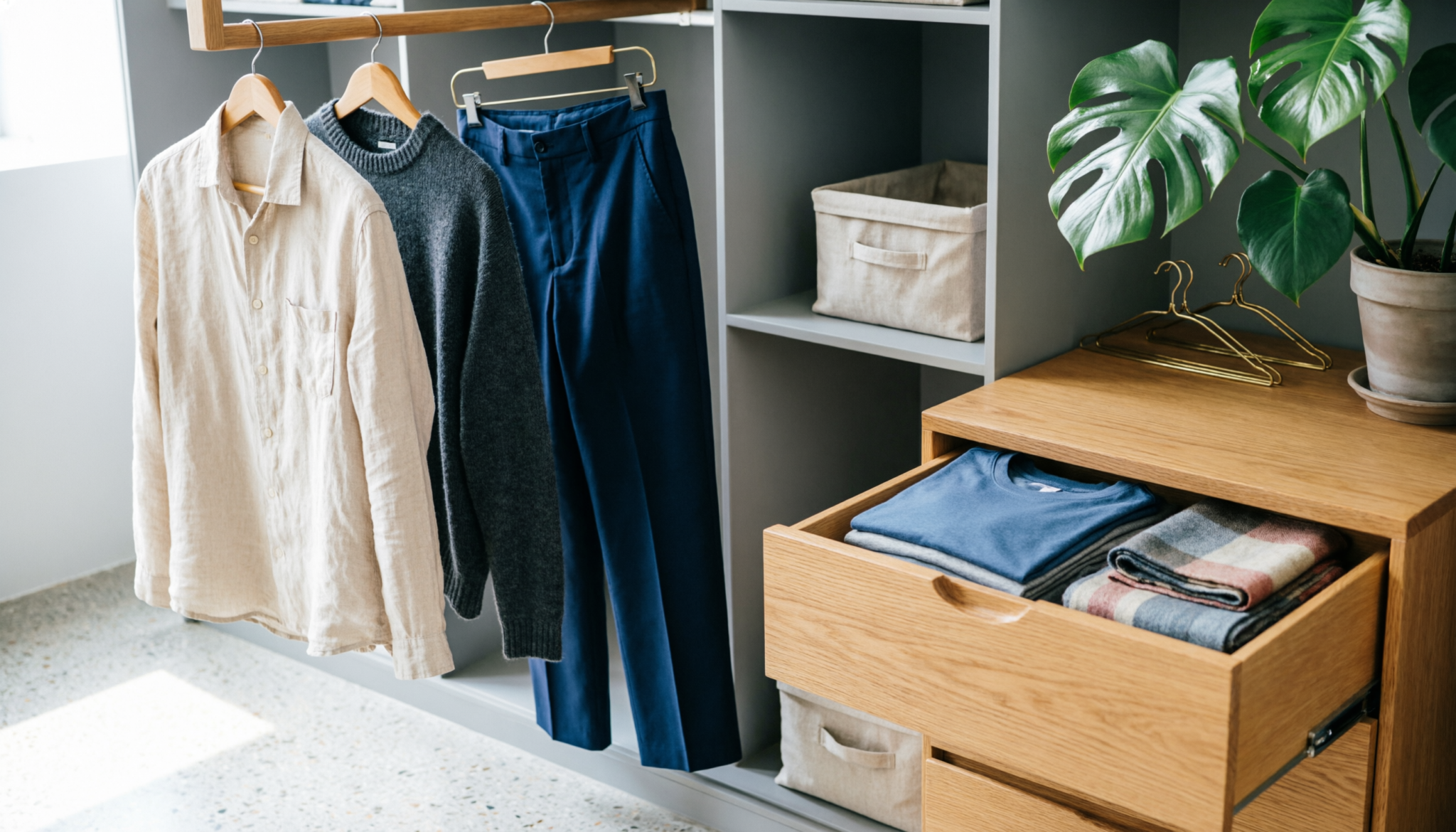
A closet works best when it’s lightly filled, not packed tight. A 90-day maintenance loop keeps clothing visible, wearable, and easy to manage.
This schedule prevents buildup, reduces wear and tear, and keeps storage working efficiently without the stress of a massive annual cleanout.
The Short Answer
A closet maintenance loop is a quarterly audit designed to prevent “Clutter Creep.” Every 90 days, perform the Three-Box Sort: Keep, Donate, and Repair.
This prevents overstuffing, which is the #1 cause of wrinkled clothes and broken closet rods. Consistency beats a yearly purge by maintaining a 10% “Air Buffer” for new items.
The 90-Day Checklist Table
| Quarter | Focus | Required Tool |
|---|---|---|
| Spring | Winter Prep (Cleaning/Storing) | Vacuum Bags |
| Summer | Linen & Light-Wear Audit | Drawer Dividers |
| Fall | Sweater/Boot Maintenance | Cedar Blocks |
| Winter | Holiday/Formal Organization | Velvet Hangers |
The 3-Box Method: Logic for ruthless decision-making
The mistake most closets suffer from is hesitation. Clothes sit in limbo because decisions feel personal. A simple system removes emotion and replaces it with structure.
Set up three boxes:
- Keep: Items worn regularly, fit well, and suit current routines
- Donate: Good condition but unused for 90 days or more
- Repair: Needs mending, cleaning, or tailoring
Reality check rules:
- If it hasn’t been worn in the last season, it’s already on borrowed time
- If it doesn’t fit today, it’s clutter, not motivation
- If it needs repair and hasn’t been fixed in 90 days, it moves to Donate or out
Where this breaks down:
Sentimental items. These don’t belong in a working closet. Store them separately or limit them to a small, defined box.
The ‘One-In, One-Out’ Rule for wardrobe stability
Without a control system, clutter always returns. The one-in, one-out rule is simple: every new item replaces an existing one.
How to make it stick:
- Tie it to purchasing behavior: no removal, no buying
- Match categories: a new shirt replaces a shirt, not a pair of socks
- Keep a visible donation bag in the closet to reduce friction
Why it works:
Closet space stays constant. Decision-making becomes routine instead of reactive.
Common failure point:
“Special exceptions” pile up. Occasional exceptions turn into a new baseline. Keep the rule strict or it loses value.
Using ‘Vacuum Storage’ for off-season volume reduction
Out-of-season clothing is the silent space thief. Storing it properly creates breathing room without getting rid of useful pieces.
Best practice:
- Wash and fully dry items before storing
- Use vacuum storage bags to reduce bulk by up to 70%
- Label clearly by season and category
What to avoid:
- Storing damp or unclean clothes (leads to odor and damage)
- Overfilling bags (zippers fail quickly)
Practical tip:
Keep one or two transitional pieces accessible during weather shifts instead of rotating too aggressively.
FAQs
1. How long should a 90-day closet reset take?
Two to three hours for an average wardrobe. Larger closets may need a half day. Speed improves after the first cycle because decisions become easier and volume drops.
2. What percentage of a closet should stay empty?
Around 10%. This “air buffer” prevents wrinkling, makes items easier to see, and allows room for new additions without immediate overcrowding.
3. Is it necessary to follow all four seasonal rotations?
Yes, but intensity can vary. In mild climates, focus more on usage patterns than weather. The key is consistency every 90 days, not strict seasonal labels.
Final Thought
Closet order is not built in one weekend. It holds steady through small, repeated actions. A 90-day loop keeps clothing relevant, storage functional, and daily routines smooth.
Stick to the system, keep space slightly underfilled, and clutter never gets the upper hand again.