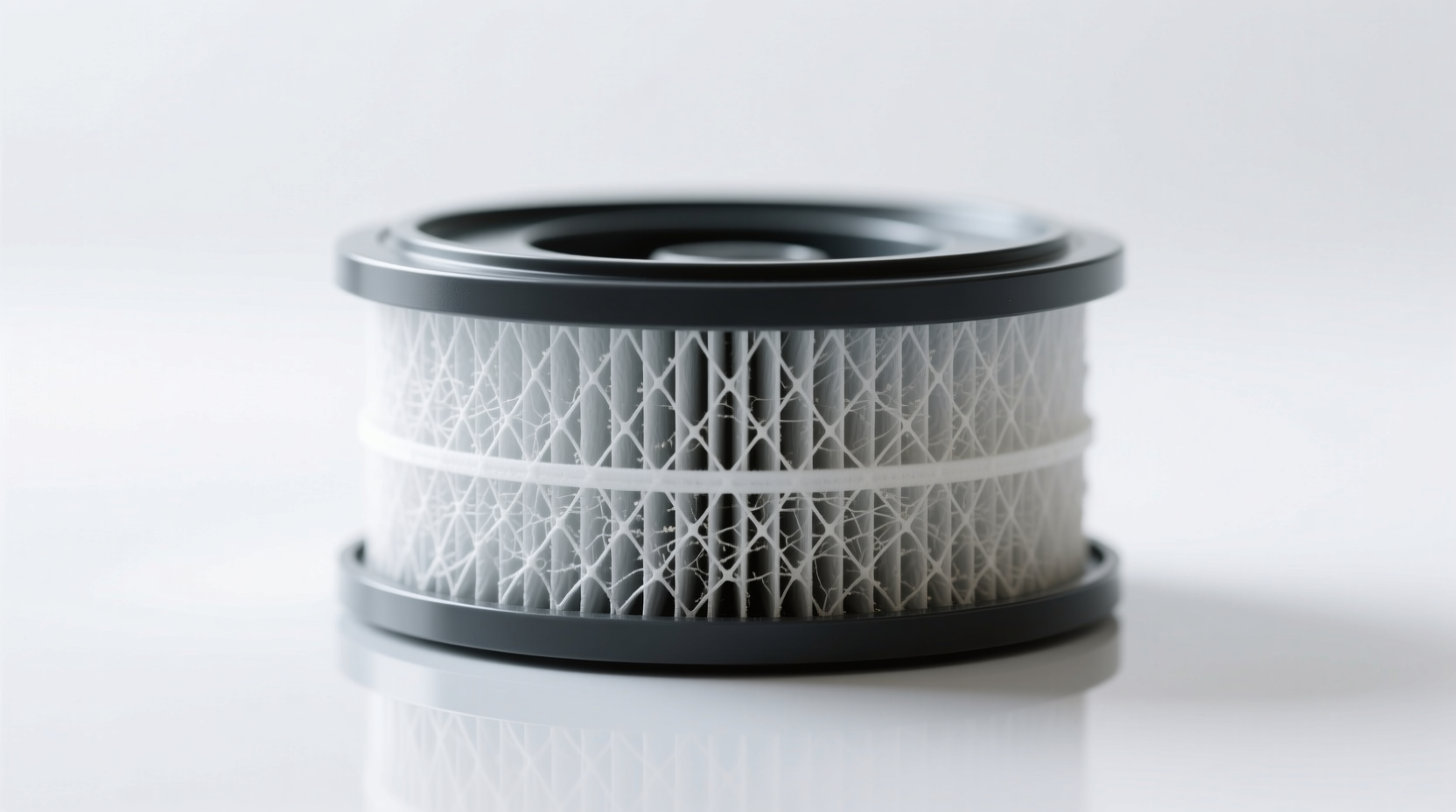
A vacuum that smells bad is usually pushing dirty air back into the room, not cleaning it.
The most common cause is a worn-out HEPA filter packed with dust, dander, and moisture.
Once that buildup starts breaking down, odor spreads every time the vacuum runs.
The Verdict
If a vacuum releases a musty or “dog-like” smell, the HEPA filter has hit organic saturation.
These filters trap microscopic skin cells, pet dander, and mold spores. Over time, that material decomposes inside the filter fibers.
Once saturated, cleaning won’t fix it. Replacement is the only real solution to stop contaminated air from blowing back out.
Why Your Vacuum Still Smells: The 6 Signs Your HEPA Filter is Dead
Sign 1: The “Musty” Exhaust
A sour, damp smell from the exhaust vent is the clearest warning.
HEPA filters are dense by design. That density traps fine debris deep in the pleats.
Add a bit of moisture from the air, and it creates the perfect environment for bacteria and mold to grow.
That smell is not “dust.” It is organic matter breaking down.
Quick reality check:
- If the smell gets stronger after a few minutes of use, the filter is holding active growth
- If the odor lingers in the room after vacuuming, the machine is spreading it
At this stage, washing the filter rarely works. The contamination sits too deep in the fibers.
Sign 2: Reduced Suction or Motor Overheating
Weak suction paired with a hot motor is not a coincidence.
This comes down to pressure drop. As the filter clogs, airflow gets restricted. The motor has to work harder to pull air through a blocked surface.
What actually happens:
- Airflow drops
- Motor strain increases (often by around 20–30%)
- Heat builds up faster than normal
Common signs at home:
- Vacuum feels louder or strained
- Stops suddenly during use
- Takes longer to pick up debris
Ignoring this shortens motor life. A cheap filter replacement prevents an expensive vacuum replacement.
Sign 3: Visible Discoloration
A healthy HEPA filter is off-white or light gray. Anything darker tells a story.
Watch for:
- Dark gray or black patches → soot or heavy dust buildup
- Speckled spots → early mold growth
- Yellowing → long-term organic buildup (skin cells, oils)
If discoloration is uneven or patchy, airflow is already compromised.
The Flashlight Test
A simple check that works every time:
- Remove the filter
- Hold it up to a bright light or flashlight
- Look through the pleats
What matters:
- Even glow through the pleats → still usable
- Blocked, dark sections → airflow is restricted
If light can’t pass through easily, air can’t either.
Sign 4: The Vacuum Smells Worse After Cleaning
A clean floor followed by a bad smell in the room points straight to the filter.
This happens when:
- Fresh airflow hits old debris inside the filter
- Odor particles get pushed out with force
The result feels backward. The cleaner the floor gets, the worse the air smells.
That is not a bag problem. That is a filter problem.
Sign 5: Allergy Symptoms Spike After Vacuuming
Sneezing, itchy eyes, or coughing right after vacuuming is a red flag.
A working HEPA filter traps fine allergens. A saturated one leaks them back out.
This matters most in homes with:
- Pets
- Asthma
- Dust sensitivity
If symptoms increase after cleaning, the filter is no longer doing its job.
Sign 6: The Filter Has Been “Cleaned” Too Many Times
Most HEPA filters are not built for repeated washing.
Even washable types degrade over time:
- Fibers loosen
- Microscopic gaps form
- Filtration efficiency drops
Worse, moisture left behind encourages mold growth.
If a filter has been rinsed multiple times and still smells or looks dull, it is finished.
Replacement Schedule
A filter does not fail overnight. It wears out based on how a home is used.
| Household Variable | Recommended Replacement |
|---|---|
| Standard Home | Every 12 Months |
| Pets / Heavy Shedding | Every 6 Months |
| Severe Allergies / Asthma | Every 4 Months |
| Construction / Fine Dust | Immediately after project |
Cutting corners here costs more in the long run. Filters are cheaper than motors.
Bottom Line
A smelly vacuum is not normal wear. It is a sign that trapped debris has turned into a source of contamination.
Once odor shows up, the filter has already failed.
Replace it early, and the vacuum goes back to doing what it should: cleaning the air, not polluting it.