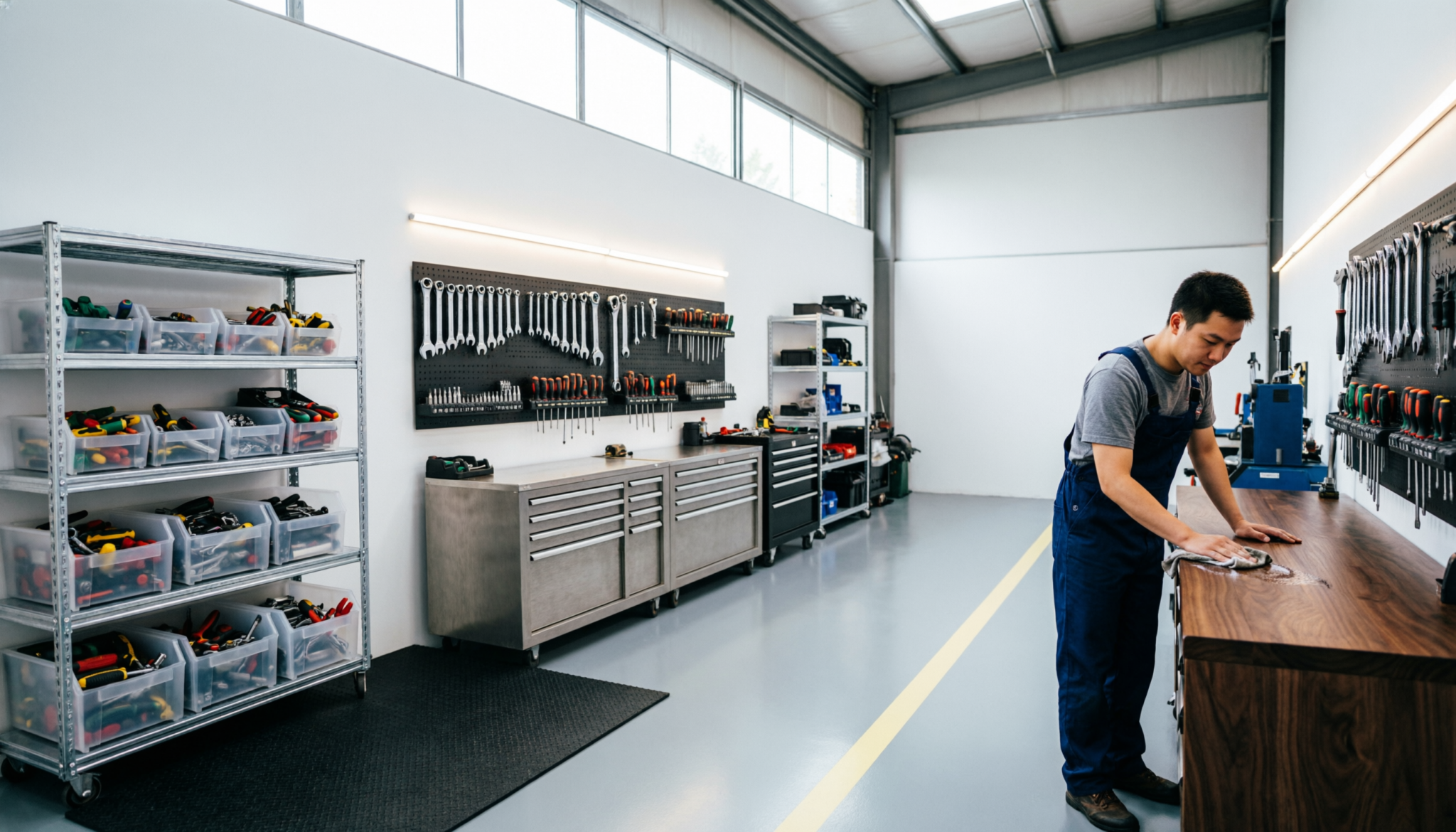
A cluttered garage wastes time, creates safety risks, and quietly drains energy. The 5S method, rooted in manufacturing discipline, brings order that actually lasts.
Applied at home, it replaces guesswork with simple routines, clear storage, and habits that keep tools accessible, visible, and ready for work.
The Short Version
The 5S Methodology (Sort, Set in Order, Shine, Standardize, Sustain) is a lean manufacturing process designed to eliminate waste and increase efficiency.
In a garage, this means eliminating non-essentials (Sort) and ensuring that tools return to their exact shadow-board location (Set in Order) within 30 seconds.
The Implementation Table
| Phase | Action Item | Garage Tool Needed |
|---|---|---|
| Sort | Discard broken/unused items | Heavy Duty Trash Bags |
| Set in Order | Assign a home for every tool | Slatwall/Pegboard |
| Shine | Deep clean all surfaces | Shop-Vac |
| Standardize | Label all bins and zones | Label Maker |
| Sustain | Weekly 5-minute reset | Discipline |
The 5 Pillars of Garage Efficiency
1. Sort (Seiri)
Start with a hard reset. Anything unused in the last year earns scrutiny. Broken duplicates, mystery parts, and dried-up chemicals go first. Sentimental items get one clearly marked bin, not a shelf takeover.
Reality check: most garages fail here by hesitating. If it has no clear use, it becomes clutter again.
2. Set in Order (Seiton)
Every tool earns a fixed home based on frequency of use. Daily tools sit at arm’s reach. Seasonal gear moves higher or farther back. Vertical storage wins every time in tight spaces.
Practical tip: a slatwall system with modular hooks beats random nails. It adapts as tools change.
3. Shine (Seiso)
Cleaning is not cosmetic. Dust hides leaks, loose fasteners, and hazards. A clean floor prevents slips and keeps pests away.
Baseline: sweep weekly, vacuum monthly, deep clean quarterly.
4. Standardize (Seiketsu)
Consistency keeps order from slipping. Labels, color-coded bins, and repeatable layouts remove guesswork.
Weak point: skipping labels. Memory fails faster than expected, especially in shared spaces.
5. Sustain (Shitsuke)
Habits matter more than systems. A five-minute weekly reset prevents the slow return of chaos.
Truth: without this step, the rest collapses within months.
Why a clean floor is a safety requirement
A garage floor collects oil, sawdust, and debris that quietly increase risk. Slips, fire hazards, and equipment wear all start here. Cleaning is not about appearance. It is preventive maintenance.
What actually works:
- Use a high-capacity wet/dry vacuum like the Craftsman 16 Gallon Shop Vacuum for debris and liquid spills
- Keep absorbent pads near work areas for quick oil cleanup
- Store a stiff-bristle push broom for daily sweeps
- Seal concrete floors if possible to reduce staining and dust buildup
Common mistake: relying only on sweeping. Fine dust stays behind and becomes airborne. Vacuuming removes what sweeping misses.
How to avoid the 6-month clutter relapse
Most garages relapse because systems rely on motivation instead of routine. The fix is simple and strict.
A system that holds up:
- Set a fixed weekly reset time (same day, same hour)
- Use a visible checklist near the garage entry
- Limit new items entering the space without assigned storage
- Keep a donation box active at all times
Hard truth: discipline beats clever storage. Even the best setup fails without consistent resets.
Recommended Tools That Hold Up Over Time
These are reliable, widely used, and tend to stay in garages long-term because they solve real problems without fuss:
- Hefty Ultra Strong Heavy Duty Trash Bags – thick enough for sharp debris during sorting
- Wall Control Metal Pegboard Organizer Kit – more durable than standard pegboard, resists warping
- Rubbermaid FastTrack Garage Storage System – flexible rail system that adjusts as needs change
- CRAFTSMAN 16 Gallon Wet/Dry Shop Vacuum – strong suction, handles both dust and spills
- DYMO LabelManager 160 Label Maker – simple labeling that keeps systems consistent
FAQs
1. How long does a full 5S garage setup take?
A typical single-car garage takes one to two full days for the initial reset. Sorting takes the longest. Maintenance drops to about five minutes per week afterward.
2. Is pegboard or slatwall better for “Set in Order”?
Slatwall handles heavier tools and adapts more easily. Pegboard works for lighter setups but tends to loosen over time under weight.
3. What causes most 5S failures in garages?
Skipping the Sustain phase. Without a fixed routine, clutter quietly rebuilds within months, no matter how good the setup looks at the start.
Final Thought
Order in a garage does not come from buying more storage. It comes from clear decisions, fixed locations, and steady habits. The 5S method works because it removes ambiguity.
Keep the system simple, maintain it weekly, and the space stays functional without constant effort or frustration.