
The Tineco S7 Pro delivers the better streak-free finish on glossy hard floors thanks to smoother water distribution, stronger edge cleaning, and improved dirty-water separation.
The Roborock Dyad Pro wins on raw suction power and larger debris pickup. For polished tile, sealed hardwood, and reflective laminate, the Tineco produces the cleaner visual finish with fewer drying marks.
The Winner is the Tineco Floor One S7 Pro
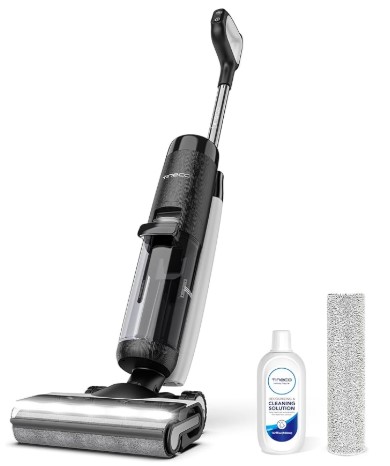
Its balanced water flow, smoother roller design, and excellent edge cleaning reduce streaking better than the Dyad Pro in everyday kitchens and living areas.
Quick Comparison: Tineco S7 Pro vs. Roborock Dyad Pro
| Feature | Tineco Floor One S7 Pro | Roborock Dyad Pro |
|---|---|---|
| Price | Amazon | Amazon |
| Water Tank | 0.85 L clean / 0.72 L dirty | 0.90 L clean / 0.77 L dirty |
| Cleaning System | Single roller with smart water control | Dual roller + side rollers |
| Weight | ~11.3 lbs | ~11 lbs |
Is the Dyad Pro Overbuilt for Everyday Kitchens?
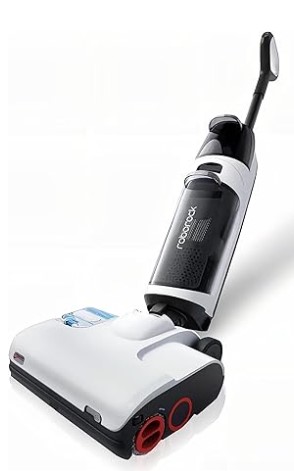
Roborock designed the Dyad Pro around three rollers: two main rollers plus smaller edge rollers.
On paper, that sounds powerful. In practice, it introduces a common problem with wet cleaning: uneven water distribution.
The result in many homes:
- The center roller scrubs well.
- Edge rollers sometimes leave faint damp trails.
- Floors can dry with light streak marks, especially on glossy tile.
The Ruthless Truth
More rollers do not automatically mean cleaner floors.
In a typical kitchen or hallway, the extra rollers increase complexity without improving streak control.
The Tineco S7 Pro’s single large roller spreads water more evenly. That simple design is why it often dries cleaner.
Tineco Floor One S7 Pro vs. Roborock Dyad Pro: Streak-Free?
1. Cleaning Power vs. Water Control
Both machines vacuum debris while washing floors, but the key to streak-free cleaning isn’t suction. It’s water management.
Roborock Dyad Pro Strength
- Very strong suction
- Excellent for wet spills
- Great edge-to-edge pickup
Tineco S7 Pro Advantage
- iLoop smart sensor adjusts water flow
- Keeps the roller damp, not soaked
- Floors dry faster with fewer marks
Here’s the uncomfortable truth:
You don’t need extreme suction to clean a kitchen floor.
What you need is consistent water flow and a roller that rinses itself properly. That’s where the S7 Pro usually wins.
2. Edge Cleaning: Who Gets Closer to the Wall?
Edge cleaning is where many wet vacs fail.
Roborock Dyad Pro
Roborock markets the Dyad system as edge-to-edge, and it does reach corners well.
Tineco S7 Pro
The S7 Pro improved edge cleaning over earlier models. It gets within a few millimeters of the wall, which is close enough for most kitchens.
Practical Reality
Both machines perform well here. The difference is small.
What matters more is how evenly they dry the floor afterward.
3. Self-Cleaning and Roller Drying
Dirty rollers cause odor and streaking over time.
Roborock Dyad Pro
- Self-cleaning wash cycle
- Hot air roller drying
This is excellent for preventing mildew.
Tineco S7 Pro
- Self-cleaning cycle
- Warm-air drying in the dock
In practice, both systems work well. If you forget to clean the roller for several days, the Roborock dries slightly faster, but the difference is minor.
4. Battery Reality Check
Both machines claim long runtimes.
| Model | Max Runtime |
|---|---|
| Tineco S7 Pro | Up to ~40 minutes |
| Roborock Dyad Pro | Up to ~43 minutes |
Real-World Cleaning Time
Most kitchens and living areas take 10–20 minutes to clean.
So battery life is not the deciding factor. Both machines easily finish the job on one charge.
What matters more is tank size and water balance, which affect streaking.
5. Pros and Cons: Straight Talk
Tineco Floor One S7 Pro
Pros
- More consistent streak-free finish
- Excellent water flow control
- Smooth roller design
- Quiet operation
Cons
- Slightly higher price
- Smaller dirty water tank
Roborock Dyad Pro
Pros
- Strong suction
- Excellent edge cleaning
- Fast roller drying
- Large tanks
Cons
- Triple roller system can leave faint streaks
- Slightly heavier feel when pushing
6. Maintenance & Longevity
Wet/dry vacs live or die by maintenance design.
Tank Cleaning
Both machines separate clean and dirty water tanks, but there’s a small difference:
- The Dyad Pro’s dirty tank is larger, which helps for big homes.
- The S7 Pro tank is easier to rinse because it has fewer internal channels.
Roller Replacement
Rollers typically last 6–12 months depending on use.
Replacing them is easy on both models, but the Tineco roller system has fewer moving parts, which usually means less long-term wear.
Final Verdict: Which Leaves Floors Truly Streak-Free?
The Expert’s Choice
If your top priority is clean floors that dry without streaks, choose the Tineco Floor One S7 Pro.
The reason is simple:
Its single-roller system spreads water evenly and controls moisture better. That’s the real secret to streak-free cleaning.
The Roborock Dyad Pro is still excellent for heavy spills and edge cleaning, but its multi-roller design sometimes leaves faint drying marks on glossy floors.
Recommendation:
Buy the Tineco S7 Pro if you want the most reliable streak-free finish for kitchens, hallways, and open living spaces.
People Also Ask
1. Is the Tineco S7 Pro better than the Roborock Dyad Pro?
For streak-free floor washing, yes. The S7 Pro’s water control system tends to leave fewer drying marks on tile and hardwood.
2. Does the Roborock Dyad Pro clean edges better?
Slightly. Its side rollers reach closer to walls and corners than most wet/dry vacuums.
3. Which wet/dry vacuum is best for everyday kitchen cleaning?
The Tineco S7 Pro is usually the better choice because it balances water flow, suction, and roller design to leave floors cleaner and drier.