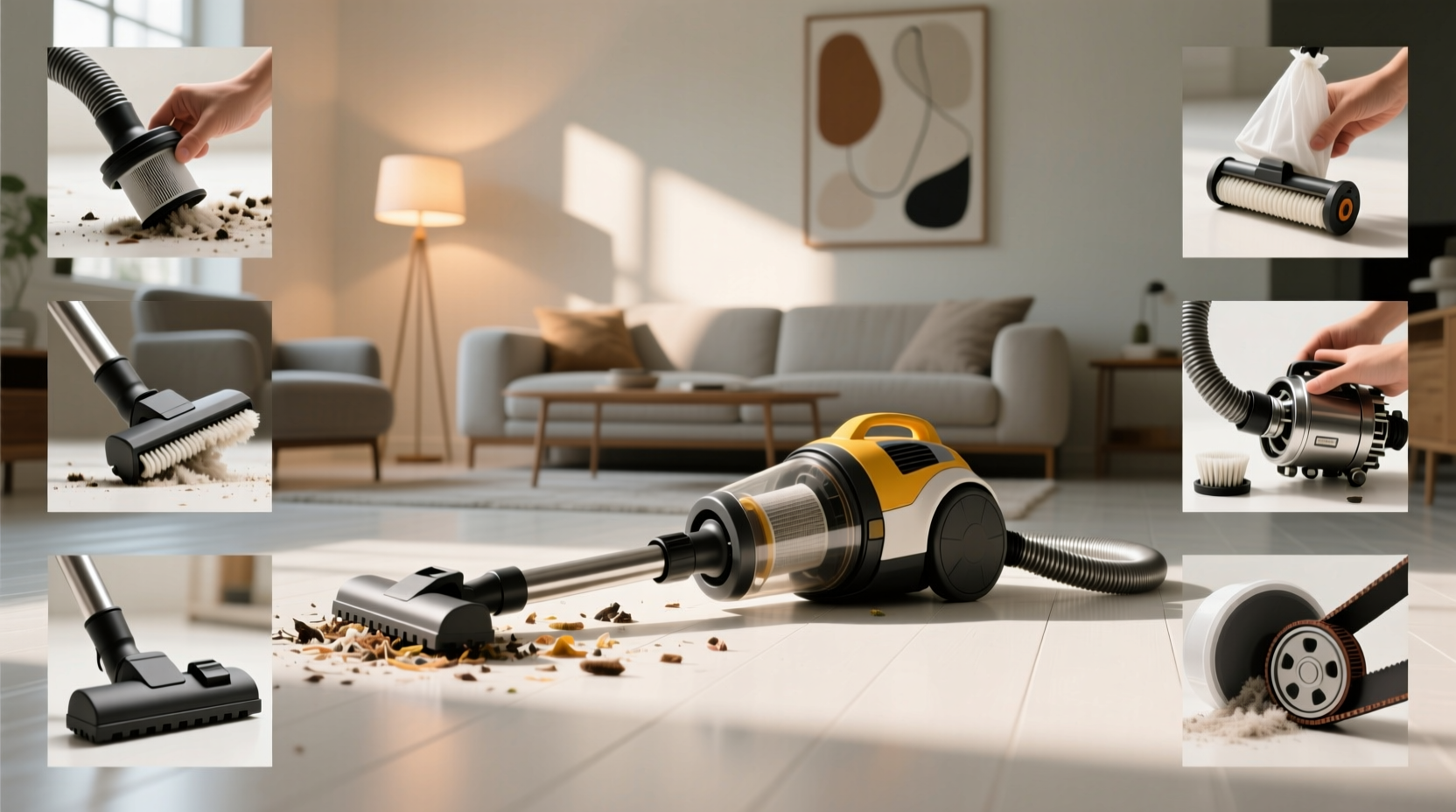
Most vacuum suction failures come from blocked airflow, not motor failure. A full dust bin, clogged filter, or hair-packed brushroll causes the majority of performance problems. Checking those three areas restores suction in many machines within minutes.
Vacuum cleaners rarely lose suction without warning.
Airflow gradually weakens as dust packs into filters, hoses, and floor heads. Many homeowners assume the motor failed when the real problem sits inside a clogged airway.
Strong suction depends on three things:
- Clear airflow channels
- Clean filtration
- A functioning brush system
Once one section becomes restricted, cleaning performance drops quickly.
Most repairs require basic maintenance rather than expensive replacement parts.
THE SUCTION FAILURE HIERARCHY
| Problem Area | Common Symptom | Airflow Outcome | Repair Difficulty |
|---|---|---|---|
| Full dust bin or bag | Weak pickup | Restricted airflow | Very easy |
| Clogged filter | Overheating and poor suction | Air starvation | Easy |
| Blocked hose | No suction at floor head | Airflow interruption | Easy |
| Hair-wrapped brushroll | Dirt left behind | Poor debris agitation | Easy |
| Stretched belt | Brush stops spinning | Weak carpet cleaning | Moderate |
| Motor failure | Burning smell or shutdown | Total airflow loss | Severe |
The “Before You Panic” Box
90% of suction problems come from three things:
- A full dust bag or bin
- A clogged filter
- Hair wrapped around the brushroll
Check these three items before assuming the vacuum is ruined. Many machines return to full strength after a simple cleanout.
How to Fix a Vacuum Cleaner with No Suction
Tool Kit (Helpful for Quick Fixes)
Basic maintenance works better with the right tools nearby:
- Anti-Static Cleaning Brushes – loosen packed dust inside vents and crevices
- Replacement Filter Set – restores airflow when old filters are clogged
- Compressed Air – clears fine dust from tight airflow channels
These items handle most suction issues without opening the motor housing.
Where Is the Suction Lost? (The Quick Test)
Start with a simple airflow test to narrow the problem.
| Test | Result | Meaning |
|---|---|---|
| Detach the hose from the base and turn the vacuum on. Feel for suction at the handle. | Strong suction | Blockage sits in the floor head or brushroll area. |
| Detach the hose from the base and turn the vacuum on. Feel for suction at the handle. | Weak or no suction | Blockage sits in the hose, filters, or internal airflow path. |
This quick check saves time. Airflow problems usually appear in only one section of the machine.
Check the Filters (The #1 Suction Killer)
Dust filters quietly choke airflow long before the bin fills.
Two common types appear in household vacuums:
Rinseable Foam or Felt Filters
- Usually located above the dust bin
- Safe to wash with water
- Must dry fully for 24 hours before reinstalling
HEPA Filters
- Built to trap microscopic particles
- Not always washable
- Gradually clog with fine dust
A HEPA filter that has not been replaced in six months often becomes “blinded.” The tiny pores fill with dust and airflow drops sharply.
Rinsing rarely restores performance.
A $15 replacement filter set costs far less than replacing a burned-out motor.
Expert’s Insight: If airflow feels hot and weak at the exhaust vent, the motor is usually starving for air behind a clogged filter. Continued use under restricted airflow accelerates motor wear and overheating.
Clearing a Blockage in the Wand or Hose
Long hoses act like tunnels for hair, paper scraps, and carpet fibers. Over time, these materials pack together and stop airflow.
Quick Blockage Test
Drop a coin or marble through the hose.
- If the coin slides through easily, the hose is clear
- If the coin stops halfway, a clog sits inside
Safe Removal Method
Push the blockage out using a flexible dryer vent brush.
Avoid using a metal wire hanger. Thin plastic vacuum hoses puncture easily, which creates permanent air leaks.
Compressed air also works well for loosening packed lint near the wand connection.
Why the Floor Head Is Spitting Dirt Back Out
Strong suction alone does not clean a carpet.
The brushroll must spin to lift dirt and guide it into the airflow path.
When the brushroll stops turning, debris stays on the carpet or gets pushed around.
Common causes include:
- Hair wrapped tightly around the brushroll
- A stretched or snapped drive belt
- Debris jammed inside the brush chamber
Flip the vacuum over and inspect the brush area.
Hair often forms a thick rope around the roller. Cut through the bundle with scissors and pull the strands away.
Belt Check
Vacuum belts stretch over time. Once loose, the motor spins but the brushroll barely moves.
Most belts need replacement every 12 months.
A simple universal vacuum belt kit fixes this problem in minutes.
When a Fix Is No Longer Possible
Some symptoms point to motor failure rather than a blockage.
Warning Signs
- Sharp metallic burning smell
- High-pitched screaming sound
- Machine shuts off after two minutes from overheating
These signs indicate internal motor damage or severe dust contamination inside the motor chamber.
Repair shops often charge more for labor than the value of many household vacuums.
In those cases, replacement becomes the practical option.
High-suction machines such as Dyson V15 or Shark Stratos handle deep cleaning and resist airflow clogging better than older designs.
How to Ensure Suction Stays Strong
A simple maintenance rhythm prevents most suction problems.
Weekly
- Empty the dust bin or replace the bag
- Check the brushroll for hair buildup
Monthly
- Rinse washable filters
- Inspect hose openings for blockages
Every 6 Months
- Replace HEPA filters if the model uses them
Yearly
- Install a new drive belt
- Deep clean the floor head and internal airways
Consistent maintenance keeps airflow strong and prevents costly repairs.
For a deeper breakdown of vacuum care routines, see the guide “How Often Should You Replace Your Vacuum?”
FAQs
1. Why does a vacuum have suction at the hose but not the floor?
Strong suction at the hose usually means airflow is fine inside the machine. The blockage or problem sits in the floor head, brushroll chamber, or belt system.
2. Can a non-washable HEPA filter be washed?
No. Water damages the delicate fiber structure. Washing collapses the filtration layers and permanently reduces airflow.
3. Why is a vacuum making a whistling sound?
Whistling often comes from a small air leak or partial blockage. Check hose connections, cracked seals, and packed dust inside the wand.
Final Thought
Most suction failures come down to airflow restrictions.
A clean filter, a clear hose, and a spinning brushroll restore performance in the majority of machines.
Regular checks take only minutes and prevent expensive replacements.