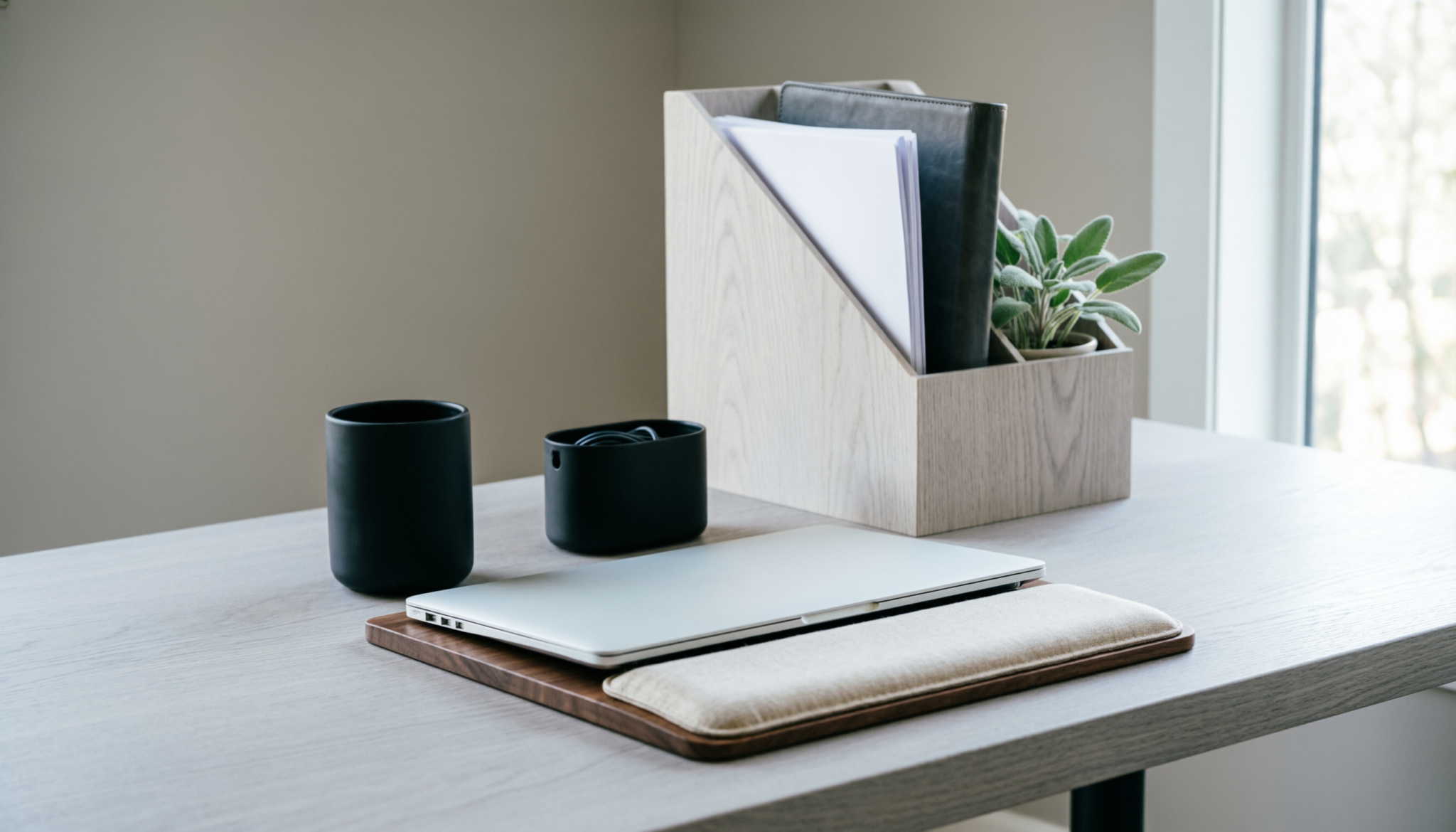
A clean standing desk needs more than willpower. The right organizer keeps essentials within reach without crowding the surface.
Slim profiles, vertical storage, and cable control matter most.
These five picks balance function and simplicity, helping maintain a calm, efficient workspace that stays tidy through real daily use.
The Verdict: SimpleHouseware Mesh
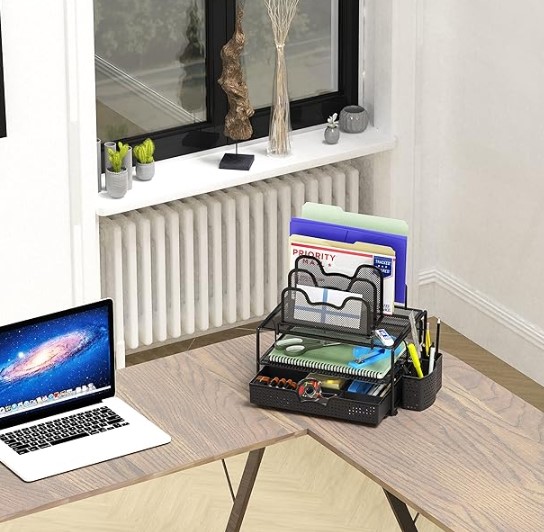
The best desktop organizers for minimalist standing desks prioritize vertical storage, compact footprints, and integrated cable management.
Top performers combine metal or bamboo construction with modular layouts. The leading pick is the SimpleHouseware Mesh Desk Organizer for its slim, multi-tier efficiency without visual clutter.
The Comparison Table
| Organizer Model | Design Type | Material | Footprint Efficiency | Best Application | Price |
|---|---|---|---|---|---|
| SimpleHouseware Mesh Desk Organizer | Vertical Tiered | Steel Mesh | High | Papers + daily tools | Amazon |
| Marbrasse Mesh Desk Organizer | Multi-Compartment | Steel Mesh | High | Files + accessories | Amazon |
| Yamazaki Tower Desk Organizer | Minimal Tray + Stand | Steel + Wood | Elite | Ultra-clean setups | Amazon |
Vertical vs. Modular Layouts
Flat organizers waste space on a standing desk. Vertical designs stack storage upward, freeing room for movement.
This matters more when switching between sitting and standing, where clutter quickly becomes distracting.
Modular organizers solve a different problem. They adapt. Shelves shift, compartments resize, and layouts evolve with changing tools.
The downside is bulk. Poorly chosen modular units can overwhelm a minimalist setup. The best options stay flexible without looking busy.
Best Desktop Organizers for Minimalist Standing Desk Setups
1. The Gold Standard: SimpleHouseware Mesh Desk Organizer
This unit earns its place by doing more with less space. Multiple tiers handle papers, notebooks, and loose items without spreading outward.
Steel mesh keeps the look light, not bulky.
In real use, it prevents paper piles from forming. Everything has a visible slot. The only drawback is the industrial look, which may not suit warmer desk setups.
2. The Compact Control Pick: Marbrasse Pen Organizer
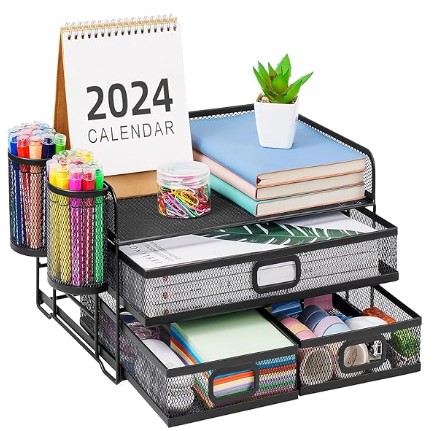
Small clutter ruins minimalist desks faster than anything else. This organizer fixes that. Pens, sticky notes, clips, and USB drives all get defined spaces.
It works best paired with a larger unit, not alone. On its own, it feels limited. Combined with a vertical file holder, it creates a complete system for daily essentials.
3. The Natural Choice: Pipishell Bamboo Desk Organizer
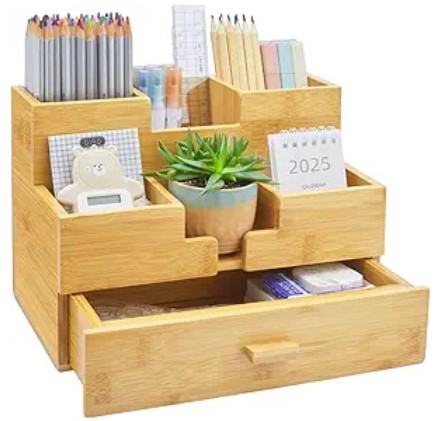
Bamboo softens the look of a standing desk without adding visual noise. This organizer expands sideways, which helps adjust width based on available space.
The trade-off is footprint. Expansion increases surface use, which can conflict with strict minimalism. Best used when a slightly warmer, lived-in feel is preferred over strict efficiency.
4. The Custom Layout Pick: Jerry & Maggie Modular Organizer
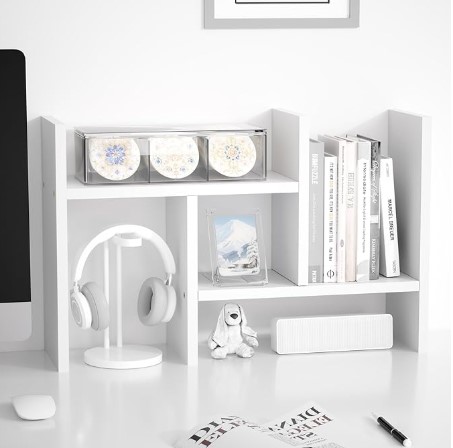
Adjustable shelves make this unit practical for mixed storage. Books, tablets, and accessories fit without forcing awkward stacking.
Assembly takes time, and poor setup can look cluttered. Careful spacing keeps it clean. Once dialed in, it replaces multiple smaller organizers with one controlled system.
5. The Minimalist Statement: Yamazaki Tower Desk Organizer
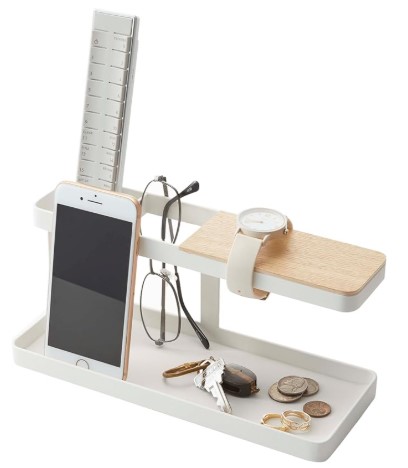
This is restraint done right. A simple tray and vertical stand hold just the essentials. No extra compartments, no visual noise.
It works only if discipline is already in place. Overloading it defeats the purpose. Ideal for setups with limited tools and a strong preference for clean lines.
FAQs
1. What makes an organizer suitable for a standing desk?
Stability and compact design matter most. Lightweight units shift when the desk moves. Low-profile or vertical organizers stay steady and keep items accessible during height adjustments.
2. How many organizers should a minimalist desk have?
One to two is enough. More than that usually signals poor consolidation. A vertical file organizer plus a small accessory holder covers most needs without clutter.
3. Are drawer organizers better than desktop organizers?
Drawers hide clutter but slow access. Desktop organizers work better for daily-use items. A mix of both creates balance, but overusing drawers leads to forgotten, unused items.
Final Thought
Minimalist desks fail when storage is an afterthought. The right organizer reduces decisions, not just clutter. Stick to vertical or tightly controlled modular designs.
Anything oversized or overly segmented creates the very mess it tries to fix. Keep it simple, visible, and easy to maintain daily.