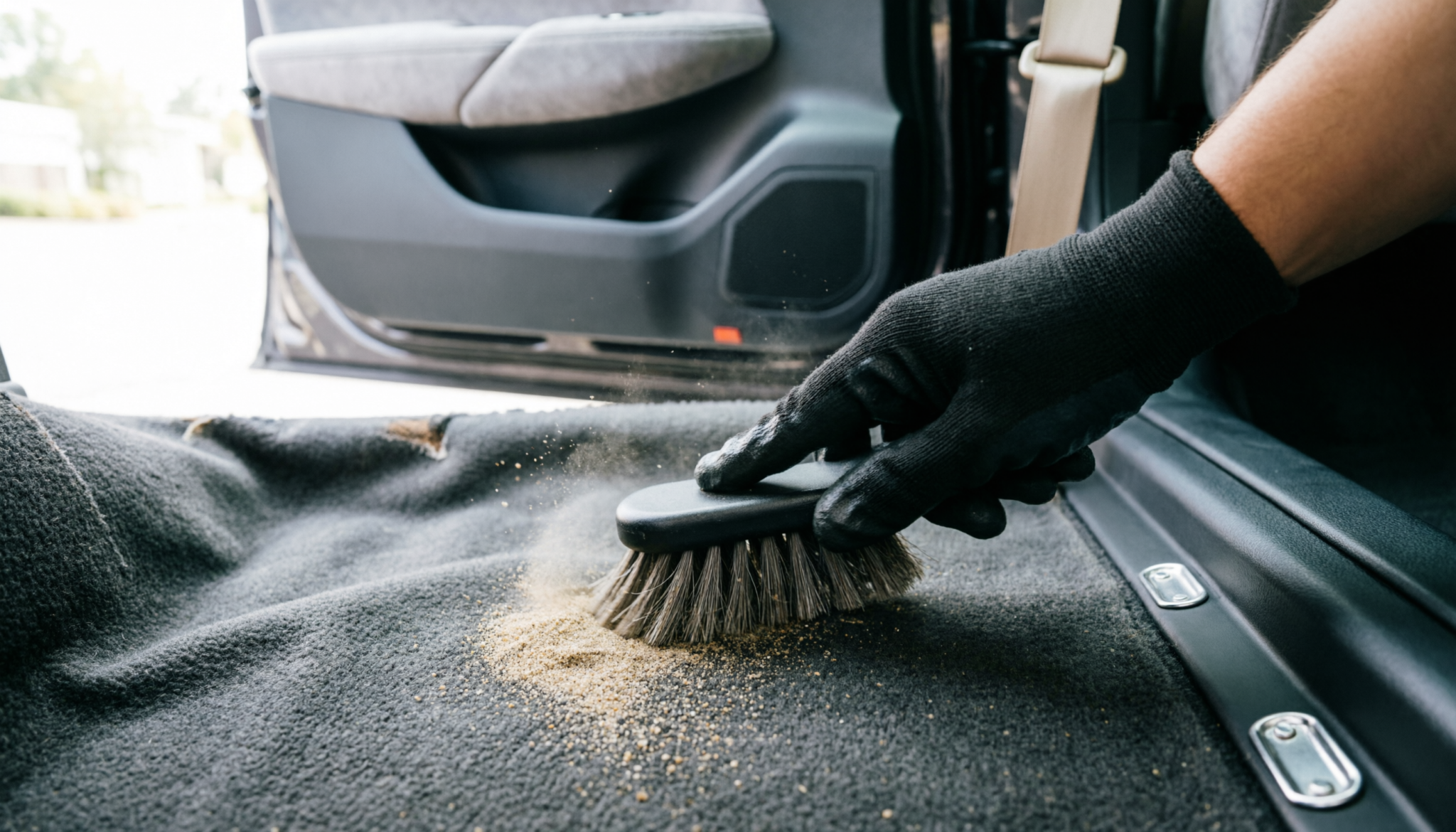
Sand looks harmless, but underfoot it acts like grit trapped in fabric.
Over time, it grinds down carpet fibers, leaving rough patches and thinning spots.
Standard vacuuming barely touches it. Proper removal depends on one thing most people skip: controlled agitation paired with strong airflow.
The Short Answer
The Science:
Sand particles have sharp edges.
When embedded in carpet fibers, foot pressure drives them deeper, causing micro-abrasions that weaken and fray the material.
The Fix:
Mechanical agitation lifts sand upward. Vibration breaks its grip on fibers, while high airflow (CFM) pulls it out before it settles again.
Without agitation, most sand stays trapped below the surface.
Why Standard Vacuuming Fails
Most people run a vacuum head over the surface and assume the job is done. That only removes loose debris.
Deep sand behaves differently:
- It wedges into the carpet backing
- It resists suction alone
- It compacts tighter with every step
High suction without movement just pulls air around the sand, not through it. That’s the core mistake.
The Agitation Hack That Actually Works
Three steps. Skip one, and results drop fast.
Step-by-Step Extraction Guide
1. Vibrate (Mechanical Agitation)
Use a drill brush attachment or a massage gun with a soft head. The goal is vibration, not brute force scrubbing.
- Hold the tool lightly against the carpet
- Let the motion shake the fibers, not crush them
- Work in small sections
This breaks the bond between sand and fiber. Without this step, sand stays buried.
Common mistake: pressing too hard. That pushes sand deeper instead of loosening it.
2. Loosen (Stiff Bristle Brush)
After vibration, follow with a stiff detailing brush.
- Short, quick strokes
- Brush in multiple directions
- Focus on seams and edges where sand collects
This step pulls sand closer to the surface where airflow can reach it.
Weak approach: soft brushes. They glide over the surface and leave heavy grit behind.
3. Capture (Vacuum with High CFM)
Now vacuum immediately while particles are loose.
- Use a narrow nozzle for better airflow concentration
- Slow, overlapping passes
- Work against the carpet grain
CFM (cubic feet per minute) matters more here than raw suction numbers. Strong airflow carries loosened sand out instead of letting it fall back in.
For a deeper breakdown of airflow vs suction, see the guide on CFM vs. Air Watts.
Where This Method Makes the Biggest Difference
This isn’t for light dust. It’s for real buildup:
- Beach sand ground into footwells
- Construction dust mixed with grit
- Dry soil tracked in during rainy seasons
In these cases, skipping agitation guarantees long-term carpet damage.
What Most People Get Wrong
1. Rushing the process
Quick passes don’t give sand time to release. Slow, controlled work wins here.
2. Using only suction
Even strong vacuums fail without agitation. Air needs movement to carry debris out.
3. Ignoring edges and seams
Sand packs into tight areas first. These spots wear out fastest.
Practical Add-Ons That Help
- Drill brush attachments for consistent vibration
- Stiff interior detailing brushes for fiber separation
- Crevice tools to increase airflow precision
These aren’t upgrades for comfort. They directly improve extraction efficiency.
Final Word
Sand doesn’t just sit in carpet. It slowly destroys it.
The fix isn’t stronger suction alone. It’s controlled agitation followed by immediate extraction.
Done right, this method pulls out what standard cleaning leaves behind and prevents the slow wear that turns carpets rough, thin, and worn out.