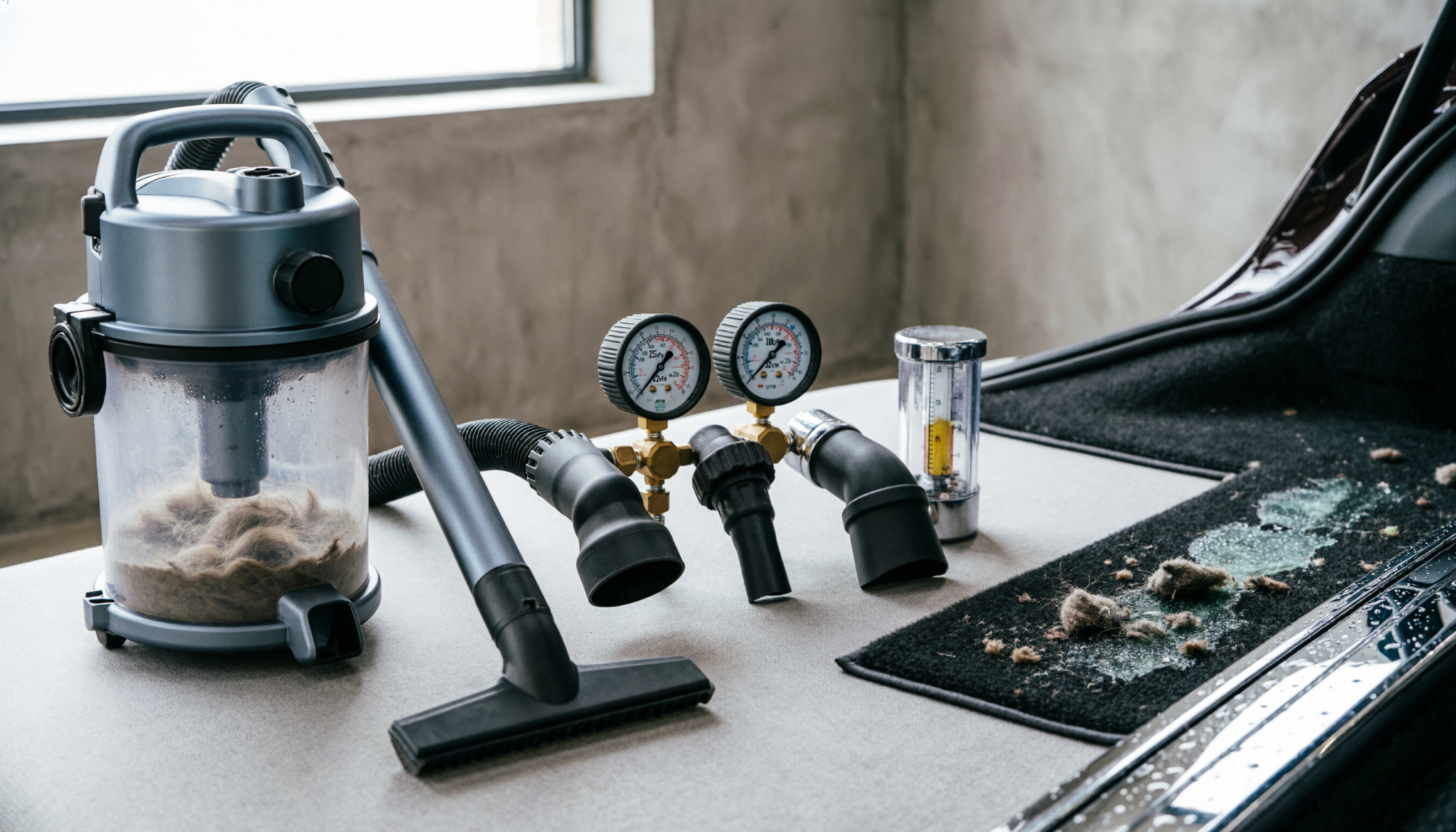
Diagnostic Summary: “Peak horsepower” measures a vacuum motor during a brief startup surge, not during real cleaning.
Car detailing performance depends on sealed suction, airflow, hose diameter, filtration resistance, and sustained motor load.
Water lift and CFM reveal actual extraction power from carpet fibers, vents, and upholstery.
Warning
Manufacturers often advertise “6.5 Peak HP” or “8 Peak HP” without listing working airflow or sealed suction. High horsepower numbers paired with weak airflow create poor detailing results, overheating, and excessive noise.
Car interiors require balanced suction performance, not inflated motor-start ratings.
Comparison Table
| Metric | What It Measures | Why It Matters for Car Detailing |
|---|---|---|
| Water Lift (inches) | Sealed suction strength | Pulls grit from carpet fibers and seat fabric |
| CFM (Cubic Feet per Minute) | Volume of moving air | Removes loose dust, sand, crumbs, and debris quickly |
| Air Watts | Combined airflow and suction efficiency | Reveals balanced real-world cleaning performance |
What Actually Creates Suction
Suction is not magic. It’s airflow plus resistance.
Two numbers matter:
- CFM (Cubic Feet per Minute): How much air moves through the system
- Static Lift (Water Lift): How strongly the vacuum pulls against resistance
Car detailing leans heavily on airflow, not just pull strength. Sand, crumbs, and dust sit deep in fabric and seams.
Without enough airflow, debris stays put even if the motor sounds strong.
Horsepower doesn’t measure either of these directly. It measures electrical input, not cleaning output.
The Numbers That Actually Matter
Most car owners buy a vacuum based on horsepower because the label appears simple. Bigger number equals stronger machine. That logic fails in real detailing work.
A vacuum motor reaches “peak horsepower” for a fraction of a second during startup before resistance, filtration, hose length, and airflow restrictions reduce usable power dramatically.
Professional detailers rarely discuss horsepower inside workshops. Serious operators focus on three measurements:
- Water lift
- CFM airflow
- Air watts
Those figures determine whether sand leaves carpet backing, pet hair lifts from seats, and dust exits dashboard seams.
A vacuum with lower horsepower but stronger airflow often outperforms a louder, hotter machine advertising massive peak numbers.
Why Peak Horsepower Fails in Real Car Cleaning
Peak horsepower comes from a laboratory-style electrical calculation. The number reflects the highest possible motor draw before efficiency losses occur.
Real detailing conditions never operate inside that ideal state.
Several restrictions immediately reduce usable power:
- Long hoses
- Narrow detailing tools
- Dirty filters
- Foam filtration resistance
- Heat buildup
- Motor inefficiency
- Voltage drop
A vacuum advertising 6.5 peak HP may deliver mediocre extraction once connected to a 10-foot hose with a crevice attachment.
Professional detailing requires sustained suction under restriction, not theoretical startup output.
That distinction matters inside vehicle interiors because cars contain tight airflow bottlenecks:
- Seat rails
- Vent slats
- Carpet edges
- Console gaps
- Trunk corners
Weak airflow stalls debris before extraction occurs.
Water Lift Matters More Than Horsepower
Water lift measures suction pressure. Technicians test this by sealing airflow and measuring how high the vacuum pulls water upward.
Higher water lift equals stronger pulling force.
For car detailing, water lift matters because automotive carpets trap debris deep inside compressed fibers. Sand, hair, and fine grit resist surface cleaning.
Strong water lift pulls embedded debris upward instead of merely vibrating it loose.
Typical performance ranges:
- Under 50 inches: weak extraction
- 50 to 70 inches: acceptable interior cleaning
- 70+ inches: professional-grade suction
Many cheap shop vacs advertise huge horsepower numbers while producing disappointing water lift.
That imbalance creates noisy operation without deep-cleaning ability.
Detailing professionals often prefer machines with moderate airflow and strong sealed suction because vehicle interiors contain confined cleaning zones rather than wide-open floors.
Expert’s Insight
Expert’s Insight: Excessive hose length destroys usable suction faster than most buyers realize. Every bend, extension, and narrow attachment increases airflow resistance.
A properly sealed 5-foot hose often outperforms a poorly designed 12-foot setup, even when connected to the same motor system.
CFM Determines Cleaning Speed
CFM measures airflow volume.
While water lift handles embedded debris, CFM controls evacuation speed.
Low airflow creates a frustrating detailing experience:
- Crumbs remain trapped
- Dust swirls repeatedly
- Pet hair sticks to fabric
- Loose dirt requires multiple passes
High airflow clears surfaces quickly and reduces heat buildup inside the motor.
Strong detailing vacuums balance both measurements:
- High water lift for extraction
- Healthy CFM for debris transport
Too much suction with weak airflow creates clogging.
Too much airflow with weak suction leaves grit behind.
Balanced performance matters more than exaggerated specifications.
Professional detailers often target:
- 90 to 120 CFM for general detailing
- Higher airflow for larger SUVs and trucks
- Strong water lift for carpet restoration work
Compact handheld vacuums frequently fail because airflow collapses once filters collect dust.
Filtration Changes Vacuum Performance
Filtration affects airflow more than many buyers realize.
Cheap filters restrict airflow rapidly as debris accumulates. Suction drops, motor temperatures rise, and performance declines after only a few minutes.
Better filtration systems maintain consistent airflow under load.
For detailing work, filtration quality matters because vehicle debris contains:
- Fine road dust
- Skin particles
- Pet dander
- Ash
- Sand
- Fabric lint
Fine particles overwhelm poor filtration quickly.
Professional systems often use multi-stage filtration to preserve airflow consistency during longer detailing sessions.
A clogged filter can reduce usable suction more dramatically than a weak motor.
Filtration Performance in Detailing Vacuums
| Filter Grade | Particle Size Outcome | Capture Efficiency | Medical Application |
|---|---|---|---|
| Standard Foam Filter | Captures visible debris only | Low | None |
| HEPA H13 | Captures microscopic particles | 99.95% | Hospitals and laboratories |
| ULPA Filter | Captures ultrafine contaminants | 99.999% | Cleanrooms and surgical environments |
Air Watts Reveal Real Efficiency
Air watts combine airflow and suction into one practical measurement.
Unlike peak horsepower, air watts reflect usable cleaning power during operation.
That metric exposes weak vacuum designs quickly.
A vacuum with enormous advertised horsepower but low air watts wastes electricity as heat and noise.
Efficient detailing vacuums convert electrical energy into usable airflow rather than vibration and motor strain.
Professional buyers often prioritize:
- Stable air watt performance
- Efficient airflow design
- Durable motor cooling
- Consistent filtration
Marketing departments prefer peak horsepower because the number appears dramatic on packaging.
Technicians prefer air watts because the number predicts actual cleaning ability.
FAQs
1. Why do manufacturers advertise peak horsepower?
Peak horsepower creates larger marketing numbers that appear more impressive during comparison shopping. The rating reflects temporary startup load rather than sustained cleaning performance.
2. What vacuum specification matters most for car detailing?
Water lift and CFM matter most together. Strong suction without airflow causes clogging. Strong airflow without suction leaves embedded dirt behind.
3. Does higher horsepower always mean stronger suction?
No. Hose design, filtration, airflow resistance, and motor efficiency determine real suction performance. Many high-horsepower vacuums perform poorly during actual detailing work.
Bottom Line
Peak horsepower remains one of the most misleading specifications in the vacuum industry.
Real car detailing performance comes from balanced airflow, strong water lift, efficient filtration, and sustained suction under restriction.
Professional detailers judge vacuums by cleaning results inside carpet fibers and tight vehicle spaces, not oversized numbers printed on the box.