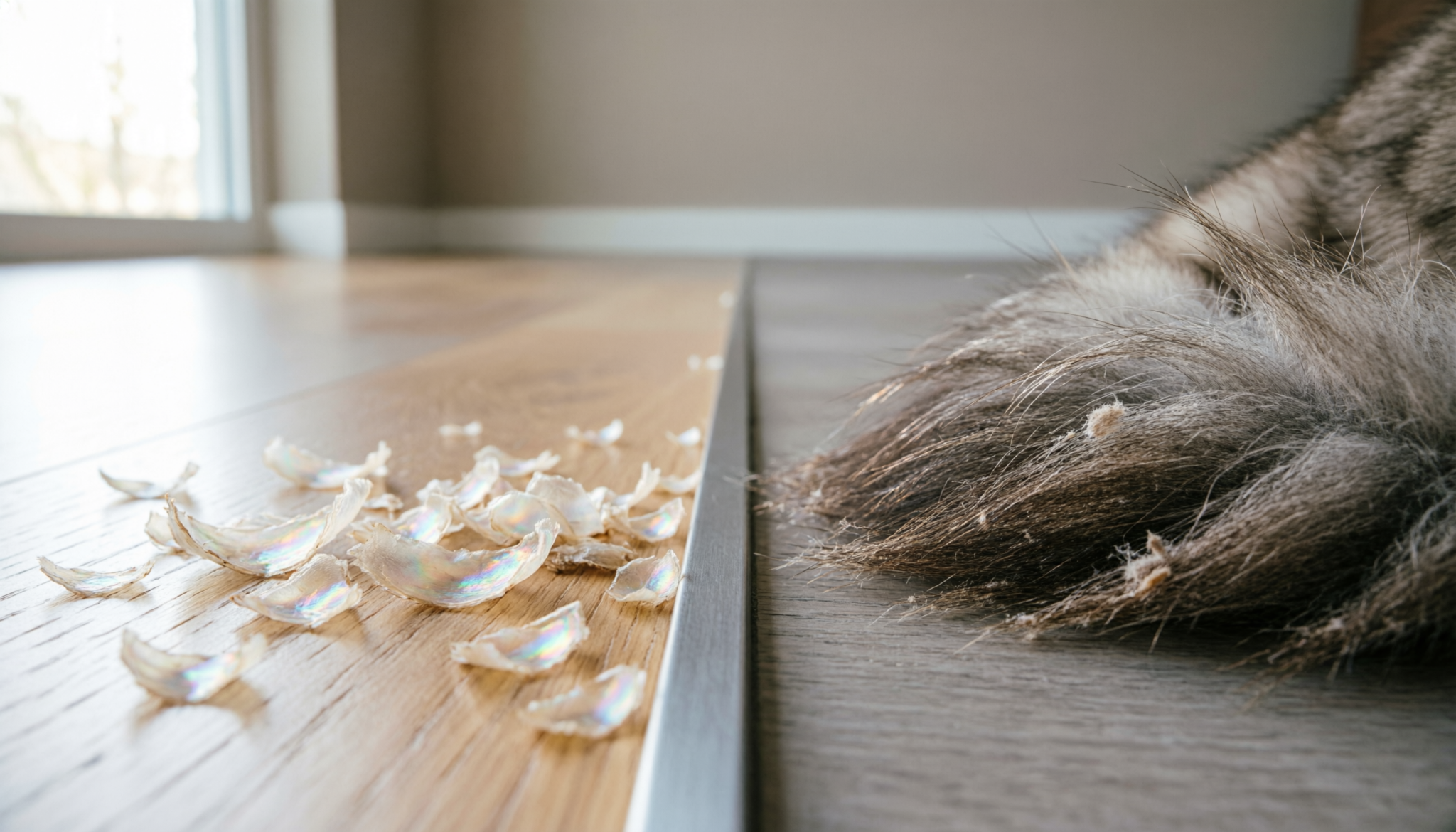
Diagnostic Summary: Pet fur creates visible mess, but pet dander causes most allergy reactions. Vacuums with poor seals, weak filtration, or clogged filters often blow microscopic allergens back into indoor air through the exhaust system.
True HEPA filtration, sealed airflow pathways, and regular filter maintenance reduce airborne dander circulation and prevent repeated allergy exposure.
Warning: A vacuum labeled “HEPA” may still leak allergens if the body, hose connections, or dust bin seals fail. Exhaust leakage can spread dander particles smaller than 2.5 microns throughout carpets, upholstery, curtains, and HVAC airflow zones.
Pet Allergy Filtration Comparison Table
| Filter Grade | Particle Size Outcome | Capture Efficiency | Medical Application |
|---|---|---|---|
| Standard Foam Filter | Captures large debris only | Poor against dander and fine dust | General debris collection |
| HEPA H10-H12 | Captures most airborne allergens | 85-99.5% efficiency | Residential allergy control |
| True HEPA H13-H14 | Captures microscopic dander and PM2.5 particles | 99.95-99.995% efficiency | Hospital and clean-room filtration |
The Static Bond: Why Dander Clings to Everything
Dander behaves differently from fur. Hair sits on top of surfaces. Dander embeds itself.
Here’s what’s really happening:
- Electrostatic charge: Dander carries a slight charge that makes it cling to fibers like carpet, upholstery, and curtains
- Microscopic size: It slips deep into pile and padding where suction alone can’t reach
- Oil content: Skin flakes carry oils that help them stick to surfaces and resist airflow
Where most vacuums fail:
Strong suction without agitation only skims the surface. It pulls loose debris but leaves bonded dander behind.
What actually removes it:
- A motorized brush roll that beats and lifts fibers
- Consistent brush contact with the floor (not floating above it)
- Multiple passes in slow, overlapping strokes
Technical benchmarks prove this: agitation breaks the bond, suction removes the debris. One without the other is incomplete.
Fur and Dander Are Not the Same Problem
Pet fur causes mechanical cleaning problems. Pet dander causes respiratory problems.
Many households focus on visible hair buildup across rugs, couches, and stairs.
Fur certainly clogs brush rolls and fills dust bins quickly, but fur itself rarely becomes the primary airborne trigger. Dander behaves differently.
Pet dander consists of microscopic skin flakes coated with proteins from saliva, sweat, and sebaceous oils. Those proteins trigger allergic reactions.
Unlike fur, dander floats through indoor air for hours and settles deep into carpet fibers, mattresses, curtains, and HVAC ducts.
A poor vacuum can worsen this cycle.
Large fur particles remain trapped inside the vacuum bin. Fine dander particles often bypass low-grade filters and exit through the exhaust port.
Each vacuuming session can redistribute allergens instead of removing them.
Many allergy complaints blamed on “dusty carpets” actually originate from contaminated vacuum exhaust airflow.
Why Vacuum Exhaust Air Matters More Than Suction
Strong suction alone does not guarantee cleaner indoor air.
Many high-powered vacuums create intense airflow turbulence inside the cyclone chamber or dust compartment.
Without proper filtration and airtight seals, microscopic allergens escape before reaching the final filter stage.
Several failures commonly occur:
- Cracked dust-bin seals
- Loose HEPA filter housings
- Worn hose gaskets
- Saturated foam filters
- Poorly sealed motor compartments
- Incorrect aftermarket filter replacements
The result becomes obvious during vacuuming sessions. Sneezing increases. Eyes itch. Chest irritation develops shortly after cleaning.
The vacuum effectively becomes an airborne allergen distributor.
Exhaust placement also matters. Rear-facing exhaust vents can blast dander directly into occupied breathing zones.
Some upright vacuums create strong turbulence near floor level, lifting settled allergens back into circulation before filtration occurs.
This explains why some homes feel dustier immediately after vacuuming.
Technician’s Insight
Technician’s Insight: If dust appears around the vacuum’s exhaust grille or filter compartment, internal leakage has already occurred.
Fine dander particles bypass damaged seals long before visible dust becomes noticeable.
Persistent allergy symptoms after vacuuming often indicate filtration failure rather than poor carpet cleaning performance.
HEPA Filters Only Work Inside a Sealed System
Marketing labels create major confusion in allergy-sensitive homes.
A vacuum may contain a genuine HEPA filter while still leaking allergens through unsealed seams and joints. Filtration only works when all airflow passes through the filter before leaving the machine.
A sealed vacuum system prevents bypass leakage.
Critical sealing points include:
- Dust-bin connection rings
- Motor housing gaskets
- Hose attachment collars
- Exhaust filter frames
- Cyclone chamber joints
Even a small air gap allows pressurized allergen escape.
Cheap aftermarket filters create additional problems. Poor fitment weakens compression seals and reduces filtration efficiency.
Some generic filters also restrict airflow unevenly, increasing motor strain while reducing dust capture performance.
Filter maintenance matters equally.
A clogged HEPA filter reduces airflow and increases internal air pressure. Rising pressure forces fine particles through weak seals and microscopic cracks.
Vacuum exhaust contamination gradually worsens even while suction still feels acceptable.
Many households replace filters far too late.
Homes with multiple pets often require HEPA replacement every three to six months depending on shedding levels, indoor humidity, and carpet density.
Carpet Fibers Trap Dander More Aggressively Than Fur
Pet hair sits near carpet surfaces. Dander penetrates deeper.
Thick carpets and high-pile rugs create dense fiber layers that trap microscopic allergens below visible surface debris.
Standard vacuum heads often remove fur effectively while leaving embedded dander untouched.
Several carpet conditions worsen the problem:
- Plush carpeting
- High humidity
- Infrequent vacuuming
- Wall-to-wall carpeting
- Worn carpet padding
- Heavy upholstered furniture
Walking across contaminated carpets releases dander back into the air repeatedly. Ceiling fans and HVAC airflow spread particles even further.
Brush-roll design also influences allergen removal.
Aggressive brush agitation helps release trapped dander from dense fibers. However, excessive agitation combined with poor filtration creates another problem: airborne redistribution.
Balanced airflow engineering matters more than raw brush-roll speed.
Vacuums designed for allergy control typically combine:
- Controlled airflow channels
- Multi-stage filtration
- Sealed dust systems
- Fine-particle cyclonic separation
- Slower controlled exhaust discharge
This combination reduces secondary airborne contamination during cleaning.
Indoor Air Quality Problems Often Start During Vacuum Maintenance
Improper vacuum maintenance exposes households to concentrated allergen clouds.
Dust-bin emptying creates one of the highest dander exposure moments inside a home.
Fine particles become airborne immediately after debris agitation. Indoor trash cans worsen contamination by recirculating disturbed allergens.
Several maintenance habits reduce exposure:
- Empty bins outdoors whenever possible
- Replace filters before complete saturation
- Wash reusable filters fully before reinstallation
- Inspect seals during every filter change
- Clean brush rolls weekly in pet-heavy homes
- Wipe dust compartments with damp microfiber cloths
Filter washing mistakes also create mold risks.
Reinstalling damp filters encourages microbial growth inside dark motor compartments. Mold spores then circulate through exhaust airflow alongside pet allergens.
Drying time matters.
Most washable filters require at least 24 hours of full air drying before reinstallation.
FAQs
1. Does pet fur cause allergies?
Pet fur alone rarely causes allergic reactions. Allergy symptoms usually come from proteins attached to dander, saliva, urine, and skin flakes resting on the fur surface.
2. Why do allergy symptoms worsen during vacuuming?
Poor filtration, damaged seals, or clogged filters can release microscopic allergens through the vacuum exhaust system. Vacuum agitation also lifts settled dander back into indoor air.
3. How often should HEPA filters be replaced in pet homes?
Homes with multiple pets typically require HEPA filter replacement every three to six months. Heavy shedding, frequent vacuuming, and high carpet density shorten filter lifespan significantly.
Bottom Line
Pet fur creates visible cleaning challenges, but pet dander creates the real indoor air problem. A vacuum with poor filtration or leaking seals can spread allergens across the home during every cleaning session.
Sealed HEPA systems, proper maintenance, and controlled exhaust airflow reduce airborne dander and improve indoor air quality substantially.