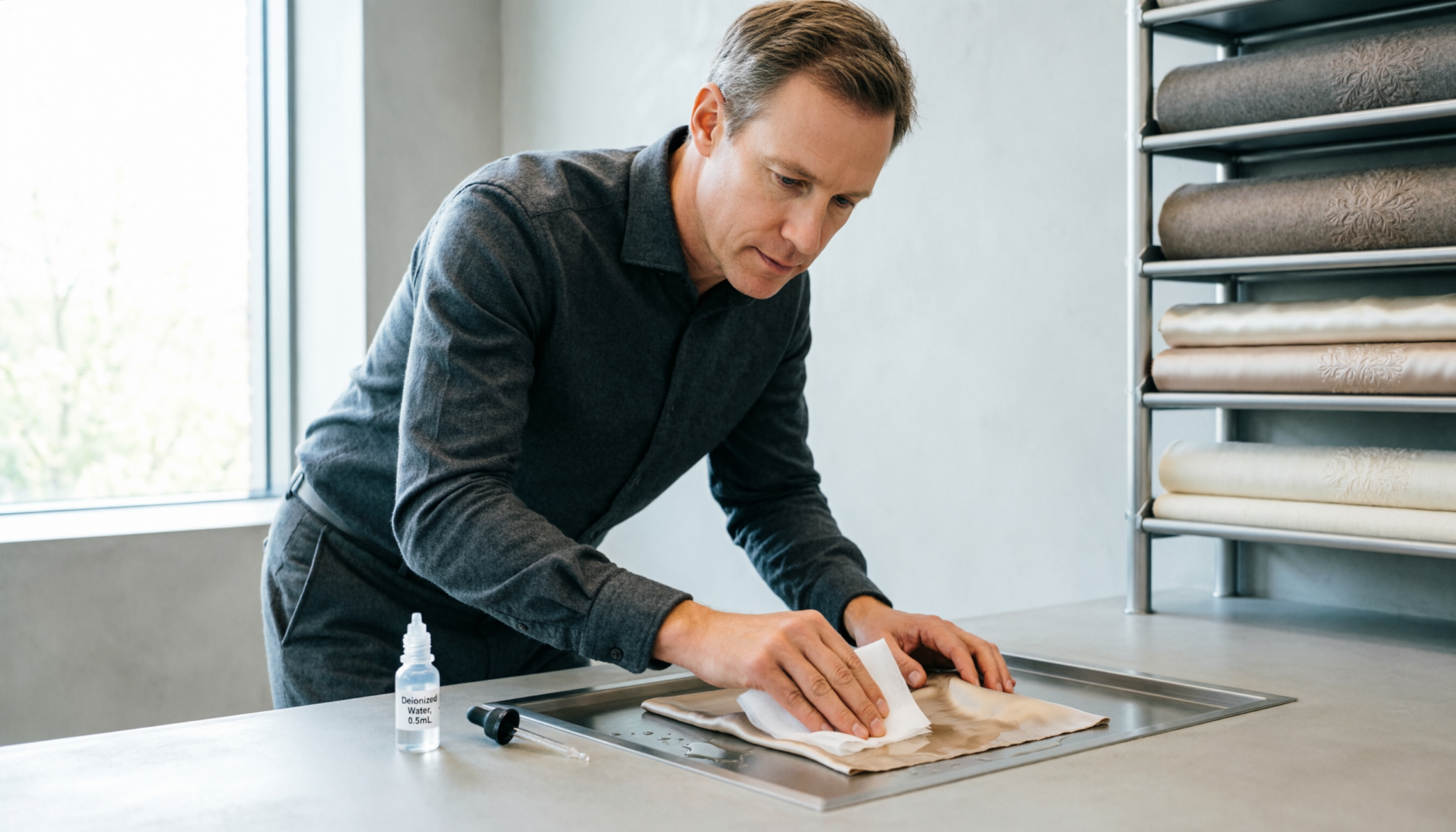
Water-spot prevention starts before moisture reaches valuable fabric. A hidden-area spot test, distilled-water testing, controlled moisture application, rapid blotting, and complete drying reduce ring formation, dye migration, and texture changes.
Fabric care labels, fiber composition, dye stability, and humidity conditions determine safe moisture exposure. Never assume water alone remains harmless.
Comparison Table
| Fabric Risk Factor | Safer Spot-Test Method | Main Warning Sign |
|---|---|---|
| Delicate natural fibers | Minimal distilled-water moisture | Darkening or dye transfer |
| Dense upholstery | Controlled hidden-area test | Persistent water ring |
| Humid indoor conditions | Small moisture dose plus ventilation | Slow drying or musty odor |
Why Expensive Fabrics React To Water
Water spotting rarely results from water alone. Fabric construction, soil distribution, dye chemistry, finishing treatments, backing materials, and drying speed all influence the final appearance.
A clean-looking textile can contain invisible residues from dust, body oils, cleaning agents, beverages, or airborne particles. Moisture can dissolve or redistribute those residues.
As moisture travels through fibers, dissolved material can migrate toward the drying boundary. Uneven drying can leave a visible ring.
Natural fibers often require particular caution. Silk, wool, cotton, linen, rayon, and certain blended textiles can respond differently to moisture.
Upholstery fabrics can contain additional layers, including foam, batting, adhesives, and backing cloth. Moisture reaching deeper layers can prolong drying and increase the chance of discoloration or odor.
Indoor air quality also matters. High indoor humidity slows evaporation, while poor air circulation extends the damp period. Prolonged dampness creates an unfavorable environment for odor-producing microbial growth.
Effective fabric care therefore requires moisture control plus adequate ventilation. The safest principle remains simple: test before treating the visible surface.
How To Perform A Controlled Spot Test
A proper spot test requires more discipline than placing a wet cloth against an inconspicuous corner.
First, identify the fabric composition and review the care label. Manufacturer instructions take priority over generalized cleaning advice. “Water washable” does not automatically mean unrestricted saturation.
Select an inconspicuous area with matching construction. A rear upholstery edge, underside seam allowance, or concealed cushion section can provide suitable testing territory.
Use a small quantity of distilled water when water testing appears appropriate. Distilled water reduces the mineral residue associated with hard tap water. Mineral deposits can contribute to visible rings after evaporation.
Apply moisture with a white, lint-free cloth rather than pouring water directly onto fabric. Excess liquid creates uncontrolled penetration and makes test results less useful.
Press gently. Avoid aggressive rubbing. Rubbing can alter surface texture, disturb dyes, or produce abrasion marks that resemble staining.
Allow the test area to dry completely. Partial drying cannot provide a reliable result. Inspect the fabric under normal lighting and angled lighting after full evaporation.
Check for:
- Color change
- Darkened edges
- Water rings
- Dye transfer
- Surface stiffness
- Texture distortion
- Nap changes
- Residue or tide marks
- Persistent odor
A successful dry appearance does not guarantee universal safety, but an unsuccessful spot test provides a strong reason to stop.
Distilled Water Versus Tap Water Testing
Distilled water offers a cleaner baseline for controlled testing. Tap water contains varying mineral concentrations, depending on local water chemistry.
Calcium and magnesium deposits can remain after evaporation, particularly on dark or smooth textiles.
A tap-water test can therefore produce a misleading result. A faint mineral ring may suggest fabric incompatibility when the underlying problem actually involves water composition.
Distilled water does not eliminate every risk. Fabric dyes, finishes, construction methods, and embedded residues remain potential causes of spotting.
For expensive upholstery, antique textiles, silk furnishings, hand-dyed materials, and specialty decorative fabrics, professional textile assessment remains preferable to repeated household testing.
Expert Opinion: Expert’s Insight
Expert’s Insight: Water spotting usually reflects uneven moisture movement rather than simple water damage.
Controlled moisture, minimal saturation, white testing cloths, distilled water, and complete drying provide the safest household protocol.
High humidity increases drying time, so ventilation deserves equal attention. A failed hidden-area test means full-surface treatment should stop immediately.
What To Do After Moisture Application
The drying stage deserves as much attention as the application stage.
Blotting should remove surface moisture without forcing liquid deeper into the textile. A clean white absorbent cloth works better than colored towels, which can introduce dye.
Air movement supports evaporation. Open windows when outdoor conditions permit. Increase room ventilation and maintain moderate indoor humidity.
Avoid directing intense heat toward delicate textiles. Excessive heat can affect dyes, finishes, adhesives, and synthetic components.
Never leave damp cushions stacked together. Separate fabric components whenever construction permits. Increased exposed surface area accelerates evaporation and reduces trapped moisture.
Avoid covering damp upholstery with plastic. Non-breathable coverings restrict evaporation and can retain humidity near the fabric surface.
A moisture-sensitive textile requires patience. Rapid drying through excessive heat can cause a different category of damage, including shrinkage, distortion, finish changes, or uneven texture.
Why Humidity Changes Fabric Risk
Relative humidity influences how quickly water leaves fabric.
A dry room with good air circulation generally supports faster evaporation than a stagnant, humid room. Faster controlled drying reduces the duration of moisture exposure and helps limit residue migration.
Indoor humidity also affects perceived air quality. Persistent dampness can contribute to musty odors and microbial growth within porous materials. Upholstery, rugs, curtains, and mattresses can retain moisture longer than hard surfaces.
For valuable textiles, humidity management should therefore form part of the sanitation routine. Moisture application without a drying plan creates unnecessary risk.
A useful household rule involves three stages:
Test → Moisturize minimally → Dry completely.
Skipping the testing stage creates uncertainty. Excessive moisture increases penetration. Poor drying extends exposure.
When Water Spotting Requires Professional Care
Some fabrics should not receive household water testing at all.
High-risk examples include antique textiles, fragile silk, hand-painted fabrics, unstable dyes, heavily embellished upholstery, vintage velvet, and materials carrying specialized conservation instructions.
Professional assistance also becomes appropriate when a previous cleaning treatment has already caused rings or discoloration. Additional moisture can worsen uneven residue distribution.
Large upholstery surfaces present another problem. A small successful spot test does not guarantee uniform results across an entire sofa or chair.
Soil levels can vary considerably from one section to another. Cushion fronts, armrests, headrests, and seating areas often contain different concentrations of oils and particulate residue.
Professional textile cleaners can assess fiber content, dye stability, construction, existing soil, and appropriate moisture levels before treatment.
For valuable fabric, prevention costs less than correction in terms of both material risk and replacement difficulty.
FAQs
1. Can tap water cause fabric spots?
Yes. Mineral content can remain after evaporation and contribute to visible residue. Distilled water provides a cleaner testing baseline, although distilled water cannot eliminate risks associated with dyes, fibers, finishes, or embedded soil.
2. Does humidity increase water-spotting risk?
Yes. High humidity slows evaporation and extends moisture exposure. Poor air circulation can further delay drying. Moderate humidity and adequate ventilation support safer moisture management around porous furnishings.
3. What happens when a spot test fails?
Stop moisture treatment on the larger surface. A failed test can indicate dye instability, moisture-sensitive finishing, residue migration, or construction-related risk. Professional textile assessment offers a safer next step for valuable fabric.
Final Word
The safest fabric-care protocol starts with restraint. Minimal moisture, concealed testing, distilled water, gentle blotting, controlled ventilation, and complete drying reduce avoidable spotting.
Expensive textiles deserve evidence before treatment, not assumptions. When dye instability, delicate fibers, antique construction, or persistent discoloration appears, professional textile care remains the responsible choice.