
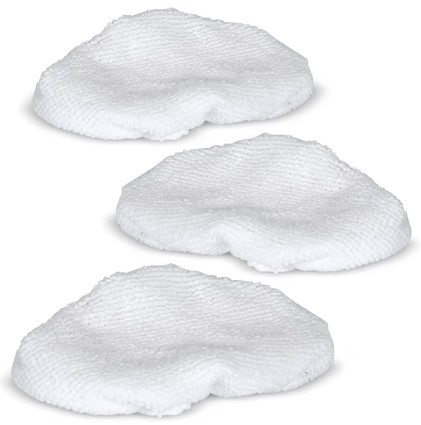
VERDICT: Wagner C900069 microfiber bonnets deliver the strongest delicate-fabric balance: three washable bonnets, dedicated fabric-steamer geometry, and controlled steam diffusion.
Autofiber Twist offers 500-GSM microfiber and reduced steam intensity for sensitive surfaces. Fabric-specific bonnets outperform ordinary mop pads for upholstery, curtains, bedding, garments, and decorative textiles.
Comparison Table
| Model | Microfiber Construction | Delicate-Fabric Control | Best Application | Price |
|---|---|---|---|---|
| Wagner C900069 3-Pack | Dedicated microfiber bonnet | Excellent | Upholstery, curtains, bedding, garments | Amazon |
| Autofiber Twist Triangle Bonnet | 500 GSM, 75/25 microfiber | Excellent | Triangle-head steam cleaning | Amazon |
| Wagner Spraytech 9-Piece Accessory Pack for Canister Steamers | Fabric-steamer microfiber bonnet | Very good | Upholstery and automotive interiors | Amazon |
The Winner
Testing Criteria: Microfiber Steam Bonnets for Delicate Fabric Agitation
Delicate-fabric steaming requires substantially different criteria from hard-surface steam cleaning.
A stiff brush can mechanically stress fibers, while unrestricted steam can saturate textile layers. A properly engineered microfiber bonnet moderates both variables.
1. Fiber Density
Microfiber density determines contact behavior. Dense microfiber captures particulate matter while distributing mechanical pressure across a broader surface.
Wagner documentation specifically identifies the microfiber bonnet as a means of preventing excessive wetting, absorbing dirty particles, and reducing particle redistribution during fabric steaming.
2. Steam Moderation
A bonnet should diffuse steam rather than concentrate a narrow blast against one textile location. Autofiber Twist specifically reduces bristle aggressiveness and steam intensity when fitted over a triangular head.
The 500-GSM construction provides a substantial physical buffer between the steam head and fabric.
3. Surface Friction
Delicate upholstery benefits from low-aggression contact. Excessive friction can flatten pile, disturb decorative fibers, or produce uneven surface appearance. Microfiber offers controlled agitation without the aggressive mechanical action associated with hard nylon bristles.
4. Fit Security
Loose bonnets create a serious practical problem. An unstable bonnet can expose the underlying steam head, concentrating heat and mechanical pressure onto a small textile area. Elastic retention, shaped construction, or dedicated attachment geometry therefore matters.
5. Washability
Reusable microfiber requires frequent laundering. Multiple bonnets provide operational separation between cleaner fabrics and heavily soiled textiles. A three-pack therefore has greater practical value than a single premium bonnet.
6. Application Compatibility
Fabric bonnets do not automatically fit every steam cleaner. Wagner C900069, for example, specifically excludes older Wagner 905 and 915 On-Demand models. Compatibility verification remains mandatory before purchase.
Expert Opinion
Expert’s Tip: Use the bonnet as a thermal buffer, not as permission for prolonged steaming. Delicate textile agitation should use short passes, moderate steam output, and continuous movement.
A microfiber bonnet helps distribute moisture and capture loosened particulate matter, but excessive dwell time can still introduce unnecessary heat and moisture into sensitive fibers.
Color-fastness testing remains essential. A hidden seam or inconspicuous section provides a safer test location before full-area steaming. Manufacturer guidance for steam upholstery equipment also recommends testing fabric color fastness before treatment.
Avoid aggressive brushing on silk, satin, embellished textiles, antique fabrics, unstable dyes, and heat-sensitive synthetic materials. Fabric-care labeling remains the controlling authority.
Best Microfiber Steam Bonnets for Delicate Fabric Agitation
1. Wagner C900069 Microfiber Bonnet (Best for Dedicated Fabric Steaming)
Wagner C900069 represents the strongest overall option for fabric-specific steam cleaning. The product contains three microfiber bonnets. Compatible equipment includes the Wagner 915E, 905e, and 925e families.
Pros
- Three dedicated microfiber bonnets
- Affordable price
- Purpose-built fabric-steamer geometry
Cons
- Compatibility excludes older 905 and 915 models
The primary advantage comes from purpose-built construction. A dedicated fabric bonnet provides better control than improvised microfiber towels wrapped around a steam nozzle.
2. Autofiber Twist Triangle Microfiber Steamer Bonnet (Best for High-Density Agitation)
![[Steamer Cover] Triangle Head Microfiber Steamer Bonnet - Twist Pile - 12 Pack](https://www.expertsinvacuum.com/wp-content/uploads/2026/09/Screenshot_1-7.jpg "Best Microfiber Steam Bonnets for Delicate Fabric Agitation 4")
Autofiber Twist delivers a substantially heavier microfiber construction than basic fabric covers. The bonnet uses 500-GSM microfiber with a 75/25 blend and fits small triangular steam heads measuring approximately 4 inches per side.
Pros
- 500-GSM microfiber density
- 75/25 microfiber blend
- Twelve-bonnet pack
Cons
- Triangle-head compatibility limits universal use
The construction suits controlled agitation around upholstery seams, corners, and other areas where direct brush contact can become unnecessarily aggressive.
Autofiber specifically states that the bonnet reduces bristle aggressiveness and steam intensity. Such behavior makes the design particularly relevant for delicate-fabric work.
3. Wagner Steamer Accessory Pack (Best for a Complete Fabric-Care Setup)
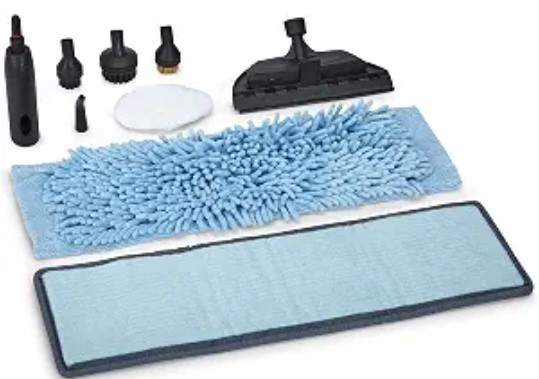
The Wagner Steamer Accessory Pack provides a broader accessory ecosystem rather than a bonnet-only purchase.
The pack includes a squeegee, fabric steamer and bonnet, microfiber cleaning pad, microfiber chenille mop pad, jet nozzle, adapter, and multiple brushes.
Pros
- Fabric bonnet included
- Multiple microfiber accessories
- Broad steam-cleaning compatibility
Cons
- Higher purchase cost than a bonnet-only replacement
A complete accessory package makes economic sense when existing accessories require replacement.
Fabric steaming gains a dedicated bonnet while hard-surface cleaning gains separate tools, reducing cross-contamination between cleaning tasks.
4. Dupray-Compatible Triangle Microfiber Bonnet (Best for Small Detail Areas)
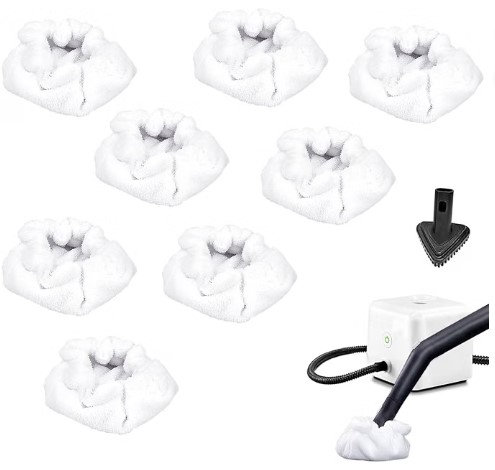
Triangle microfiber bonnets provide a useful solution for detailed upholstery work when a compatible triangular steam head already exists.
Current marketplace examples include double-layered triangle bonnets designed for Dupray-style triangular heads.
Pros
- Compact triangular geometry
- Useful for corners and tight upholstery areas
- Double-layer construction available
Cons
- Compatibility varies substantially among third-party versions
Triangle bonnets concentrate cleaning control into a small working area. Such geometry suits seams, cushion edges, narrow upholstery sections, and detailed automotive interiors.
A caution applies to double-layer designs. Extra material can improve buffering, but excessive thickness can also restrict steam flow.
Matching bonnet thickness to steam output remains preferable to selecting the thickest available cover.
Why Microfiber Bonnets Matter for Delicate Fabric Agitation
Steam alone does not equal gentle fabric care. Temperature, moisture exposure, dwell time, pressure, and mechanical friction collectively determine treatment intensity.
A microfiber bonnet modifies several variables simultaneously. Microfiber distributes contact across numerous fine fibers, captures loosened soil, and places a textile layer between the steam source and the treated surface.
Wagner documentation specifically describes this combination as a means of preventing soaking, capturing dirty particles, and reducing particle spread.
The bonnet also changes the mechanical profile of a steam-cleaning head. Without a fabric cover, bristles or concentrated steam can interact directly with textile fibers. With a properly fitted microfiber layer, contact becomes softer and more distributed.
However, microfiber cannot make every fabric steam-safe.
Silk, certain rayon constructions, heat-sensitive synthetics, unstable dyes, glued decorative elements, and antique textiles can require professional textile-care methods instead.
FAQs
1. Can a microfiber steam bonnet damage delicate fabric?
Yes. A bonnet reduces mechanical aggression and moderates steam contact, but excessive heat, moisture, pressure, or dwell time can still damage sensitive textiles.
Manufacturer fabric-care instructions should take priority. A hidden-area color-fastness test should precede broad treatment.
2. What microfiber GSM works best for delicate upholstery?
A higher GSM can provide greater buffering and absorption, but GSM alone does not determine fabric safety.
Autofiber Twist uses 500 GSM and specifically targets reduced bristle aggression and steam intensity. Fit, weave, steam output, and fabric sensitivity remain equally important.
3. Can ordinary microfiber towels replace steam bonnets?
Ordinary towels can provide a temporary fabric barrier, but dedicated bonnets offer superior fit, retention, geometry, and predictable steam distribution.
A purpose-built bonnet therefore remains the safer engineering choice for repeated upholstery and delicate-fabric steaming.
Final Word
Wagner C900069 earns the strongest overall recommendation for dedicated fabric steaming, while Autofiber Twist provides superior density for controlled triangular-head agitation.
HomeRight C817522 suits AutoRight equipment particularly well. Correct fit, low pressure, continuous movement, and color-fastness testing remain essential for delicate textiles.