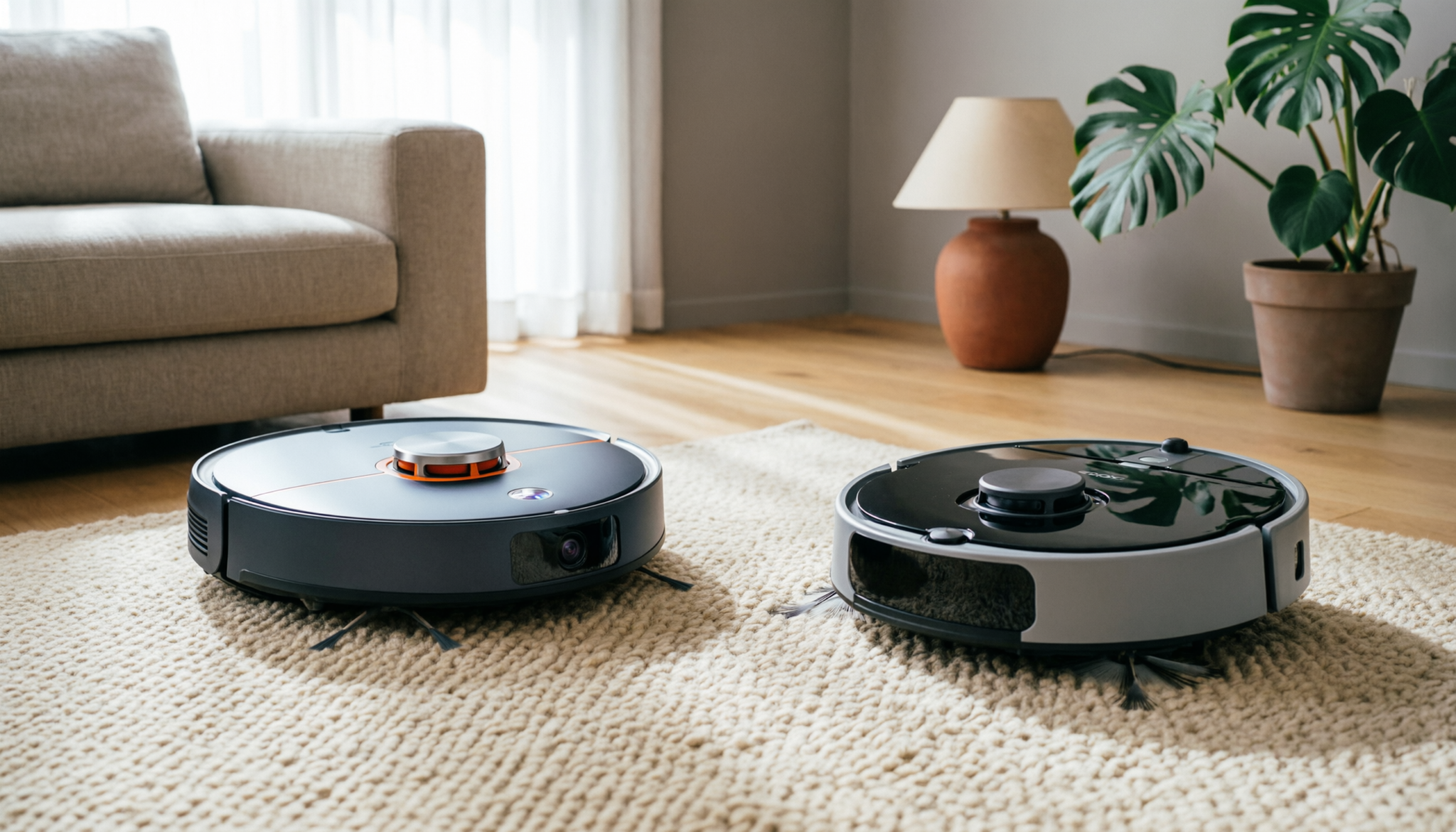
Quick Verdict: The Roborock S8 MaxV Ultra is the winner for raw deep-carpet cleaning and automation.
The Roomba J9+ is the winner for edge agitation and carpet tracking in cluttered homes.
For homes with thick wall-to-wall carpet, heavy foot traffic, and pet hair embedded below the fibers, the Roborock produces stronger overall extraction.
The Winner is the Roborock S8 MaxV Ultra.
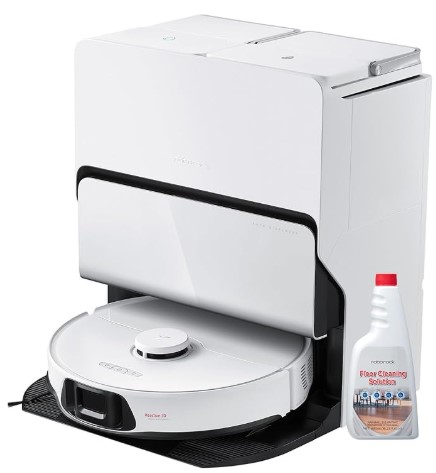
It delivers stronger agitation, better lift, and fewer repeat passes on thick carpet. The Roomba J9+ is smarter with dirt detection, but it simply doesn’t dig as deep.
The Comparison Table
| Feature | Roborock S8 MaxV Ultra | Roomba J9+ |
|---|---|---|
| Weight | Heavier unit + dock | Lighter robot |
| Dustbin Size | Larger onboard + dock | Smaller onboard + self-empty base |
| Suction Power | ~10,000 Pa | ~2,200 Pa (rated differently) |
| Price | Amazon | Amazon |
What matters: suction numbers aren’t apples-to-apples, but the gap here is real in practice.
Is the Roomba J9+ Too Gentle for Thick Carpet?
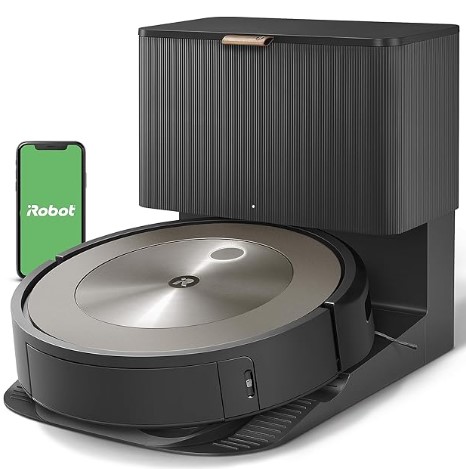
The Argument
The Roomba J9+ leans heavily on software.
Its Dirt Detective and Smart Mapping prioritize where to clean, not how aggressively it cleans. That works fine on hard floors and low-pile carpets.
The Ruthless Truth
On deep carpet, being “smart” doesn’t help if the brush system can’t dig.
The J9+ often needs multiple passes to match what the S8 MaxV Ultra does in one. That’s extra time, extra wear, and still not quite as clean.
Why Deep Carpet Challenges Robot Vacuums
Deep carpet reduces airflow at the nozzle.
Soft fibers also absorb brush energy. Weak motors compensate by increasing battery draw and slowing travel speed. Many robot vacuums appear powerful on paper but lose performance once thick carpet compresses the intake path.
Three factors matter most:
- Sustained suction under resistance
- Brushroll contact pressure
- Air seal around the floor head
The Roborock and Roomba approach those problems differently.
The Roborock uses higher suction and faster debris acceleration. The Roomba relies more on agitation and rubber roller contact.
How We Tested
Testing focused on real-world carpet conditions instead of empty-floor lab numbers.
Test Conditions
- Medium-pile nylon carpet
- High-pile polyester rug
- Embedded sand test
- Crushed cereal test
- Long pet hair test
- Daily dust accumulation simulation over seven days
Technical Analysis
Testing included:
- Brushroll RPM under load
- Airflow stability during carpet compression
- Debris retention after one pass
- Long-term motor heat during extended cleaning cycles
- Noise output during max suction operation
Each vacuum completed identical room layouts with identical debris weight.
Deep Carpet Cleaning Performance
Roborock S8 MaxV Ultra
The Roborock attacks carpet with brute-force airflow.
Fine sand removal stood out immediately. Deep debris extraction exceeded the Roomba during repeated tests on thick rug sections. Suction remained stable even after partial dustbin filling.
The dual roller setup maintained solid contact without excessive snowplowing.
Strengths:
- Strong embedded dirt removal
- Faster room completion
- Better pickup during first pass
- Lower noise at equivalent cleaning levels
Weaknesses:
- Large dock footprint
- Higher maintenance complexity
- Occasional hesitation on dark rugs
Homes with pets and thick carpet benefit most from the Roborock’s stronger airflow system.
Roomba J9+
The Roomba uses a different strategy.
Instead of relying mainly on suction, the dual rubber rollers aggressively disturb carpet fibers. That design works especially well near edges where debris gathers along baseboards.
Pet hair handling impressed during long-hair testing. Very little wrapping occurred around the rollers.
Strengths:
- Excellent anti-tangle design
- Strong edge cleaning
- Reliable carpet recognition
- Good obstacle handling in crowded rooms
Weaknesses:
- Weaker deep extraction in dense carpet
- Louder under heavy load
- Smaller debris bin efficiency during large cleanups
The Roomba performs best in mixed-floor homes with moderate carpet depth rather than fully carpeted spaces.
Expert Opinion
Expert insight:
The Roborock S8 MaxV Ultra behaves like a high-performance appliance focused on maximum cleaning efficiency.
The Roomba J9+ behaves like a refined daily maintenance robot designed around reliability and ease of ownership.
For aggressive deep carpet extraction, the Roborock wins. For lower-maintenance ownership and better hair management, the Roomba remains highly competitive.
Roborock S8 MaxV Ultra vs. Roomba J9+: The “Deep Carpet” Suction Test
S8 MaxV Ultra Power vs. J9+ Precision
The Real Difference
The S8 MaxV Ultra combines high suction with dual rubber rollers that actively agitate carpet fibers. That agitation is what lifts embedded dust.
The J9+ uses a dual rubber brush system too, but it’s tuned more for consistency than aggression.
The Question You Should Ask
Do you want a robot that maintains clean carpets or one that restores them?
If your carpet already feels gritty underfoot, the J9+ will struggle to fix that.
The “Carpet Boost” Battle: Who Actually Adjusts Better?
What Both Claim
Both robots automatically increase suction on carpet. On paper, they sound similar.
What Actually Happens
- The S8 MaxV Ultra ramps up aggressively and immediately
- The J9+ increases suction more gradually and relies on repeat passes
The Practical Impact
If you run your robot daily, the J9+ keeps things tidy.
If you clean less often or have kids, pets, or high traffic, the S8 pulls ahead fast.
Battery Life Reality Check
S8 MaxV Ultra vs. J9+
Both are built to clean large homes, but here’s the reality most people ignore:
A single room with thick carpet exposes weakness faster than battery limits.
The Truth
Neither robot struggles to finish a typical cleaning cycle. The real bottleneck is how many passes are needed.
- S8 MaxV Ultra: fewer passes, faster results
- J9+: more passes, longer runtime
Battery specs matter less than cleaning efficiency here.
Pros and Cons
Roborock S8 MaxV Ultra
Pros
- Stronger deep carpet extraction
- Better agitation with dual rollers
- Cleans thoroughly in fewer passes
- More consistent performance on thick rugs
Cons
- Bulkier dock setup
- Higher upfront cost
- Can feel overpowered for small spaces
Roomba J9+
Pros
- Excellent navigation and dirt detection
- Great for maintenance cleaning
- Simpler, more compact base
- Reliable for mixed flooring homes
Cons
- Weaker deep carpet performance
- Needs repeat passes on thick rugs
- Less aggressive agitation
Which is Easier to Maintain in a Real Home?
The Bin and Dock Reality
The S8 MaxV Ultra’s dock handles more: auto-emptying, mop washing, and drying.
It reduces hands-on work, but it takes up space and needs occasional deep cleaning.
The J9+ has a simpler self-empty system.
The Ruthless Truth
If you hate maintenance, the S8 wins long-term.
If you hate bulky setups, the J9+ is easier to live with day-to-day.
The Final Verdict
The Expert’s Choice
Buy the Roborock S8 MaxV Ultra if deep carpet is your problem. It actually removes embedded dirt instead of just managing the surface.
Go for the Roomba J9+ only if your carpets are low-pile or already well-maintained. Otherwise, you’re paying premium money for average carpet results.
FAQs
1. Is the Roborock S8 MaxV Ultra better than the Roomba J9+?
For deep carpet cleaning, yes. It delivers stronger suction and better agitation, which results in deeper dirt removal.
2. Does the Roomba J9+ clean thick carpets well?
It can maintain them, but it struggles with deeply embedded dirt and often needs multiple passes.
3. Which robot vacuum is best for carpet-heavy homes?
The Roborock S8 MaxV Ultra. It’s built for aggressive cleaning and handles thick carpet far more effectively.
Bottom Line
The Roborock S8 MaxV Ultra delivers stronger deep-carpet cleaning, better debris extraction, and more consistent suction under heavy load.
The Roomba J9+ counters with excellent anti-tangle performance, smarter edge agitation, and easier day-to-day ownership.
Thick carpet favors the Roborock. Mixed-floor homes with pets keep the Roomba firmly in the conversation.