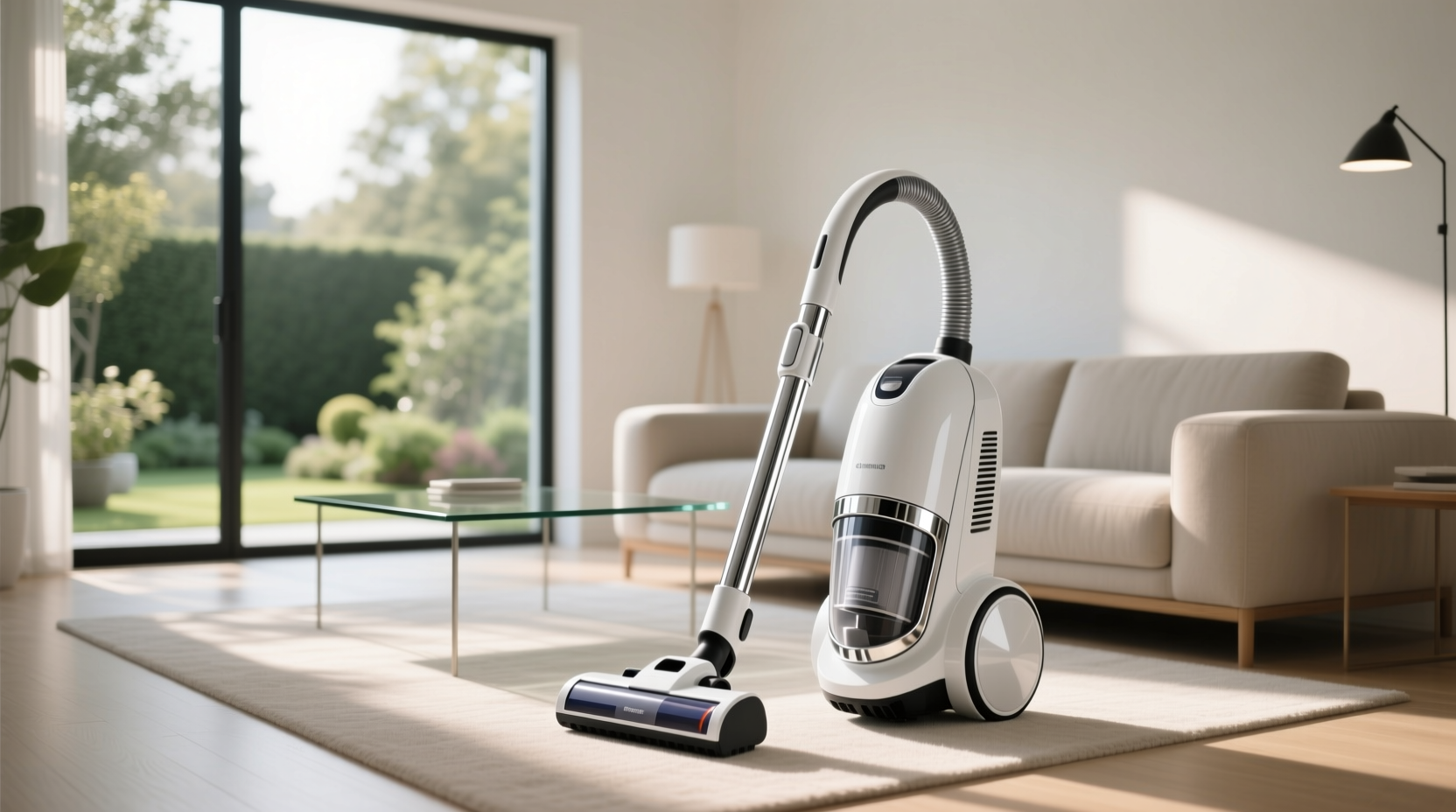
Most vacuum cleaners need replacement after 5 to 8 years. Weak suction, overheating, loud motor noise, and dusty exhaust are the clearest signs of decline. A worn-out vacuum does more than clean poorly. It leaves abrasive grit in carpets, recirculates allergens, and increases floor wear over time.
THE VACUUM LIFESPAN HIERARCHY
| Vacuum Type | Average Lifespan | Common Failure Point | Long-Term Outcome |
|---|---|---|---|
| Premium bagged canister | 15–20 years | Hose or seal wear | Repairable long-term |
| Premium cordless | 7–10 years | Battery degradation | Moderate repair value |
| Mid-range upright | 5–8 years | Motor fatigue | Performance decline |
| Budget bagless upright | 3–5 years | Seal and motor wear | Replacement usually cheaper |
| Entry-level cordless | 2–4 years | Battery fade | Short service life |
The Short Answer
On average, a vacuum cleaner lasts about 5–8 years.
That range depends heavily on the brand, the motor quality, and how well it’s maintained.
A well-built machine from brands like Miele or Sebo can last well over a decade. Budget machines from Shark or Bissell usually wear out much sooner.
Here’s a simple rule from experience:
If suction has dropped by about 50%, your vacuum is already costing you time and damaging your floors.
The “Is It Dead?” Quick Checklist
Run through these quick checks. No tools needed.
Ask yourself:
- Does the vacuum smell dusty or musty even after you clean the filter?
- Is it making a high-pitched whistle, grinding sound, or rattling noise?
- Do you have to vacuum the same spot two or three times to pick up crumbs?
Verdict:
If you checked two or more, jump straight to the section below about when to give up on a machine.
Those symptoms rarely fix themselves.
Not All Vacuums Are Created Equal: Lifespan by Brand
Different brands are built with completely different philosophies. Some are repairable workhorses.
Others are designed more like appliances you replace every few years.
| Brand Type | Typical Lifespan | What That Means |
|---|---|---|
| Miele / Sebo | 15–20 years | Premium build, parts available, designed to be repaired |
| Dyson | 7–10 years | High-tech motors, battery lifespan limits cordless models |
| Shark / Bissell | 3–5 years | Budget models often treated as replaceable appliances |
Expert’s Insight
Shark makes capable cleaners for the price. But most models are not built for long-term repair.
If a 4-year-old Shark starts losing suction or the motor struggles, repairs rarely make financial sense. In most cases, replacement is the practical option.
That’s not a flaw. It’s simply how those machines are designed.
5 Signs Your Vacuum Is Actually Damaging Your Home
A failing vacuum doesn’t just clean poorly. It can slowly wear down carpets and circulate allergens.
Here are the warning signs I see most often.
1. Suction Loss
When suction drops, dirt stays trapped at the base of the carpet.
That grit behaves like sandpaper every time someone walks across the floor. Over time, it wears down carpet fibers and dulls rugs.
Weak suction means the vacuum is no longer protecting your floors.
2. The “Dog Smell” Problem
If your vacuum smells musty or like old pet hair every time it runs, the filtration system may have failed.
This often happens when HEPA seals degrade or filters stop trapping particles properly.
Instead of cleaning the air, the machine simply blows allergens back into the room.
3. Excess Heat and Loud Motor Noise
A vacuum motor should feel warm.
It should not feel hot.
If the machine runs hot and sounds louder than usual, the motor bearings are usually wearing out.
Once that process starts, failure isn’t far behind.
4. Cordless Battery Fade
Cordless vacuums lose power as their batteries age.
If a cordless machine from Dyson or Shark now runs only 10 minutes instead of 40, the battery is near the end of its life.
Replacement batteries often cost $80–$120.
At that point, it’s fair to ask a simple question:
Is it worth putting a new engine in an old car?
5. Obsolete Brushroll Technology
Older vacuums often lack anti-tangle brushrolls.
If you spend twenty minutes every week cutting hair off the roller, the machine is outdated.
Modern brushrolls prevent this problem almost entirely.
Your time is worth more than that weekly chore.
The Repair vs. Replace Rule of Thumb
When a vacuum starts failing, people often rush to repair it.
Sometimes that makes sense. Sometimes it doesn’t.
Here’s the simple rule many repair technicians follow:
Replace the vacuum if:
- The repair costs more than 50% of a new machine, or
- The vacuum is over 5 years old.
Motors, control boards, and battery replacements can get expensive quickly.
Putting major repair money into an aging vacuum usually means paying twice.
What to Buy If Your Old Vacuum Just Died
If your current machine has reached the end of the road, the next choice depends on how you like to clean.
Here are three reliable paths.
The “Buy It for Life” Choice
The Miele Complete C3
This is the type of vacuum many people keep for 15–20 years.
Why it stands out:
- Extremely strong suction
- Fully sealed HEPA filtration
- Replaceable parts available for decades
It’s expensive upfront, but long-term owners rarely regret the purchase.
The Tech-Forward Choice
The Dyson V15 Detect
For people who want cordless convenience and modern features.
Highlights include:
- Laser dust detection on hard floors
- Automatic suction adjustment
- Strong cordless performance
Just remember: cordless batteries eventually wear out, usually after several years.
The Best Value Option
The Shark Stratos
This model hits a practical middle ground.
Good features for the price:
- Strong suction
- Anti-tangle brushroll
- Good performance on both carpet and hard floors
It won’t last decades, but it offers excellent cleaning value for the cost.
Don’t Kill Your New Machine: 3 Maintenance Non-Negotiables
A vacuum’s lifespan depends heavily on maintenance. These habits make the biggest difference.
1. Change Filters Every 6 Months
Clogged filters choke the motor and reduce suction.
Most machines perform best when filters are replaced twice a year.
2. Cut Hair Off the Brushroll Weekly
Hair wrapped around the brushroll strains the motor and slows cleaning.
A quick weekly trim with scissors keeps airflow and performance strong.
3. Never Vacuum Fine Dust with Bagless Machines
Flour, drywall dust, and cement powder are extremely fine.
These particles can destroy bagless filters and clog motors.
If you must clean that type of dust, use a bagged vacuum or shop vacuum.
FAQ
1. Is it worth fixing a 5-year-old Dyson?
Sometimes. If the problem is a clogged filter or worn brushroll, repairs are cheap.
But if the motor or battery needs replacement, the repair cost often approaches half the price of a new machine.
In that case, replacement is usually the better long-term decision.
2. Can I use my vacuum until it completely stops turning on?
Technically yes, but it’s not a good idea.
A weak vacuum leaves abrasive grit deep in carpet fibers. Every step on that carpet grinds the dirt deeper and slowly damages the flooring.
Replacing a failing vacuum early often protects the floors it’s meant to clean.
Bottom line:
Most vacuums should be replaced after 5–8 years, sooner if suction drops or the motor struggles.
A well-maintained premium machine can last far longer, but once performance fades, holding onto an old vacuum usually costs more in time, dust, and floor wear.