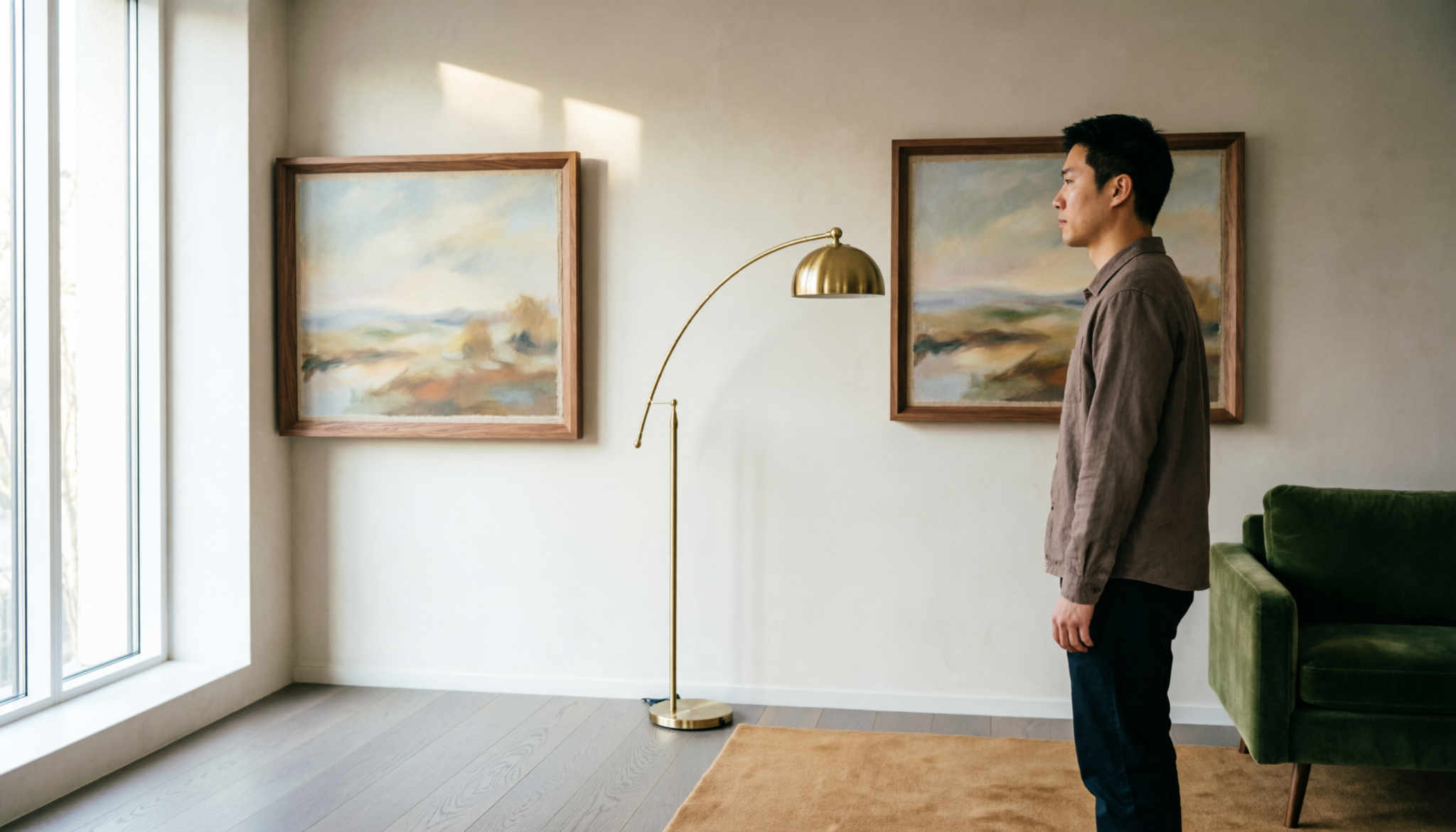
Most walls tell the same story, art hung too high, floating above the room instead of grounding it. The fix is simple and reliable.
The 57-inch rule, used in galleries, brings artwork down to a natural sightline, making spaces feel calm, connected, and intentionally arranged without guesswork.
The Short Answer
Interior designers and museums follow the 57-inch rule. The center of the artwork sits 57 inches from the floor, matching average eye level.
Hanging art too high creates the “skyline effect,” where pieces feel disconnected from furniture and strain the eye instead of settling comfortably into the room.
Calculating the ‘Hook Point’: The Math Behind the 57-Inch Rule
Getting the height right comes down to a simple formula:
Formula:
57 inches − (half the artwork height) + (distance from top of frame to hanging hardware) = hook placement on wall
Example:
- Artwork height: 24 inches
- Half height: 12 inches
- Wire drop from top: 2 inches
Calculation:
57 − 12 + 2 = 47 inches (place hook here)
This method avoids guesswork. It also prevents repeated nail holes, which weaken walls over time and leave visible marks.
Tools That Make Accurate Hanging Easier
The right tools remove frustration and improve precision, especially on heavier frames or gallery walls.
A laser measure speeds up wall-to-floor calculations. A level ensures frames sit straight the first time. Strong hanging kits prevent shifting, especially in homes with movement or vibration.
Exceptions to the Rule: Mantels, Sofas, and Headboards
The 57-inch rule works best on empty walls. Once furniture enters the picture, spacing matters more than eye level.
Follow the 6–8 inch rule instead:
- Leave 6 to 8 inches between the bottom of the artwork and the top of the furniture
- Keep the art visually tied to the piece below it
Where this applies:
- Above sofas
- Above beds or headboards
- Above mantels or consoles
Ignoring this creates a gap that feels awkward and unfinished. Art should feel anchored, not floating.
Placement Guidelines That Work
| Placement Location | Optimal Distance from Floor/Furniture |
|---|---|
| Blank wall | Center at 57 inches from floor |
| Above sofa | 6–8 inches above backrest |
| Above headboard | 6–8 inches above top edge |
| Above mantel | 6–8 inches above mantel shelf |
| Gallery wall | Center grouping at 57 inches |
| Staircase wall | Follow stair angle, keep eye flow |
Common Mistakes That Cause “Too High” Placement
1. Measuring from the ceiling
Ceilings vary. Eye level stays consistent. Always measure from the floor.
2. Ignoring furniture below
Art without connection to furniture feels misplaced. Treat them as one visual unit.
3. Hanging for standing height only
Rooms are often used sitting down. Art should feel comfortable from both positions.
4. Oversized walls, undersized art
Large walls tempt higher placement. Instead, scale artwork up or group pieces together.
FAQs
1. Does the 57-inch rule work in every room?
It works best on open walls. Once furniture is involved, spacing from the furniture takes priority over eye-level placement.
2. What if ceilings are very high?
High ceilings do not change eye level. Keep artwork grounded. If the wall feels empty, use larger pieces or a grouped arrangement.
3. How does the rule apply to gallery walls?
Treat the entire arrangement as one unit. The center of the full grouping should sit at 57 inches, not each individual frame.
Final Thought
Well-placed art settles a room without drawing attention to itself. The 57-inch rule keeps everything grounded and easy on the eye, while simple spacing adjustments handle the rest.
Small corrections in height make a room feel balanced, finished, and far more comfortable to live in every day.