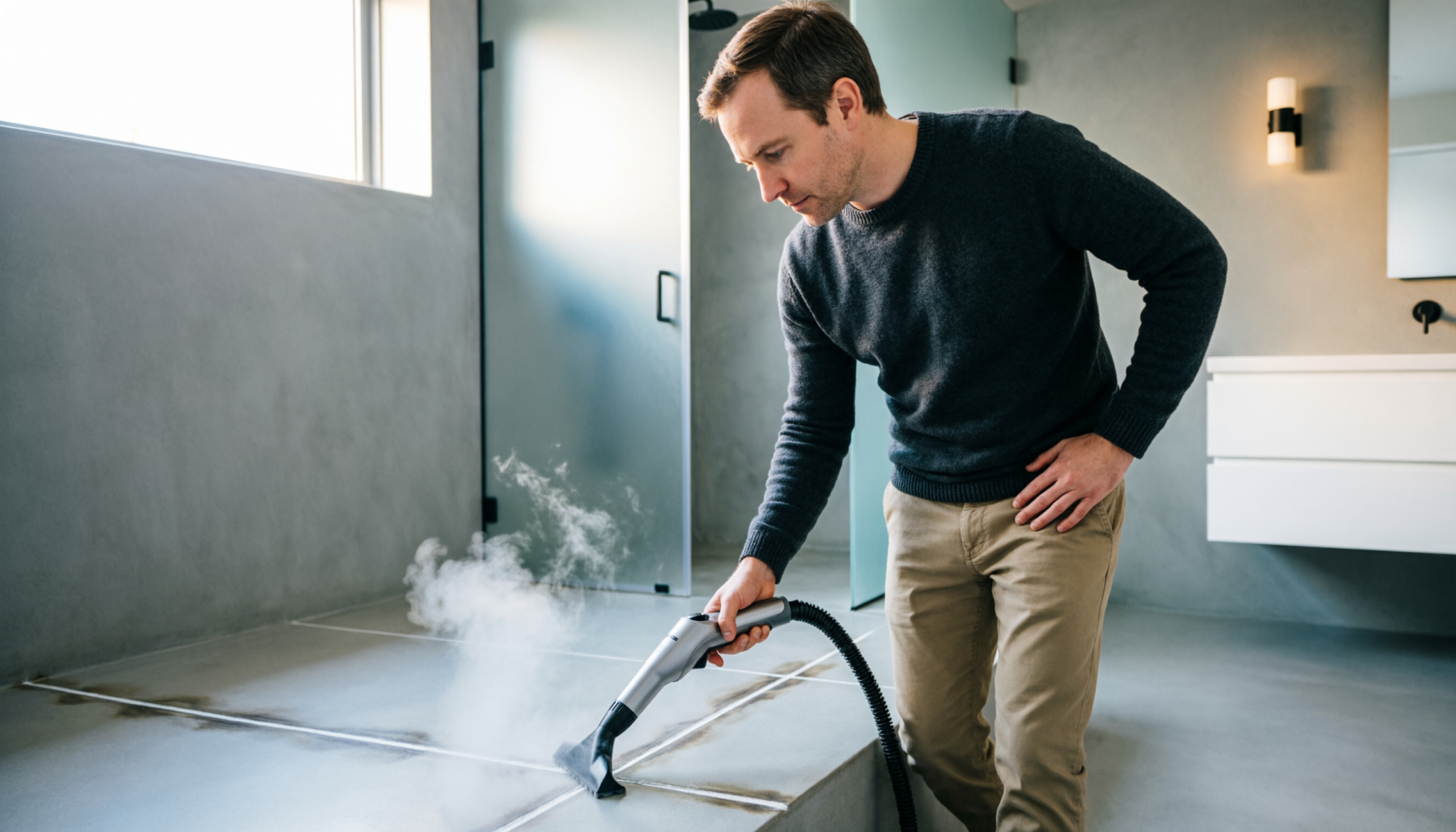
Grout behaves like a porous mineral sponge because microscopic pores absorb and retain contaminated mop water. Surface mopping removes visible soil while leaving moisture and microbes within grout depth.
Steam applies controlled heat that penetrates surface pores, loosens embedded residue, and supports rapid drying, producing cleaner, more hygienic grout.
Comparison Table
| Cleaning Method | Moisture Behavior | Grout Sanitization Potential | Main Limitation |
|---|---|---|---|
| Traditional Wet Mopping | High moisture absorption | Low | Pushes contaminated water across porous grout |
| Damp Microfiber Cleaning | Moderate moisture exposure | Moderate | Limited penetration into grout pores |
| Steam Cleaning | Low liquid residue | High when sufficient heat reaches the surface | Requires controlled technique and suitable grout condition |
Why Grout Absorbs Contaminated Mop Water
Grout resembles a miniature network of capillaries rather than a solid, impermeable surface.
Cement-based grout contains fine mineral particles, binders, microscopic voids, and interconnected pores. Those pores provide pathways for water movement.
During wet mopping, water contacts grout joints across a large surface area. Capillary action pulls moisture into microscopic openings. Surface tension and pore geometry then hold moisture inside the grout matrix.
The same mechanism explains why a dry sponge absorbs liquid without mechanical pressure. Narrow spaces generate capillary forces that draw water inward. Grout performs a similar function at a much smaller scale.
Dirty mop water introduces additional material into those pores. Organic debris, dissolved soil, detergent residue, skin oils, and microorganisms can accompany moisture into the grout structure.
Repeated wet cleaning can therefore produce an unwanted cycle: contaminated water contacts grout, moisture enters pores, drying leaves residue, and another cleaning session adds fresh moisture.
Glazed ceramic or porcelain tile generally presents a far less absorbent surface. Grout remains the vulnerable interface because cementitious material contains substantially greater porosity.
Capillary Action Keeps Grout Moist Longer
Porosity alone does not explain persistent dampness. Capillary action determines how deeply liquid travels and how long moisture remains available inside microscopic spaces.
A grout joint contains pores with different diameters. Larger pores permit faster movement, while smaller pores can retain moisture through capillary forces.
Evaporation then occurs from exposed surfaces, gradually drawing deeper moisture toward the exterior.
Low ventilation, high indoor humidity, cool flooring, and excessive mop water can slow evaporation. Bathrooms and kitchens present particularly favorable conditions for prolonged moisture retention.
Persistent moisture matters for indoor hygiene because damp organic residue can support microbial persistence. Grout therefore requires more than visual soil removal. Moisture control forms part of effective surface sanitation.
Sealing can reduce absorption, but grout sealer does not convert cementitious grout into an impermeable material.
Wear, abrasion, cleaning chemicals, and age can reduce protective performance. Unsealed or deteriorated grout remains particularly receptive to liquid absorption.
A practical cleaning principle follows: less contaminated liquid entering grout means less contaminated residue remaining inside grout.
Steam Replaces Saturation With Controlled Heat
Steam cleaning changes the physical mechanism from liquid transport toward thermal treatment.
A steam system produces heated vapor that contacts the grout surface while delivering considerably less free liquid than conventional mopping.
Heat softens greasy residues and loosens soil attached to mineral surfaces. High-temperature vapor also provides a hostile thermal environment for many microorganisms when sufficient temperature, contact, and exposure conditions occur.
The distinction between cleaning and sanitization remains important. Steam does not automatically sterilize every surface after a quick pass.
Thermal performance depends on vapor temperature at the contact point, dwell time, nozzle distance, surface condition, and movement speed.
Grout benefits from controlled steam passes because heat reaches surface pores while moisture input remains comparatively limited. Agitation with an appropriate brush can then release loosened residue from textured grout.
A microfiber cloth should follow steam treatment. Cloth removal captures loosened soil instead of allowing suspended residue to settle elsewhere across the tile field.
Heat Plus Extraction Improves Grout Hygiene
Steam alone cannot remove every contaminant. Thermal action loosens material, while mechanical agitation and wiping provide physical removal.
Effective grout cleaning therefore follows a sequence:
Heat → agitation → extraction → drying.
Heat reduces residue adhesion and applies thermal stress to microorganisms. Agitation dislodges material lodged within surface texture.
Extraction removes loosened contamination. Drying reduces residual moisture that could support continued microbial persistence.
A narrow steam nozzle can concentrate heat along grout joints, but excessive dwell time can damage vulnerable sealers, soften certain adhesives, or force moisture into deteriorated joints.
Controlled movement produces better results than stationary heating.
After steaming, dry microfiber extraction becomes especially valuable. A dry or barely damp cloth captures remaining soil while limiting additional water entry.
Ventilation completes the process. Open doors, operating exhaust fans, and allowing flooring to dry thoroughly reduce residual humidity around recently cleaned grout.
Expert Opinion: Steam Needs Physics, Not Hype
Expert’s Insight
Grout requires moisture control as much as surface cleaning. Porous cementitious joints absorb liquid through capillary action, allowing residue to settle below surface level.
Steam offers a stronger sanitation strategy through controlled thermal exposure with limited liquid deposition. Proper dwell time, mechanical agitation, extraction, and drying determine final hygiene performance.
Better Grout Cleaning Starts With Less Water
Traditional mopping remains useful for routine soil removal, but excessive water creates unnecessary exposure for porous grout.
A heavily saturated mop can spread contaminated moisture rather than remove contamination efficiently.
Microfiber technology improves the situation because tightly woven fibers capture soil while requiring less liquid. A well-wrung microfiber mop generally produces a better moisture balance than a dripping mop head.
Steam provides another advantage when grout requires deeper cleaning. Minimal liquid deposition reduces the amount of water available for capillary absorption. Controlled heat simultaneously loosens embedded residue.
Cleaning frequency also matters. Regular removal of surface soil prevents heavy accumulation inside grout texture.
Waiting until joints become visibly dark, greasy, or stained often requires more moisture, more agitation, and longer thermal exposure.
Grout condition deserves attention before steam treatment. Crumbling joints, missing sections, loose caulk, damaged sealant, and cracked grout require repair rather than increasingly aggressive cleaning.
The strongest routine therefore combines modest moisture during ordinary cleaning with targeted steam treatment when embedded residue demands additional action.
FAQs
1. Can wet mopping make grout dirtier?
Wet mopping can redistribute contaminated water across grout. Porous cementitious joints absorb moisture and dissolved residue through capillary action.
Excessive water, dirty mop heads, and repeated passes increase contamination transfer. Controlled moisture, clean microfiber materials, frequent rinsing, and thorough drying reduce such transfer.
2. Does steam completely sanitize grout?
Steam can substantially reduce microbial contamination when sufficient heat reaches the target surface for adequate contact time. A rapid pass does not guarantee complete sanitization.
Grout condition, nozzle distance, temperature, dwell time, surface texture, and mechanical agitation influence thermal effectiveness.
3. Should grout receive steam before mopping?
Steam treatment works best after loose debris and surface soil receive removal. Vacuuming or dry sweeping first prevents loose particles from becoming wet residue.
Steam can then target embedded contamination, followed by microfiber extraction and complete drying.
Final Word
Grout behaves like a microscopic sponge because porous mineral structure permits capillary water absorption. Wet mopping can therefore drive contaminated moisture into grout rather than removing every contaminant.
Steam shifts cleaning toward controlled heat, limited liquid exposure, mechanical agitation, extraction, and drying. That combination provides stronger grout hygiene with less saturation.