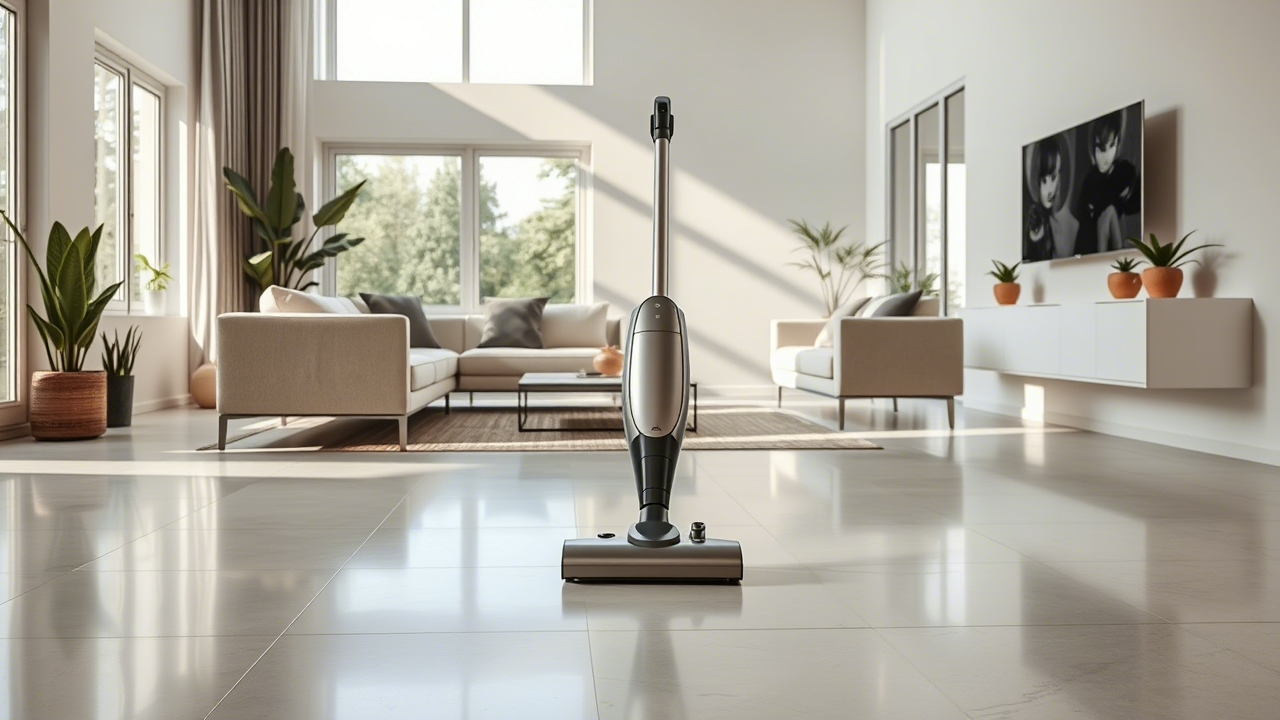
If your tile floor has pits and deep grout lines, standard vacuums leave dirt behind where it matters most.
Fine dust settles into grooves, and cheap brush rolls just skate over it.
After decades of cleaning real homes, one truth stands out: suction alone isn’t enough. The right head design changes everything.
The “Winner’s Circle” (Quick Picks)
| Best Overall | Best for Deep Grout Agitation | Best Value |
|---|---|---|
| Shark Stratos Upright | Miele Complete C3 Marin | Eureka PowerSpeed |
| View on Amazon | View on Amazon | View on Amazon |
Our Testing Criteria for Pitted Tile & Deep Grout
What actually matters on uneven tile:
Brushroll Design
Soft rollers alone don’t cut it. A hybrid or stiff-bristle brush is needed to dig into grout lines and pull debris up.
Suction Power (Air Watts / Pa Equivalent)
Anything under strong mid-range suction leaves grit trapped in pits. Real-world threshold: strong enough to lift sand without multiple passes.
Floor Head Sealing
Loose heads scatter debris. A tight seal helps direct airflow into grooves instead of across the surface.
Edge Cleaning
Grout lines often sit near edges and corners. Poor edge performance means missed dirt along walls.
Weight & Maneuverability
Heavy vacuums struggle to maintain contact over uneven tile. Balanced weight keeps consistent pressure.
Best Vacuums for Pitted Tile and Deep Grout
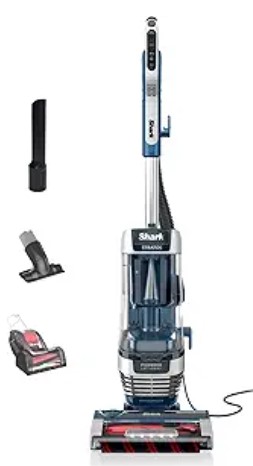
1. Shark Stratos Upright (The “Grout Lifter” Workhorse)
Why it made the list:
Dual brushroll system combines a soft roller for fine dust and a bristle brush for embedded grit.
That mix reaches into pitted surfaces better than most uprights.
Reality Check:
Slightly bulky in tight kitchens. Works best in open tile areas where consistent passes are possible.
Pros
- Strong suction pulls dirt from deep grout
- Dual rollers handle both dust and debris
- Good edge cleaning
Cons
- Heavier than stick vacuums
- Not ideal for very tight spaces
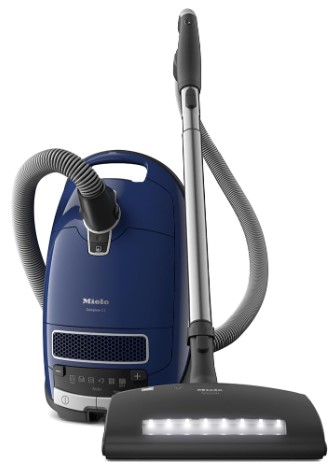
2. Miele Complete C3 Marin (The “Precision Cleaner”)
Why it made the list:
Electrobrush head uses controlled agitation with powerful suction. It doesn’t just skim tile; it pulls from grooves with steady airflow.
Reality Check:
High price, but performance holds for years with proper care. Quiet operation is a bonus in busy homes.
Pros
- Excellent suction consistency
- Adjustable head height for uneven tile
- Long lifespan
Cons
- Expensive upfront
- Bagged system requires ongoing supplies
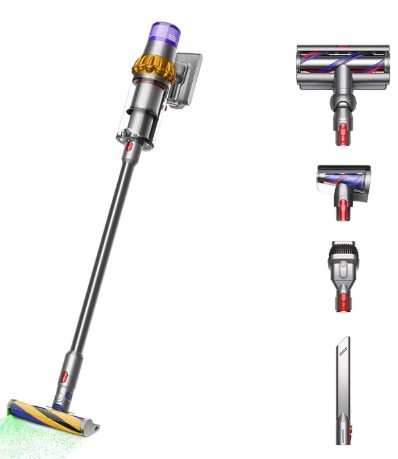
3. Dyson V15 Detect (The “Fine Dust Hunter”)
Why it made the list:
Laser dust detection exposes hidden debris in grout lines. High suction plus motorized head lifts fine particles others miss.
Reality Check:
Battery limits long cleaning sessions on large tiled homes.
Pros
- Reveals hidden dirt in pits
- Strong suction for a cordless unit
- Lightweight and easy to maneuver
Cons
- Battery runtime can feel short
- Small dustbin
4. Eureka PowerSpeed (The “Budget Workhorse”)
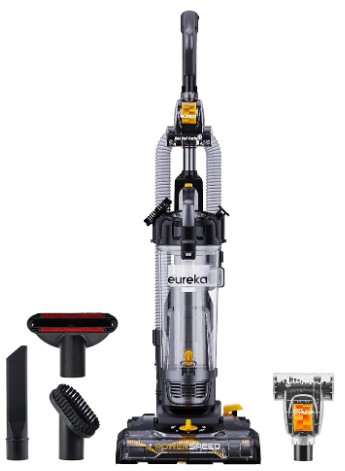
Why it made the list:
Simple design with strong suction and a stiff brushroll. Handles gritty tile floors better than expected at this price point.
Reality Check:
Build quality reflects the price. Not built for long-term heavy use.
Pros
- Affordable and effective
- Strong suction for the cost
- Lightweight
Cons
- No advanced filtration
- Shorter lifespan
Why Standard Vacuums Fail on Deep Grout
Flat floors are easy. Pitted tile is not.
Grout lines act like narrow trenches. Fine dust settles deep, and smooth vacuum heads glide over the top without pulling it out.
Even high suction fails without agitation.
Expert Tip:
A vacuum with a brushroll that actively disturbs dirt is far more effective than one relying on suction alone.
On deeply pitted tile, slow passes matter more than raw power.
Essential Maintenance for Tile-Focused Vacuums
Neglecting maintenance kills performance fast, especially with fine dust.
What to keep on hand:
- Replacement HEPA filters (fine dust clogs quickly)
- Extra brushrolls (bristles wear down over time)
- Belt replacements (for upright models)
- Cleaning tools for roller buildup
Hard truth:
A clogged filter cuts suction in half. Regular replacement keeps performance steady.
Which Vacuum Should You Choose?
Scenario A: Heavy dirt, deep grout, large tiled areas
Go with the Shark Stratos Upright. Strong agitation and suction handle stubborn debris.
Scenario B: Premium build, long-term reliability
Choose the Miele Complete C3 Marin. Consistent performance and durability justify the cost.
Scenario C: Quick daily cleaning with visibility of hidden dust
Pick the Dyson V15 Detect. Best for spotting and removing fine debris.
Scenario D: Tight budget but still need solid performance
Stick with the Eureka PowerSpeed. Simple but effective.
FAQs
1. Will vacuums remove dirt from deep grout lines?
Only if they combine strong suction with active brush agitation. Flat suction heads alone won’t reach deep enough.
2. How often should tile floors be vacuumed?
High-traffic areas need vacuuming at least three times a week. Deep grout traps dirt faster than smooth floors.
3. Is mopping enough for pitted tile?
No. Mopping pushes dirt into grout. Vacuuming first is necessary to remove loose debris before washing.
Final Word
Most vacuums fail on pitted tile because they treat it like a flat surface. That assumption is wrong.
The right machine uses agitation, controlled suction, and proper head design to pull dirt out, not just move it around.