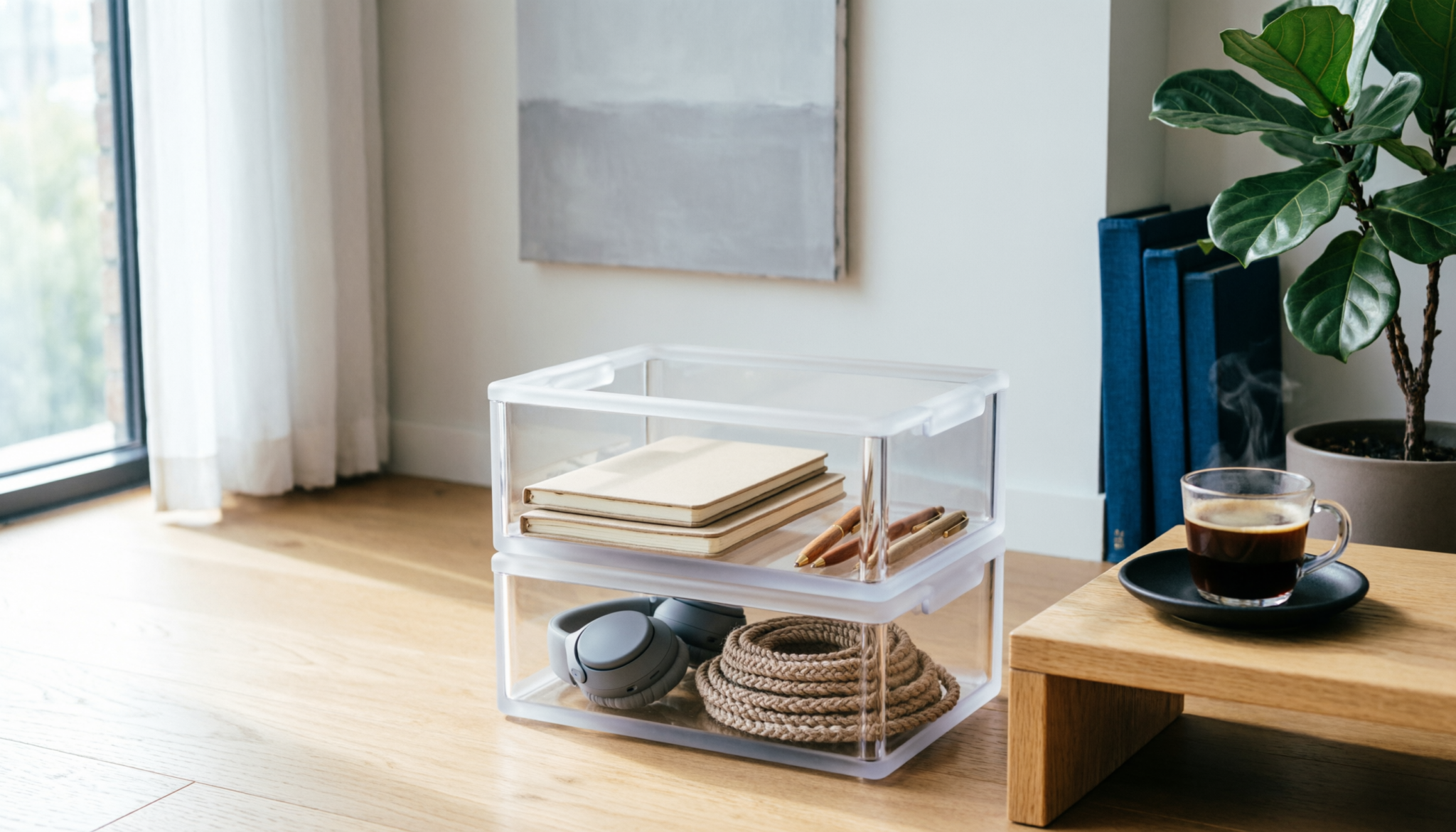
Clutter does more than crowd shelves.
It strains the brain. Clear bins reduce that strain by removing guesswork, cutting decision fatigue, and creating instant order.
When everything is visible, the mind relaxes. Daily routines become faster, calmer, and easier to maintain without constant mental effort.
The Short Answer
Clutter creates visual noise, overwhelming the brain with excess stimuli and raising cortisol levels. Transparent bins ease anxiety by offering immediate visual clarity.
This removes the mental loop of unfinished tasks and reduces decision fatigue. Clear visibility builds a sense of control, which helps the brain settle and focus.
Psychology of Organizing Table
| Storage Type | Neurological Impact | Best For |
|---|---|---|
| Transparent (Clear) | Reduces Cognitive Load | Everyday Staples / High-Turnover |
| Opaque (Solid) | Reduces Visual Chaos | Visual Clutter / Spare Parts / Sentimental |
| Color-Coded | Speeds up Pattern Recognition | Kids’ Rooms / Specific Dietary Needs |
The Cognitive Burden of “Mystery Bins”: Why Opaque Storage Fails
Opaque bins seem neat, but they shift the burden to memory. That is where problems start.
Every closed bin becomes a question:
- What is inside?
- Is it still there?
- Do supplies need restocking?
That mental guessing triggers what psychology calls “open loops.” The brain keeps revisiting unfinished or uncertain tasks. Over time, this creates low-level stress that builds quietly.
Real-life friction shows up fast:
- Buying duplicates because contents are hidden
- Avoiding tasks because finding items feels like work
- Constant relabeling that rarely sticks
Opaque storage works for long-term or rarely used items. For daily use, it slows everything down.
Research from Environmental Psychology
The brain prefers environments it can scan quickly.
Clear bins support three key mental processes:
1. Reduced cognitive load
Visible items remove the need to recall or search. The brain spends less energy tracking inventory.
2. Faster decision-making
Seeing contents instantly shortens choices. Fewer steps mean less fatigue across the day.
3. Sense of control
Order that can be seen feels stable. That stability lowers stress signals and improves follow-through.
In practice, this means:
- Pantry restocking becomes automatic
- Cleaning feels manageable instead of overwhelming
- Daily routines require less effort to start and finish
Clear systems are not about appearance. They are about reducing mental work.
Color-Coding vs. Pure Clarity: When to Use Which
Clarity works best, but color still has a role. The mistake is overusing it.
Use clear bins when:
- Items rotate often (food, cleaning supplies)
- Quick access matters
- Inventory needs tracking at a glance
Use color coding when:
- Categories must be separated fast (kids’ items, dietary needs)
- Multiple people share the same space
- Labels are often ignored
Where people go wrong:
- Too many colors create new visual noise
- Mixing color and opacity reduces clarity
- Over-labeling adds clutter instead of removing it
A simple rule holds:
Start with clear. Add color only where confusion still exists.
FAQs
1. Do clear bins make a space look messy?
Only when overfilled or poorly grouped. Limit categories per bin and avoid mixing unrelated items. Order inside the bin matters as much as the bin itself.
2. Are labels still needed with clear bins?
Minimal labeling helps, especially for shared spaces. Short, consistent labels work best. Over-labeling creates visual clutter and defeats the purpose.
3. What size bins work best for anxiety reduction?
Medium, uniform sizes outperform large bins. Smaller volumes prevent overstuffing and keep contents visible, which maintains clarity and control.
Final Thought
Clear bins work because they reduce thinking, not just clutter. Visibility removes hesitation, speeds up routines, and lowers daily stress.
A simple system built on clarity holds up better than complicated setups. When the brain can see everything, it stops searching, settles down, and gets on with what actually matters.