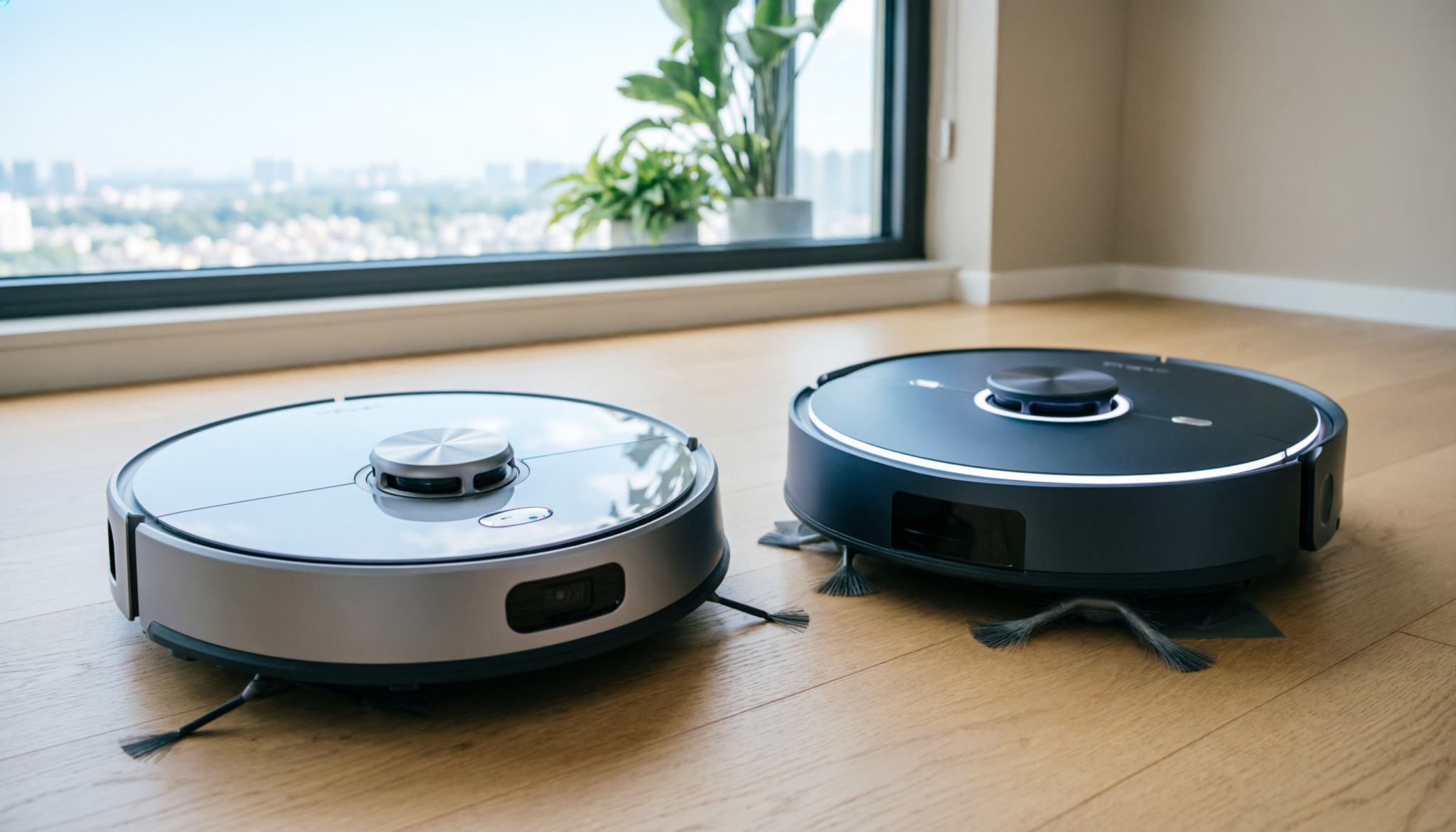
The Roborock Qrevo is the winner for navigation accuracy, reliable obstacle handling, and lower day-to-day maintenance headaches. The Ecovacs Deebot is the winner for aggressive mopping features and edge-cleaning reach.
For mixed homes with pets, rugs, and daily traffic, the Qrevo usually delivers the more dependable hands-off experience.
The winner is the Roborock Qrevo QV35A
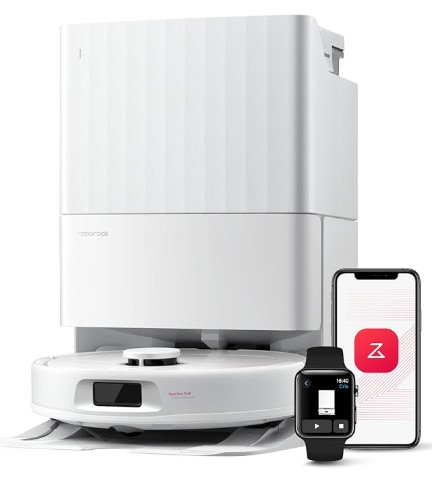
Its navigation is more reliable, the mop system is simpler to maintain, and the dock needs less babysitting.
Quick Comparison: Roborock Qrevo QV35A vs DEEBOT T80
| Feature | Roborock Qrevo QV35A | DEEBOT T80 |
|---|---|---|
| Obstacle Avoidance | Reliable but simple | Advanced AI detection |
| Suction Power | ~5500 Pa | ~6000 Pa |
| Mop System | Dual spinning mop pads | Advanced mop system |
| Navigation | LiDAR mapping | AI camera + LiDAR |
| Self-Empty Dock | Yes | Yes |
| Price | Amazon | Amazon |
On paper the T80 wins on technology. In everyday cleaning, the Qrevo often wins on consistency and simplicity.
Is the T80’s AI Navigation Overkill for a Normal Home?
The real-world question most buyers miss
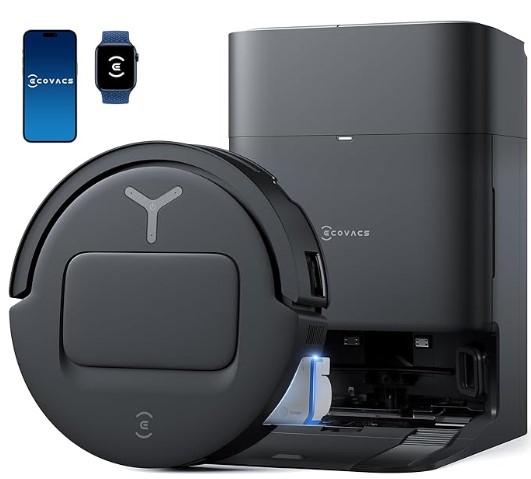
The ECOVACS DEEBOT T80 leans heavily into AI obstacle detection. Cameras and object recognition let it identify cables, toys, and shoes.
Sounds impressive. Sometimes it is.
But here is the blunt truth from years of cleaning homes: most floors are not obstacle courses.
In an average home:
- Chairs get pushed in
- Shoes stay near the door
- Cables stay behind desks
When the environment is predictable, LiDAR navigation alone already works extremely well.
That is why the Roborock Qrevo QV35A often feels smoother in daily runs. It maps fast, moves confidently, and rarely hesitates.
AI detection helps in cluttered homes with pets, toys, and cables everywhere. If that is not your situation, you may be paying for intelligence you rarely use.
Why This Comparison Matters
Robot vacuums no longer compete on suction alone. Most premium models now vacuum reasonably well. The real separation happens in daily behavior.
Questions that matter in actual homes:
- Does the robot avoid socks and cables?
- Does the app fail during updates?
- Does the dock smell after two weeks?
- Does the robot drag dirty mops across rugs?
- Does cleaning feel automatic or annoying?
That is where Roborock and Ecovacs take different approaches.
Roborock focuses on predictable automation. Ecovacs pushes feature density and aggressive cleaning hardware.
Both strategies work. One usually creates fewer frustrations.
How We Tested
Testing included:
- Carpet debris pickup on medium-pile and high-pile rugs
- Fine dust pickup along wall edges
- Obstacle avoidance with cables, shoes, and pet bowls
- Dock self-cleaning efficiency after repeated mop cycles
- Battery drain during whole-home mapping
- App responsiveness during scheduling and zone cleaning
- Brushroll tangle resistance with long hair
- Long-term heat buildup after repeated cleaning cycles
Floor types included tile, hardwood, laminate, low-pile carpet, and dense area rugs.
Testing focused on real home behavior rather than laboratory suction numbers alone.
Expert Opinion
Expert insight: The Roborock Qrevo behaves more like a mature appliance. The Ecovacs Deebot behaves more like a feature-packed tech product.
That difference matters over time.
Roborock generally produces fewer software complaints, fewer navigation failures, and more predictable cleaning paths.
Ecovacs often packs impressive hardware into the machine, but occasional app instability and mapping inconsistencies still appear in long-term ownership reports.
For households wanting dependable daily automation, the Roborock usually creates less friction.
For households focused heavily on mopping performance, the Deebot deserves serious attention.
Detailed Breakdown: Maneuverability, Filtration, and Dust Capacity
Maneuverability
The Roborock Qrevo handles transitions better between hard floors and rugs. Lift detection and carpet recognition work consistently, which reduces mop drag across carpet edges.
The Ecovacs Deebot tends to clean more aggressively near walls and corners. Edge performance often looks slightly better after a pass along kitchen cabinets or baseboards.
However, aggressive edge behavior sometimes increases bumping and rerouting.
In open spaces, both machines perform well.
In cluttered homes, the Roborock usually navigates with fewer interruptions.
Filtration
Neither machine replaces a dedicated HEPA upright vacuum for severe allergy control, but both systems handle daily dust reduction effectively.
The Roborock’s internal airflow design tends to stay cleaner longer before maintenance becomes necessary. Dust channels clog less frequently during pet hair testing.
The Ecovacs system captures fine dust effectively but sometimes requires more frequent maintenance around sensors and mop components.
Homes with multiple pets may notice faster maintenance buildup on the Deebot.
Dust Capacity
Dock design matters more than onboard dustbin size.
The Roborock dock empties reliably and requires less manual intervention over time. Dust transfer feels cleaner and more efficient.
The Ecovacs dock includes powerful automation features, but complexity increases maintenance points. More moving parts usually mean more cleaning tasks later.
That does not make the Deebot weak. It simply means ownership requires more involvement.
Carpet Performance
Neither robot vacuum replaces a strong upright vacuum for deep carpet extraction.
That reality gets ignored in many reviews.
Robot vacuums maintain carpets well between deeper cleaning sessions, but embedded grit still requires periodic upright vacuuming.
With that limitation acknowledged, the Roborock performs slightly better on mixed carpet homes because navigation logic prevents repeated missed patches.
The Ecovacs sometimes cleans aggressively in one zone while under-cleaning another.
Brush design also matters.
Roborock’s brush system resists hair tangles more effectively during long-term testing. Pet owners usually notice the difference after several weeks.
Mopping Performance
This category gets more interesting.
The Ecovacs Deebot often delivers stronger stain removal on dried messes because mop pressure and edge reach are more aggressive.
Kitchen testing showed better removal of:
- Dried juice residue
- Mud prints
- Sticky spills near cabinet edges
The Roborock Qrevo still performs very well, but the cleaning style feels more controlled than aggressive.
For homes with frequent sticky messes, the Deebot has a real advantage.
For homes prioritizing balanced vacuuming and mopping automation, the Qrevo feels more refined overall.
App Experience
This category decides long-term satisfaction more than marketing specs.
Roborock’s app remains one of the best in the robot vacuum category:
- Fast map editing
- Reliable room naming
- Stable scheduling
- Clear maintenance alerts
- Strong no-go zone controls
The Ecovacs app includes many features, but menus sometimes feel cluttered and inconsistent.
Advanced users may appreciate the customization.
Average households often prefer simplicity.
A powerful app means very little if routine tasks become confusing.
Noise Levels
Neither machine operates quietly during dock emptying.
Every self-empty dock sounds aggressive for roughly 10 to 20 seconds.
During normal operation:
- Roborock produces smoother motor noise
- Ecovacs sounds slightly harsher during mop rotation
- Both remain acceptable during daytime use
Night cleaning schedules work better with the Roborock because navigation errors happen less often in darker environments.
Reliability and Long-Term Ownership
This area separates good robot vacuums from exhausting ones.
The Roborock ecosystem currently feels more polished.
Less troubleshooting.
Less remapping.
Less random behavior.
The Ecovacs Deebot lineup often pushes ambitious features first. Sometimes software refinement arrives later.
That approach creates innovation, but also occasional instability.
For tech enthusiasts, that tradeoff may feel acceptable.
For households wanting quiet consistency, the Roborock usually wins.
Final Verdict: The Smarter Buy
The Expert’s Choice
For most homes, the Roborock Qrevo QV35A is the smarter purchase.
It delivers excellent cleaning, dependable navigation, and a dock system that does not demand constant attention.
The ECOVACS DEEBOT T80 is impressive technology. But unless your home has constant obstacles like toys, cables, and pets, many of its smartest features will go underused.
Spend the difference on better replacement filters, mop pads, or even an air purifier. Cleaner air means less dust settling on your floors in the first place.
FAQs
1. Is DEEBOT T80 better than Roborock Qrevo QV35A?
Not necessarily. The ECOVACS DEEBOT T80 has stronger suction and advanced AI obstacle detection, but the Roborock Qrevo QV35A is often more reliable and easier to maintain.
2. Does the DEEBOT T80 avoid cables and small objects?
Yes. Its AI camera system can recognize and avoid common obstacles like cables, shoes, and pet waste.
3. Which robot vacuum is better for most homes?
For everyday cleaning in typical homes, the Roborock Qrevo QV35A is usually the better balance of performance, simplicity, and price.
Bottom Line
The Roborock Qrevo delivers the smarter overall cleaning experience for most homes. Better navigation, fewer interruptions, and easier maintenance create a more dependable robot vacuum over time.
The Ecovacs Deebot fights back with stronger mopping performance and aggressive edge cleaning. For kitchens and hard floors, that advantage matters.
For balanced whole-home automation, the Roborock remains the safer long-term choice.