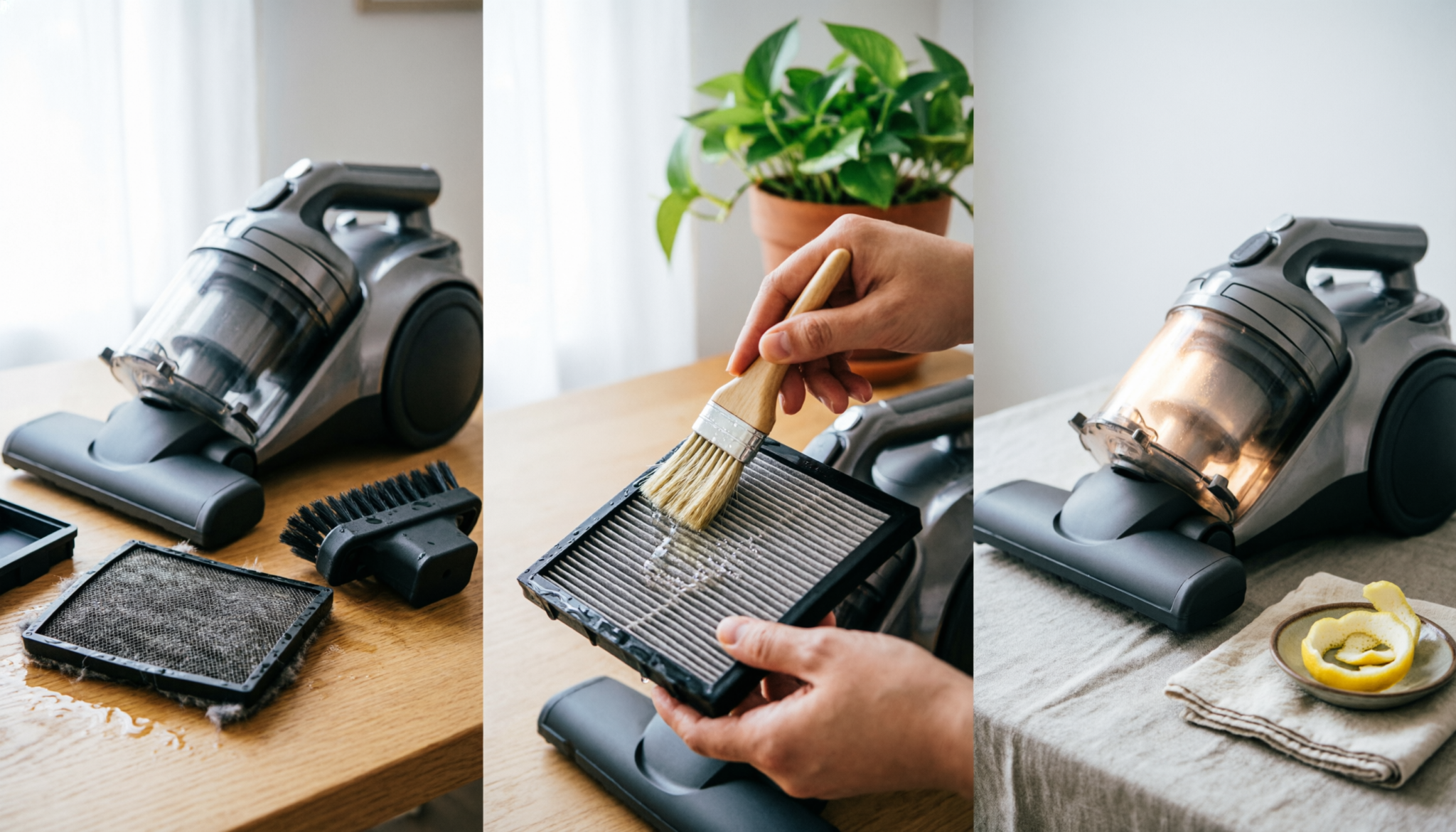
Maintenance Quick-Start: Pet vacuum odor usually comes from damp hair, bacteria trapped inside filters, and oils coating the brushroll chamber.
Deep cleaning requires full debris removal, filter washing, hose sanitation, and complete air drying before reassembly.
Most wet dog smells return because moisture remains trapped inside sealed vacuum compartments for more than 24 hours.
Warning: Never reassemble a vacuum with damp foam filters or wet cyclones. Moisture inside the motor chamber can trigger electrical failure, mildew growth, and permanent odor contamination.
Odor Source Comparison Table
| Odor Source | Moisture Retention Risk | Smell Intensity | Most Common Location |
|---|---|---|---|
| Pet Hair Oils | Moderate | Strong | Brushroll housing |
| Damp HEPA Filters | High | Severe | Filter compartment |
| Wet Debris in Hose | Very High | Severe | Internal hose bends |
The “Incubator Effect”: Why Your Vacuum Stinks
A pet vacuum does not just collect dirt. It creates a warm, humid environment inside a sealed system. That is exactly what bacteria need to multiply fast.
Motor heat pushes temperatures into the ideal range for microbial growth.
Add moisture from damp debris or humid air, and the result is active decay inside the machine.
The smell itself is not dirt. It is VOCs (volatile organic compounds) released as bacteria break down pet skin cells, oils, and hair.
That odor gets blown straight back into the room every time the vacuum runs.
Why Pet Vacuums Develop a “Wet Dog” Smell
Pet vacuums handle more biological debris than standard household models.
Fur carries skin oils, saliva residue, dander, outdoor bacteria, and microscopic organic particles. Warm airflow inside the vacuum creates the perfect environment for odor-producing microbes.
Most odor problems start inside four hidden areas:
- Pre-motor foam filters
- Brushroll bearings
- Flexible hose interiors
- Dustbin seals and gaskets
Pet hair alone rarely causes the smell. Moisture trapped inside dense debris creates the real problem.
Vacuuming damp carpet, freshly shampooed rugs, or muddy entryways accelerates bacterial growth fast.
Many homeowners clean only the dustbin while ignoring internal airflow paths. That mistake leaves odor-producing residue circulating through the machine every time the vacuum runs.
A vacuum that smells worse during operation usually has contamination near the motor airflow system rather than inside the collection bin alone.
How to Deep Clean a Pet Vacuum to Remove the “Wet Dog” Smell
Phase 1: The “Enzymatic Soak”
Step 1: The Dust Bin
Dish soap removes surface grime but fails against protein-based odors.
Pet residue contains lipids and proteins that cling to plastic and keep producing smell.
Use a protease-based enzymatic cleaner. This breaks down organic matter at a molecular level instead of just washing it away.
- Fill the bin with warm water and enzymatic cleaner
- Let it sit for at least 30 minutes
- Scrub corners and seams where residue hides
- Air dry completely before reassembly
Step 2: The Brushroll Cavity
This is the most neglected and most contaminated zone. Hair wraps tightly around the brushroll ends, especially near the bearings.
Those tight spaces trap oils and dead skin, which slowly rot.
- Remove the brushroll
- Cut away all wrapped hair
- Scrub the cavity walls and end caps
- Wipe with alcohol to kill lingering bacteria
Ignoring this step guarantees the smell returns.
Step 3: The Hose Flush
The hose holds damp debris and is often the main odor source.
Use a gravity flush method:
- Hang the hose vertically
- Pour warm water mixed with vinegar or enzymatic cleaner through it
- Let it drain fully
- Leave it to dry for at least 24 hours
If moisture remains, the odor cycle restarts.
Phase 2: The HEPA “Nuclear Option”
The Truth
A HEPA filter is designed to trap microscopic particles. That same density traps odor molecules deep inside the fibers.
Washing does not remove the smell. It often makes it worse by adding moisture.
The Solution
If any odor remains after cleaning, the filter is saturated.
Replace it.
Use a high-quality HEPA filter with activated carbon. Carbon absorbs odor compounds before they exit the vacuum.
Trying to save an old filter is a false economy. It keeps the smell circulating.
Phase 3: Sanitizing the Air Path
After cleaning visible parts, attention must shift to internal airflow channels.
Use a long-handled swab or cloth lightly dampened with 70% isopropyl alcohol.
- Wipe intake ports and accessible air tunnels
- Focus on areas just behind the dust bin and before the motor
Warning:
Never spray liquid directly into the motor housing. That can cause permanent damage.
The “Stink-Prevention” Matrix
| Component | Maintenance Frequency | Agent | Prevents… |
|---|---|---|---|
| Filters | Check Monthly | Replacement | Musty Exhaust |
| Brushroll | Weekly | Scissors + Alcohol | Bearing Burnout |
| Dust Bin | Weekly | Enzymatic Spray | Bacterial Bloom |
| Scent Discs | Optional | Essential Oils | Masking Odors |
Technician’s Insight
Technician’s Insight: Persistent pet odor after filter cleaning usually indicates contamination inside the motor shroud or hidden hose bends.
Airflow turbulence pushes microscopic organic residue into sealed compartments where standard rinsing cannot reach.
Repeated odor cycles often trace back to incomplete drying, not inadequate washing or weak suction performance.
How to Prevent Pet Vacuum Odor From Returning
Deep cleaning solves existing odor. Prevention keeps the smell from returning every few weeks.
Vacuum Dry Surfaces Only
Wet debris accelerates bacterial growth rapidly inside enclosed airflow systems.
Avoid vacuuming:
- Damp carpet
- Fresh baking soda treatments
- Wet entry mats
- Recently shampooed upholstery
Moisture mixed with pet dander creates a strong biological odor within days.
Empty the Bin Frequently
Overfilled bins trap humidity and reduce airflow.
Pet households should empty vacuum containers after every major cleaning session rather than waiting for maximum fill lines.
Small amounts of debris left inside for long periods often smell worse than heavily packed bins emptied regularly.
Clean Brushrolls Monthly
Hair accumulation near bearings creates friction heat. Warm organic buildup produces a stale animal smell over time.
Monthly brushroll maintenance prevents:
- Bearing stress
- Belt strain
- Odor buildup
- Reduced airflow
Cordless stick vacuums usually require more frequent brush cleaning because smaller motor heads trap debris tighter.
Store Vacuums in Dry Areas
Garage humidity worsens odor dramatically.
Store vacuums:
- Indoors
- Away from damp laundry areas
- Off concrete floors
- In ventilated spaces
Sealed closets without airflow encourage mildew growth inside filters and hoses.
Signs the Vacuum Needs More Than Cleaning
Some odors indicate deeper mechanical problems.
Watch for:
- Burning smells
- Hot plastic odor
- Sharp electrical scent
- Persistent mildew after full sanitation
These symptoms may indicate:
- Motor overheating
- Internal wiring damage
- Mold inside sealed chambers
- Failing bearings
At that stage, deep cleaning alone may not restore safe operation.
A vacuum that smells worse during heavy suction often has restricted airflow somewhere inside the system.
FAQs
1. Why does the vacuum smell worse after filter washing?
Incomplete drying traps moisture inside the filter media. Warm airflow during operation activates bacterial growth rapidly. Thick foam filters often stay damp internally for more than 24 hours.
2. Can baking soda remove wet dog smell from a vacuum?
Baking soda absorbs light odor temporarily but does not remove oily residue or bacterial buildup. Deep cleaning the hose, filters, and brush chamber produces longer-lasting results.
3. How often should a pet vacuum receive deep cleaning?
Pet-heavy homes usually require full internal cleaning every 2-3 months. Homes with multiple dogs or long-haired pets may require monthly brushroll and hose sanitation.
Bottom Line
Wet dog smell inside a vacuum rarely comes from pet hair alone. Damp debris, trapped oils, and poorly dried filters create the real odor source.
Complete airflow-path cleaning, full drying time, and regular brushroll maintenance stop recurring smells more effectively than deodorizing powders or fragrance additives alone.