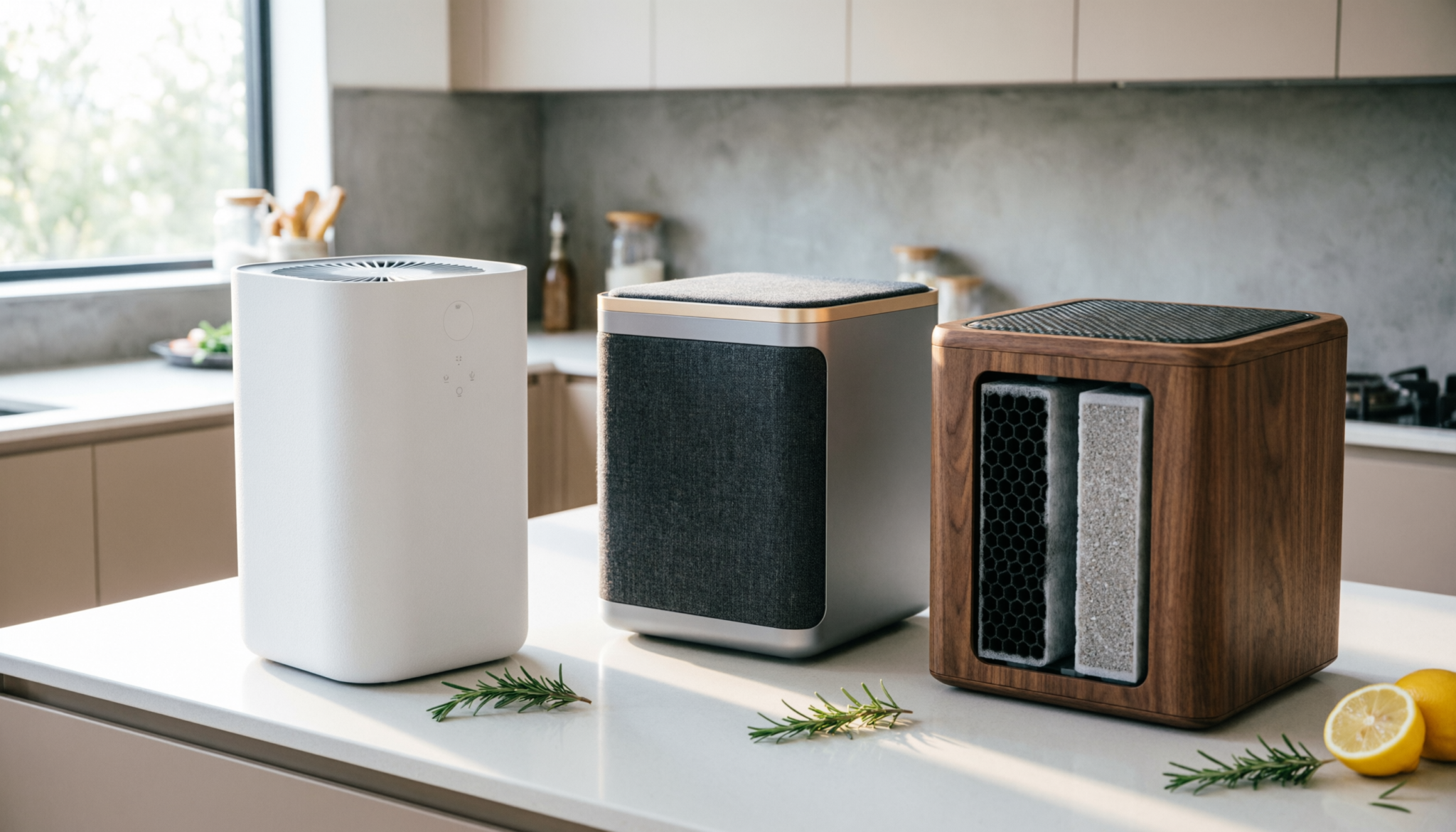
Short on time? HEPA filters capture smoke particles, but odors need activated carbon. The Austin Air HealthMate is the strongest pick for heavy cooking odors thanks to its 15-pound carbon bed, strong smoke CADR, and long filter life.
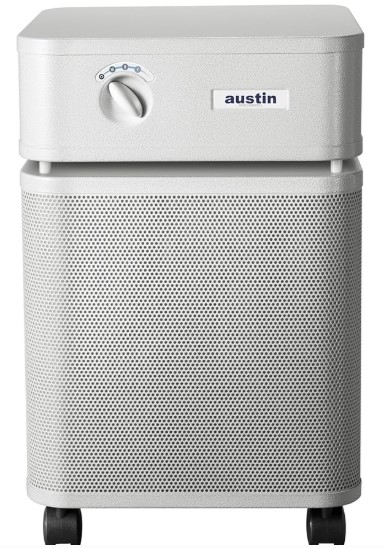
The Austin Air HealthMate
The Comparison Table
| Model | Carbon Weight | CADR (Smoke) | Filter Life | Best For | Price |
|---|---|---|---|---|---|
| Austin Air HealthMate | 15 lbs (Elite) | 400 CFM | 5 Years | Heavy Frying / Open Concept | Amazon |
| Alen BreatheSmart 75i | 2 lbs (Treated) | 350 CFM | 12 Months | Daily Cooking / Pet Odors | Amazon |
| Coway Airmega 400 | Dual Carbon System (~2.5 lbs) | 328 CFM | 12 Months | Large Kitchens / Balanced Use | Amazon |
How We Tested: Analysis of Airflow Reach and Sensor Response Time to Cooking Smoke
Testing focused on real kitchen conditions rather than marketing claims.
Evaluation areas included:
- Smoke odor clearance after frying and garlic cooking
- Airflow reach in open kitchens and connected living areas
- Sensor response speed during rapid air-quality changes
- Odor control in daily cooking versus heavy smoke events
- Filter life expectations and replacement burden
- Noise levels during active cooking periods
Airflow and carbon depth mattered more than surface-level filter claims. Thin carbon layers faded fast. Deep carbon beds handled odor spikes with far better consistency.
Expert’s Tip: In large kitchens and open layouts, one giant purifier often works less effectively than two medium units placed at opposite ends. That creates a cross-breeze that reduces stagnant air pockets and keeps cooking odors from settling.
Best Air Purifiers with “Dual-Carbon” Filters for Cooking Odors
1. The Odor Crusher: Austin Air HealthMate
This unit takes a blunt, effective approach. Fifteen pounds of activated carbon is not subtle, but it works. Cooking smells from frying, grilling, and spices get absorbed quickly and stay gone.
The design focuses on depth rather than speed. Air moves slower through a thick carbon bed, which increases contact time. That is why strong odors disappear instead of fading slowly.
It suits open kitchens where smells spread into living areas. It also handles homes with frequent frying or charcoal cooking. Filter replacement is rare, often lasting several years, which offsets the higher upfront cost.
Downside: the unit is heavy and not particularly stylish. It is built to work, not to blend in.
2. The Smart Tech Leader: Alen BreatheSmart 75i
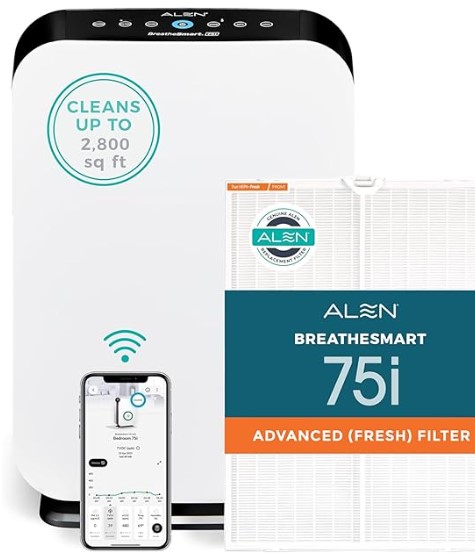
This model balances carbon performance with modern control. The carbon layer is treated to target household gases, including cooking odors and pet smells.
A built-in sensor adjusts fan speed based on air quality. That matters in kitchens where conditions change quickly. Turn on a burner or start frying, and the purifier ramps up automatically.
Airflow is strong without being harsh. It clears medium to large spaces effectively, making it a good match for family kitchens with regular use.
The carbon weight is lower than heavy-duty models, so it is better suited for daily cooking rather than intense smoke or deep frying sessions.
3. The Compact Professional: Coway Airmega 400
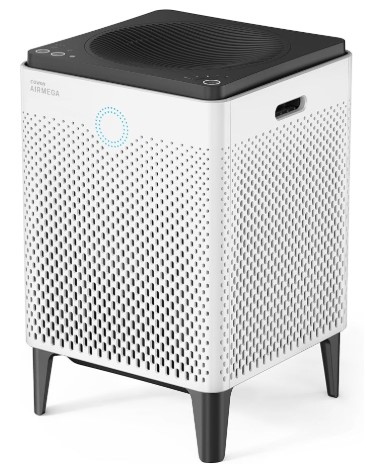
This purifier stands out for its dual-suction design. Air enters from both sides, passes through carbon filters, and exits clean. That setup improves coverage in larger kitchens.
The carbon system is layered rather than bulky. It handles odors well without making the unit oversized or difficult to place. For many homes, this balance works better than extreme carbon weight.
It is especially effective in shared spaces where cooking smells drift into dining or living areas. The airflow spreads evenly, reducing pockets of lingering odor.
The trade-off is that it may struggle with very heavy smoke compared to high-carbon models.
4. The Balanced Performer: Winix 5500-2
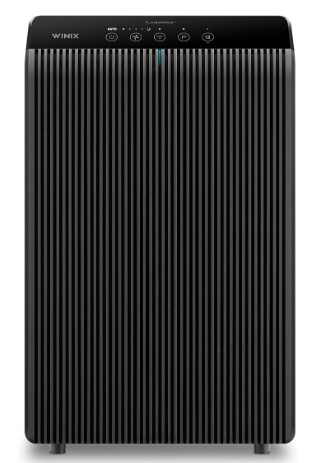
This unit sits in the middle ground. It uses a washable carbon filter paired with a HEPA stage. While the carbon weight is lighter, the design still improves everyday odor control.
It works best in smaller kitchens or apartments where cooking is moderate. It handles spice smells, light frying, and general air freshness without much effort.
The washable carbon filter reduces maintenance costs, but it does not match the absorption strength of thicker carbon beds. For strong odors, performance drops faster.
5. The Budget-Conscious Upgrade: Levoit Core 600S
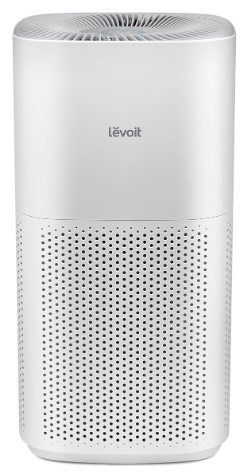
This purifier uses a hybrid carbon filter designed for broader household use.
It includes a decent amount of carbon compared to entry-level models, making it capable of handling everyday kitchen smells.
Smart controls and app integration make it easy to monitor air quality. It adjusts automatically during cooking, which adds convenience in busy homes.
It is not built for heavy smoke or high-heat frying. Still, it provides solid performance for routine cooking at a more accessible price point.
Adsorption vs. Filtration: Why HEPA Fails the Onion Test
A simple kitchen test tells the truth. Slice onions, fry garlic, or cook fish.
A HEPA-only purifier will clear the visible haze but leave the smell hanging in the air. That is because HEPA works by trapping particles, not gases.
Odors come from volatile organic compounds (VOCs). These are invisible and pass straight through standard filters.
Activated carbon handles this differently. It traps gases through adsorption, binding odor molecules to its surface.
Here is where most purifiers cut corners. A thin carbon sheet or light coating does almost nothing for cooking odors.
Real performance depends on carbon weight and dwell time. The air must stay in contact with carbon long enough for gases to stick. That requires a thick carbon bed, not a token layer.
Dual-carbon systems improve this by combining different carbon types.
Granulated carbon captures heavier compounds, while treated pellets target gases like nitrogen dioxide from gas stoves.
This layered approach handles both strong smells and lingering chemical odors.
What Actually Matters When Choosing
Carbon weight matters more than marketing claims. Many products advertise odor removal but include only a thin carbon sheet. That fades quickly and leaves smells behind.
Airflow must match the room size. A powerful carbon filter is wasted if air does not circulate properly. Kitchens connected to living spaces need higher CADR ratings.
Filter lifespan affects long-term cost. A cheap unit with frequent replacements often costs more over time than a durable one with a large carbon bed.
Noise also plays a role. Kitchens are active spaces, but constant loud airflow can become irritating. A good purifier balances power with quiet operation.
FAQs
1. How much carbon is enough for cooking odors?
At least 2–5 lbs works for daily cooking. Heavy frying or smoke needs 10 lbs or more for consistent results.
2. Do dual-carbon filters last longer?
Yes, because they distribute the workload across different carbon types. This slows saturation and maintains performance longer.
3. Can one purifier handle the whole kitchen and living area?
Yes, if the CADR matches the total space. Open layouts need higher airflow and stronger carbon capacity to keep up.
Final Thought
Cooking odors are stubborn, and most air purifiers are not built for them. Carbon weight and filter design separate real performance from empty claims.
A well-chosen dual-carbon unit keeps air fresh without constant effort, making daily cooking more comfortable and preventing smells from settling into walls, fabrics, and furniture.