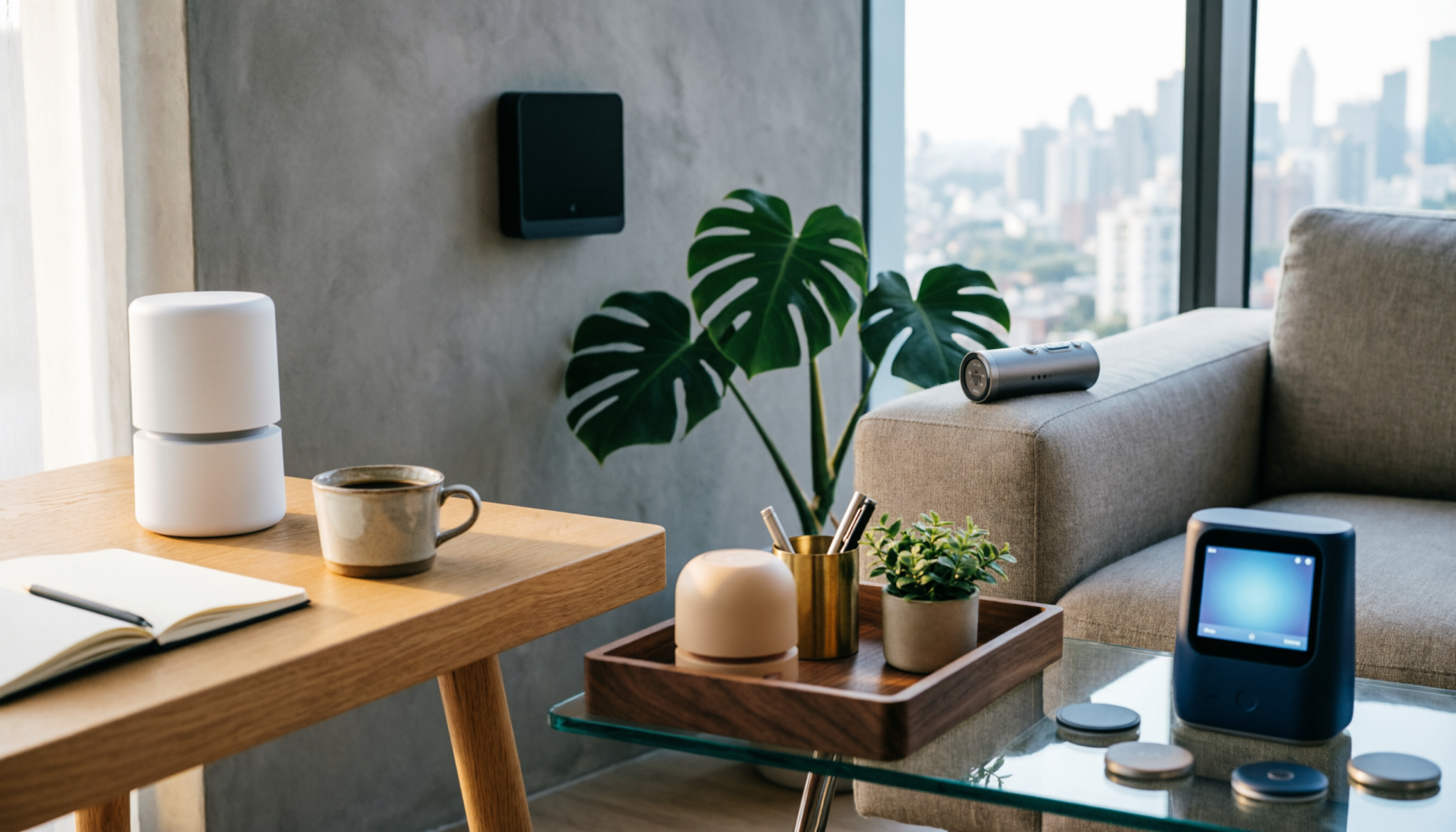
Indoor CO2 levels above 1,000 ppm often correlate with drowsiness, slower decision-making, and reduced concentration during afternoon work hours.
The Aranet4 Home stands out for fast response times, long battery life, and highly accurate NDIR sensing in offices, classrooms, and bedrooms with poor ventilation.
THE AIR QUALITY TABLE
| Model | Sensor Accuracy | Battery/Power | Smart Features | Price |
|---|---|---|---|---|
| Aranet4 Home | ±50 ppm | 2-year battery | App + historical graphs | Amazon |
| Airthings View Plus | ±50 ppm | Rechargeable | Radon + VOC tracking | Amazon |
| Qingping Air Monitor Lite | ±50 ppm | USB-C | Compact touchscreen | Amazon |
Why CO2 Levels Matter During Afternoon Work Hours
Most people blame fatigue on poor sleep or caffeine crashes. Indoor air often causes the real problem.
Carbon dioxide accumulates quickly in sealed rooms with multiple occupants, closed windows, and limited ventilation.
Concentrations above 1,000 ppm frequently cause mental fog, headaches, slower reaction times, and reduced concentration.
Levels above 1,500 ppm can make conference rooms and home offices feel stuffy within an hour.
Modern buildings worsen the problem. Energy-efficient construction reduces outdoor air exchange. HVAC systems often prioritize temperature control instead of fresh air delivery.
A reliable CO2 monitor exposes ventilation problems immediately.
Real-time readings help determine when to open windows, activate fresh-air systems, or reduce room occupancy before productivity drops.
The 800 ppm Rule: Ideal CO2 Targets for Cognitive Performance
Indoor air consultants often use three benchmark ranges:
- 400–800 ppm: Excellent ventilation and alertness
- 800–1,000 ppm: Acceptable for short-term occupancy
- 1,000–1,500 ppm: Reduced focus and rising fatigue
- 1,500+ ppm: Poor ventilation and heavy air sensation
Many home offices exceed 1,200 ppm by mid-afternoon without occupants realizing it.
High ceilings help slightly, but room volume alone does not solve stale air problems. Air exchange rate matters more than square footage. Small rooms with open windows often outperform large sealed rooms.
How We Tested
Testing focused on real-world indoor conditions instead of laboratory marketing claims.
Evaluation criteria included:
- Sensor response speed after window opening
- Accuracy consistency during occupancy changes
- Detection speed in closed office simulations
- Mobile app reliability
- Long-term calibration stability
- Visibility across daylight and low-light conditions
Each monitor operated in bedrooms, home offices, and shared living spaces for multiple weeks. Readings were compared against a commercial-grade reference NDIR instrument.
Cheap CO2 monitors often fail due to one major flaw: estimated “eCO2” readings based on VOC levels instead of true carbon dioxide sensing.
Those models produce misleading results after cooking, cleaning, or spraying deodorants.
Every recommendation below uses a true NDIR sensor.
Expert Tip: One accurate CO2 monitor near breathing height provides more useful data than multiple cheap sensors placed randomly around a room. Avoid direct sunlight, HVAC vents, and kitchen placement unless testing ventilation performance intentionally.
Best CO2 Monitors for Preventing “Afternoon Slump”
1. Aranet4 Home
Best Overall CO2 Monitor
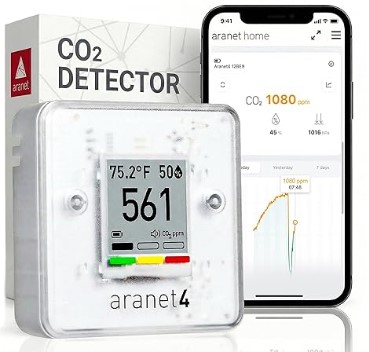
The Aranet4 Home dominates the category for one reason: reliable accuracy without unnecessary complexity.
A large e-ink display remains visible across bright offices and dim bedrooms. Battery life often exceeds one year because the display consumes minimal power.
Response times remain excellent during ventilation changes. Opening a single window typically produces visible CO2 drops within minutes.
Strengths
- Professional-grade NDIR sensor
- Portable and lightweight
- Strong Bluetooth app integration
- Silent operation with vibration alerts
- Excellent historical trend graphs
Weaknesses
- Premium pricing
- No Wi-Fi connectivity
Best For
Remote workers, students, classrooms, and bedrooms with inconsistent airflow.
2. Airthings View Plus
Best Premium Smart-Air Monitor
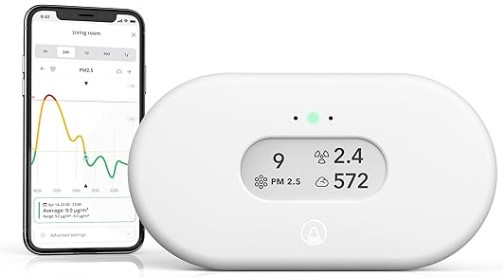
The Airthings View Plus targets buyers who want broader indoor air diagnostics beyond carbon dioxide alone.
Radon, particulate matter, humidity, VOCs, and CO2 tracking operate in one dashboard. For allergy-prone households or heavily insulated homes, the extra data provides real value.
The device integrates well with smart-home systems, though setup takes longer than simpler monitors.
Strengths
- Multi-pollutant tracking
- Excellent mobile app
- Wireless connectivity
- Rechargeable operation
Weaknesses
- Higher cost
- Slower interface responsiveness
Best For
Whole-home air quality monitoring and advanced smart-home setups.
3. Qingping Air Monitor Lite
Best Compact Desk Monitor
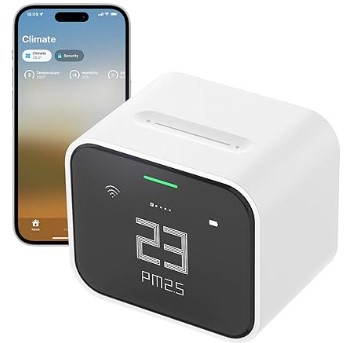
Many compact monitors sacrifice accuracy for portability. Qingping avoids that trap surprisingly well.
The touchscreen display shows CO2, humidity, and temperature clearly without clutter. USB-C power eliminates constant battery replacements.
Sensor refresh speed performs well in small offices and bedrooms. Price-to-performance ratio remains strong compared to overpriced minimalist competitors.
Strengths
- Compact footprint
- Accurate NDIR sensing
- Sharp display quality
- Competitive pricing
Weaknesses
- Limited historical analytics
- Smaller screen visibility at distance
Best For
Desktop monitoring and small office environments.
4. Temtop M10
Best Budget CO2 Monitor
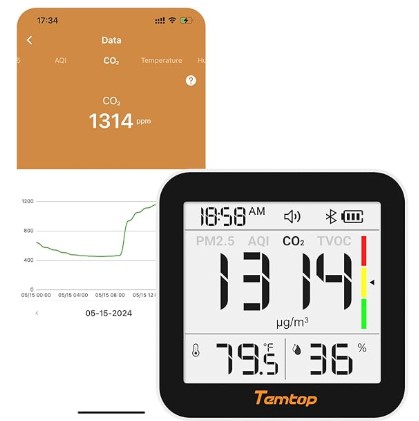
Budget air-quality devices usually cut corners aggressively. The Temtop M10 still delivers dependable baseline CO2 tracking at a lower price point.
Air quality trends remain easy to understand through simple color-coded indicators. Portability also works well for apartment renters checking ventilation performance room by room.
Strengths
- Affordable
- Portable design
- Fast startup time
- Simple operation
Weaknesses
- Basic app ecosystem
- Average battery endurance
Best For
First-time buyers and renters.
Common CO2 Monitor Mistakes
Buying VOC-Based “eCO2” Devices
Many cheap monitors estimate CO2 indirectly through chemical detection. Accuracy collapses during cooking, cleaning, or perfume exposure.
True NDIR sensing matters more than flashy displays.
Ignoring Placement
A monitor beside an open window produces artificially low readings. Placement near breathing level provides more realistic occupancy measurements.
Confusing Air Purifiers With Ventilation
HEPA air purifiers remove particles. Most do not remove carbon dioxide.
Fresh outdoor air remains necessary for lowering CO2 levels. Mechanical ventilation or window airflow solves the actual problem.
FAQs
1. What CO2 level causes afternoon fatigue?
Many people notice drowsiness and reduced focus above 1,000 ppm. Cognitive performance often declines further beyond 1,500 ppm.
2. Do air purifiers lower CO2?
Standard HEPA air purifiers do not remove carbon dioxide. Ventilation systems or outdoor airflow reduce CO2 levels.
3. Are cheap CO2 monitors accurate?
Many low-cost models use estimated VOC calculations instead of true NDIR sensing. Accuracy varies widely. Verified NDIR sensors perform significantly better.
Final Take
Most indoor spaces suffer from poor ventilation long before occupants notice stale air. A reliable CO2 monitor provides immediate feedback that improves concentration, sleep quality, and comfort.
The Aranet4 Home delivers the best balance of accuracy, usability, and long-term reliability for most homes and offices.