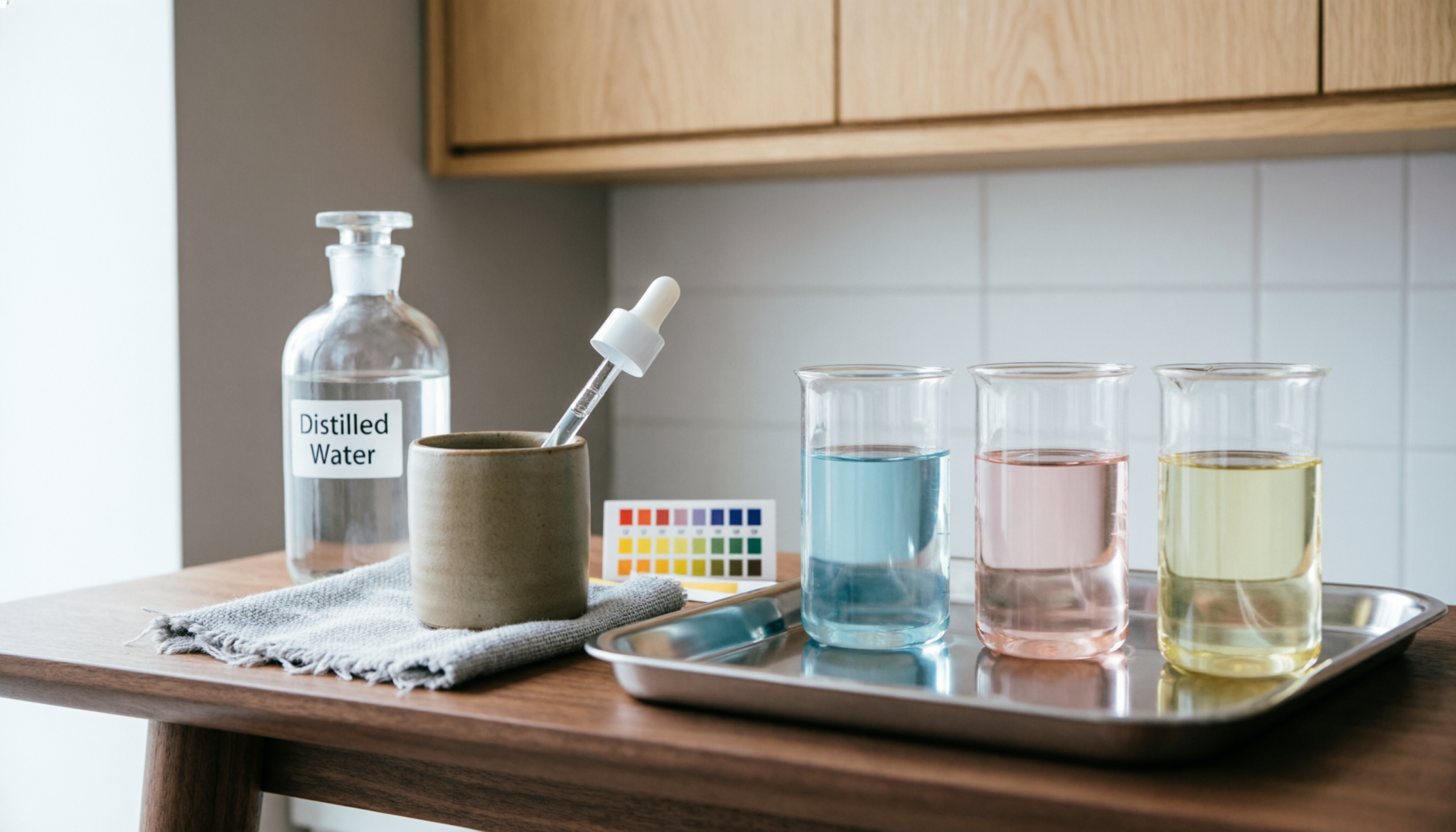
Maintenance Quick-Start: Vacuum mop cleaning solutions perform best within a pH range of 6.5 to 8.5. Neutral formulas prevent seal deterioration, mineral buildup, streaking, and premature pump failure while protecting hardwood coatings, grout lines, and microfiber rollers from chemical stress.
WARNING
Never pour bleach, ammonia, vinegar concentrate, hydrogen peroxide blends, or degreaser into a vacuum mop reservoir unless manufacturer instructions explicitly approve usage.
Chemical imbalance causes:
- Rubber gasket swelling
- Spray-nozzle blockage
- Pump corrosion
- Sensor failure
- Foaming overflow
- Floor-finish discoloration
High-alkaline cleaners above pH 10 often strip polyurethane floor coatings. Acidic mixtures below pH 5 can etch natural stone and weaken adhesive joints in luxury vinyl plank flooring.
The Cleaning Chemistry Hierarchy
| Solution Grade | pH Outcome | Surface Safety | Common Application |
|---|---|---|---|
| Neutral Cleaner | pH 6.5–7.5 | Excellent | Hardwood, laminate, sealed tile |
| Mild Alkaline Cleaner | pH 7.6–8.5 | Moderate | Grease removal on tile and vinyl |
| High Alkaline Cleaner | pH 9–11 | Poor for vacuum mops | Commercial degreasing only |
Neutral chemistry remains safest for residential vacuum mops.
The pH Scale for Homeowners
The pH scale runs from 0 to 14. It measures how acidic or alkaline a liquid is.
- 0–6 (Acidic): Vinegar, lemon juice
Cuts mineral buildup, but slowly eats rubber seals and damages stone. - 7 (Neutral): Balanced, safe zone
Ideal for vacuum mops and most sealed floors. - 8–14 (Alkaline): Bleach, ammonia
Effective for disinfecting, but harsh on finishes and internal parts.
Here’s the hard truth: most vacuum mop systems are engineered for neutral solutions.
Go outside that range, and wear starts immediately. Not dramatic at first, but steady and expensive.
How to pH-Balance Your Cleaning Solution for Vacuum Mops
Why “Suds” Are the Enemy
More foam does not mean more cleaning power. It means trouble.
Vacuum mops rely on controlled water flow, suction, and separation inside the tank. Regular floor cleaners create bubbles that:
- Block airflow inside the motor chamber
- Interfere with sensors and valves
- Leave residue that gums up internal parts
Anti-foaming agents in proper solutions prevent this.
Without them, the machine works harder, runs hotter, and fails sooner. That “extra clean” feeling from suds is misleading.
The Real Risk: Internal Damage You Can’t See
Inside every vacuum mop are small but critical components:
- Rubber O-rings
- Plastic valves
- Fine channels for water flow
Acids dry out rubber. Strong alkalines soften and warp it. Either way, seals fail. Once that happens:
- Leaks develop
- Suction drops
- Electronics get exposed to moisture
At that point, repair costs often rival replacement. Warranty claims usually get rejected when the wrong solution is used.
Why Neutral Solutions Work Better
Vacuum mops rely more on mechanical agitation than chemical aggression.
The roller performs the scrubbing. The suction removes dirty moisture. Excessively strong chemistry often reduces overall cleaning quality because residue remains behind after drying.
Neutral solutions:
- Dry faster
- Leave fewer streaks
- Protect roller fibers
- Reduce internal buildup
- Preserve floor sheen
Strong chemistry creates temporary visual brightness while slowly damaging surfaces underneath.
Expert’s Insight
Expert’s Insight: Sticky residue inside the recovery tank usually signals excessive alkalinity or soap concentration. Vacuum mop pumps fail more often from chemical misuse than electrical defects.
Neutral formulas extend pump lifespan, reduce spray blockage, and protect internal seals from swelling or shrinkage caused by unstable cleaning chemistry.
How to Test Cleaning Solution Balance at Home
Professional technicians use pH strips and digital meters, but simple home testing works well enough for routine maintenance.
Basic pH Testing Method
Required materials:
- pH test strips
- Small glass container
- Distilled water
- Cleaning concentrate
Steps:
- Fill container with distilled water
- Add recommended cleaner amount
- Dip pH strip for two seconds
- Compare color chart immediately
- Adjust concentration if necessary
Target range:
- Hardwood: pH 6.5–7
- Tile and vinyl: pH 7–8.5
Avoid “extra cleaner for extra dirt” logic. Concentration rarely improves performance inside vacuum mops.
Homemade Solutions That Usually Cause Damage
Many online cleaning recipes ignore vacuum mop engineering limitations.
Problematic Ingredients
Vinegar
- Acidic enough to weaken seal materials
- Dulls stone finishes
- Damages waxed hardwood
Dish Soap
- Produces excessive foam
- Leaves slippery residue
- Clogs moisture sensors
Essential Oils
- Degrade certain plastics
- Leave oily film
- Trap dirt inside rollers
Laundry Detergent
- Creates oversudsing
- Thickens inside tubing
- Leaves sticky deposits
Homemade formulas often smell clean while quietly damaging internal components.
Floor Type Matters More Than Most Owners Realize
Different flooring materials react differently to pH imbalance.
Hardwood
Requires near-neutral chemistry. Excess alkalinity softens finish layers over time.
Tile
Handles mild alkalinity better, especially in kitchens with grease buildup.
Natural Stone
Needs carefully controlled pH. Acidic cleaners etch marble and limestone rapidly.
Luxury Vinyl Plank
Strong solvents weaken seam adhesives and dull wear layers.
Universal cleaners rarely work equally well across every floor surface.
FAQs
1. Can vinegar clean vacuum mop tubing safely?
No. Vinegar acidity can damage seals, dull stone flooring, and weaken internal rubber components over time.
2. Why does the floor feel sticky after mopping?
Excess detergent concentration usually causes residue buildup. High-alkaline cleaners also leave tacky film after drying.
3. Does distilled water really matter?
Yes. Distilled water prevents mineral accumulation inside pumps, spray nozzles, and internal tubing systems.
Bottom Line
Vacuum mops clean best with stable, low-foam, near-neutral solutions. Excessively strong chemistry damages seals, clogs spray systems, and leaves residue on floors.
Distilled water, proper dilution, and balanced pH protect internal components while improving cleaning consistency. Simple chemistry control extends pump life and preserves floor finishes far longer than aggressive cleaners ever will.