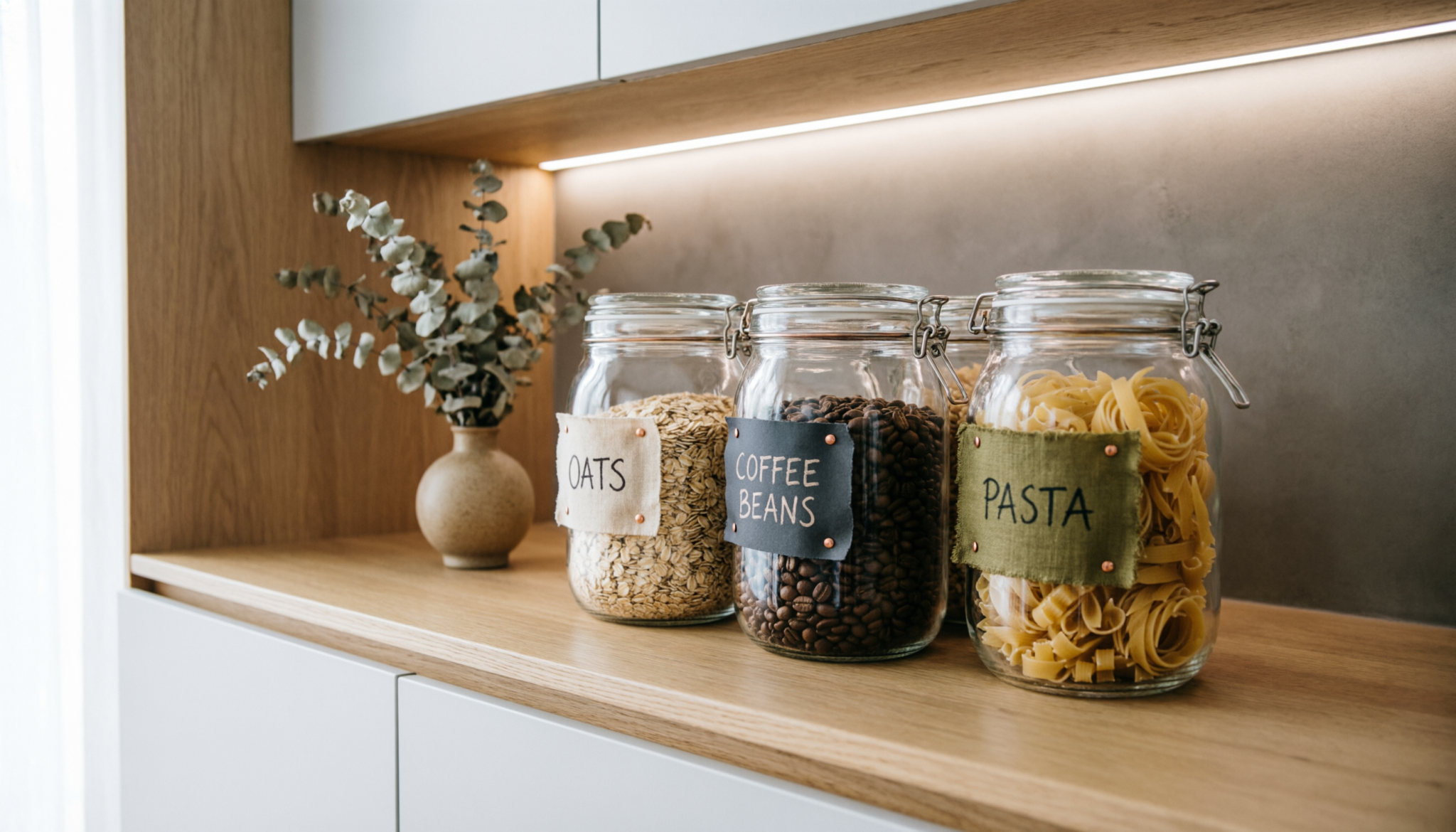
A neat pantry means nothing if nobody follows the system. Labels are not decoration; they are instructions.
When they are clear, visible, and easy to maintain, people comply without thinking.
The goal is simple: remove effort, reduce confusion, and make every item obvious at a glance.
The Short Answer
Pantry systems fail when the Friction of Maintenance is too high. For maximum compliance, labels must be high-contrast, category-based (e.g., “Snacks” vs. “Pretzels”), and placed at eye level.
Using dissolvable labels for dynamic items and Bluetooth label makers for consistent aesthetics removes the “aesthetic barrier” that prevents family members from participating in the system.
The Compliance Audit Table
| Label Type | Update Effort | Aesthetic Quality | Durability |
|---|---|---|---|
| Vinyl Stickers | High (Replacement) | Elite | High |
| Chalkboard | Low (Wipe) | Moderate | Moderate (Smudges) |
| Thermal (Digital) | Ultra-Low | Professional | High |
The Friction Factor: Why your system collapsed in two weeks
Most pantry systems fail for one reason: they demand too much thinking.
A label that needs updating, rewriting, or guessing slows everyone down. That pause is enough for people to ignore the system entirely.
Common breakdown points:
- Labels too specific, forcing constant edits
- Low contrast, making them hard to read quickly
- Placement too high or too low
- Mixed styles that feel inconsistent and confusing
A working system feels obvious. If someone has to ask where something goes, the system is already failing.
Broad vs. Specific labeling strategies
Broad categories win in real homes. A label like “Snacks” works better than “Granola Bars” because it absorbs change.
Families buy different items every week, and labels should not need replacing every time.
Use specific labels only where stability exists:
- Flour, sugar, rice
- Baking supplies
- Daily-use staples
Use broad labels where variety is constant:
- Snacks
- Breakfast
- School lunch items
This balance cuts down maintenance while keeping everything easy to find.
Chalkboard vs. Vinyl vs. Digital Thermal Printers
Each labeling method solves a different problem. The mistake is choosing based on looks alone instead of daily use.
Vinyl Labels (Clean but rigid)
Products like the Talented Kitchen Pantry Labels Set look sharp and uniform. They work best for fixed categories. The downside is obvious: once stuck, changes require peeling and replacing.
Chalkboard Labels (Flexible but messy over time)
Options like the Kamenstein Chalkboard Label Set allow quick edits. Wipe and rewrite as needed. In practice, they smudge, fade, and slowly lose clarity, especially in busy kitchens.
Thermal Label Makers (Best balance)
Devices such as the Brother P-touch CUBE Plus Label Maker or the DYMO LetraTag LT-100H Label Maker produce clean, consistent labels on demand. No handwriting issues, no visual clutter. Print, stick, replace in seconds.
For changing items like leftovers or bulk refills, dissolvable labels like the TownStix Dissolvable Food Labels eliminate cleanup completely.
FAQs
1. What is the biggest mistake in pantry labeling?
Over-labeling. Too many specific labels create constant maintenance. Systems that require frequent updates are ignored quickly.
2. Where should labels be placed for best results?
Eye level, front-facing, and consistent across all containers. If a label cannot be seen instantly, it will not be used.
3. Are label makers worth the cost?
Yes, when consistency matters. Clean, uniform labels reduce hesitation and make the system easier to follow daily.
Final Thought
A pantry system only works when everyone follows it without effort. Clear categories, readable labels, and simple updates keep things running.
The moment a system feels like work, it starts to fail. Keep it obvious, flexible, and easy to maintain, and compliance becomes routine rather than forced.